
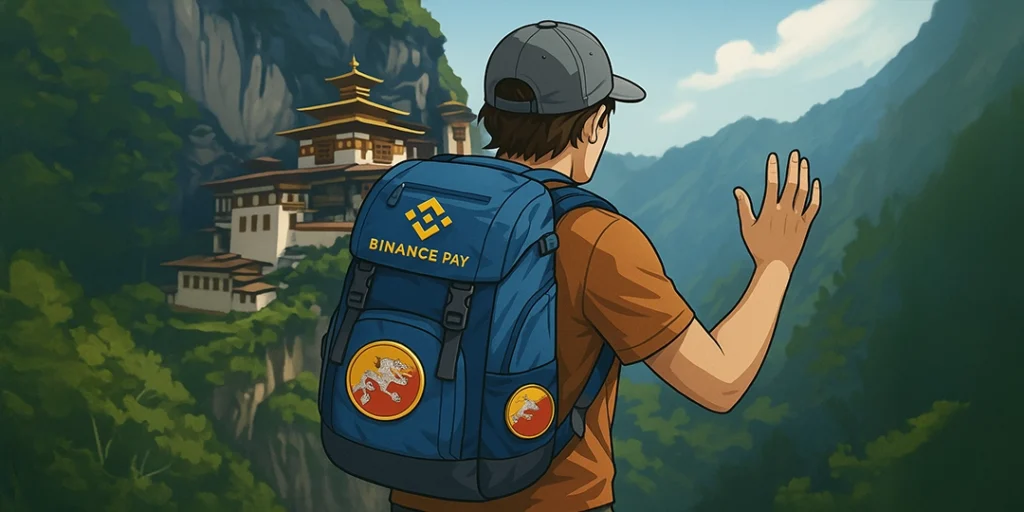

You are sipping butter tea in a creaky, centuries-old farmhouse in Bhutan. Outside, emerald valleys disappear into the mist, and snow-capped peaks loom quietly in the distance. When it is time to pay, there is no wallet shuffle, no cash, and no card. You pull out your phone, scan a slightly weathered QR code, and settle the bill with Bitcoin.
Sounds made up, right? It is not.
Bhutan just did something quietly brilliant, and hardly anyone noticed. By partnering with Binance Pay and DK Bank, the country has opened the door for visitors to use crypto for almost everything, from booking a cozy place to sleep to covering everyday travel costs. No hype, no grand announcements, just a smooth, practical move that makes exploring Bhutan feel a little more future-friendly and a lot more effortless. No drama, no gimmicks, just a smooth, tap-and-go experience in one of the most traditional places on Earth.
That is the magic of it. Ancient prayer flags ripple in the wind while blockchain rails hum in the background. A monk passes by, your transaction confirms, and the butter tea still tastes exactly the same. Bhutan is not choosing between past and future. It is letting both sit at the same table, sharing a warm cup, and minding their business. Welcome to the future, steeped in Himalayan soul.
The Himalayan kingdom, famous for measuring Gross National Happiness, is now chasing a new metric: financial inclusion. Under the initiative, travellers can book flights, secure visas, and haggle for handwoven textiles in remote markets, all with digital assets. “We’re not just streamlining payments; we’re connecting cultures,” said Binance CEO Richard Teng.
Here’s the kicker: Even a roadside momo stall in Thimphu now accepts crypto. How? DK Bank, Bhutan’s financial backbone, instantly converts digital payments into local currency, shielding small businesses from crypto’s infamous rollercoaster. A farmer in Paro can now sell organic red rice to a French tourist paying in Ethereum, and no middlemen are required. “This is about keeping our traditions alive while stepping into the future,” shared a Bhutanese tour guide between bites of chilli-laced cheese.
Why should crypto nerds care? Because Bhutan just turned its entire tourism economy into a blockchain sandbox. Fancy a hot stone bath? Pay with Solana. Booking a hike to Tiger’s Nest Monastery? Dogecoin works too. The system supports 200+ coins, making it a crypto Disneyland for hodlers and newbies alike.
Sceptics might grumble about tech hiccups or security risks, but Bhutan’s play is cleverly low-key. Binance Pay’s QR system requires no app downloads—just a crypto wallet. Every transaction is recorded on the blockchain, which means less room for funny business and far more confidence that tourism money actually reaches the local communities it is meant to support. “Transparency isn’t optional here,” one DK Bank representative joked. “Our mountains are high, but our accountability is higher.”
Strip away the tech jargon, and Bhutan’s approach becomes refreshingly simple. This is about progress without erasure. By allowing rural artisans and small communities to earn directly through crypto, the country gives people a reason to stay rooted rather than drift toward cities. Culture stays intact, livelihoods grow, and tradition does not get traded away for convenience. Call it DeFi with a conscience, or modern finance that knows when to take its shoes off at the temple.
So, what’s the verdict? For crypto enthusiasts, Bhutan is now the ultimate flex destination. For sceptics, it’s proof that blockchain can be a force for good. And for Bhutan? It’s a gamble that could reshape how the world views money, travel, and happiness.
Pack your Ledger and hiking boots. Bhutan’s trails just got a lot more interesting, and your portfolio might too. As of the time of writing, over 300 local businesses have joined the crypto network, with DK Bank reporting a 214% surge in traveller transactions since April. Moon bags optional, but mountain views guaranteed.