



Ethereum is busier than ever, and surprisingly, it is getting increasingly economical to use. On-chain data shows that the number of Ethereum transactions is hitting record highs, while the cost of operating the network is in a freefall.
Ethereum usage hits new highs
The latest data from Etherscan shows that the total number of wallet addresses on the Ethereum blockchain currently stands at more than 374 million. In the same vein, the number of fresh wallet addresses in the last day has jumped by 574,603 – representing a 6.5% increase.
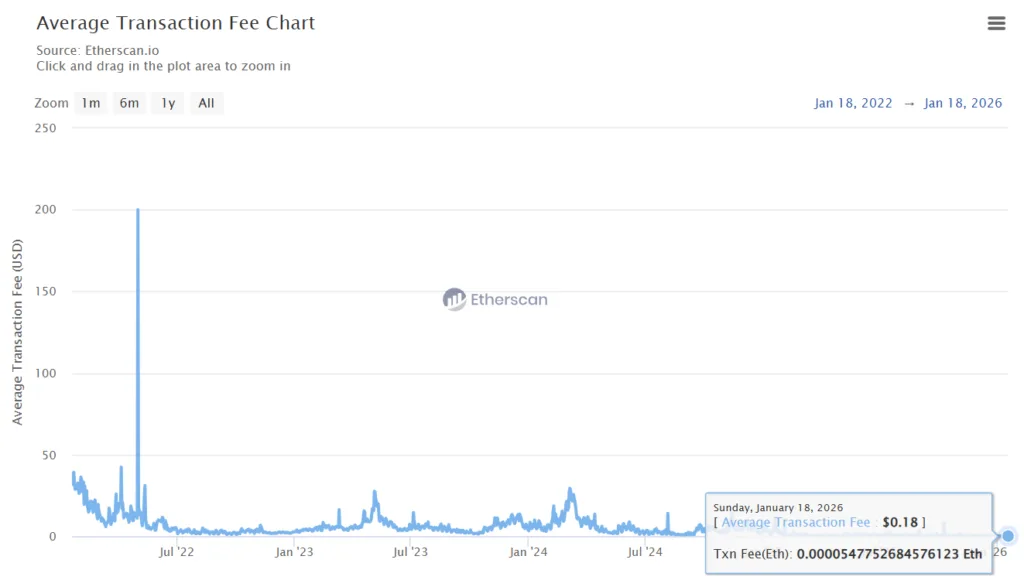
The average transaction fee has been tumbling over the past four years. For comparison, in January 2022, the number was around $37. This metric currently sits close to $0.18, indicating a significant fall of over 99%.
The daily transactions on the Ethereum blockchain keep hitting new highs, increasing to 2,885,524 transactions on January 17. This represents more than a 100% increase from the 1,124,281 transactions recorded on December 7, 2025.
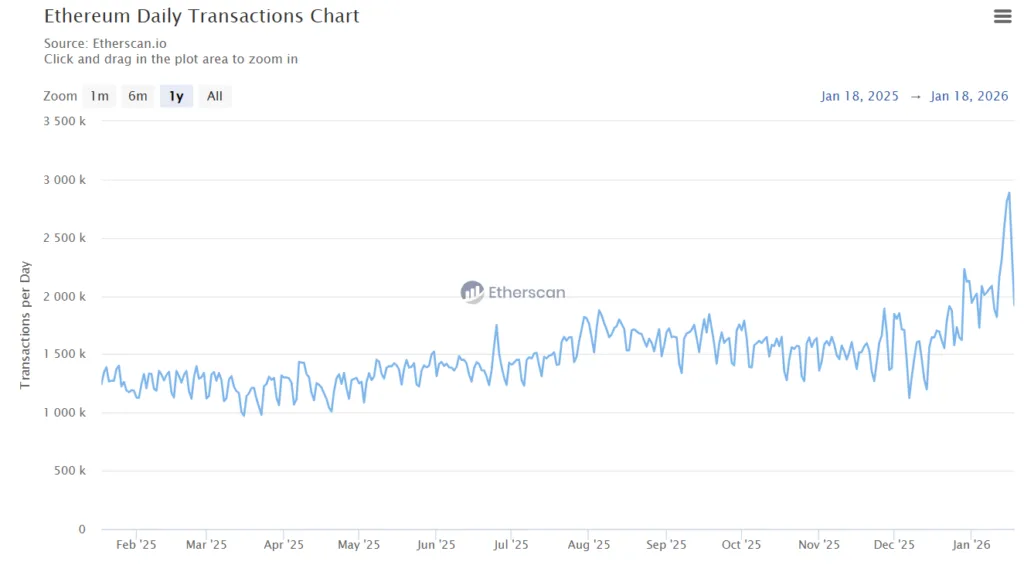
Key technical upgrades in 2025 to the Ethereum protocol can be credited for the low transaction costs on the smart contract platform, despite the unprecedented surge in the number of transactions.
To recall, Ethereum underwent two major protocol upgrades in 2025, the Pectra, Duncan, and Fusaka upgrades. Specifically, Ethereum Improvement Proposal (EIP) 4844 – a part of the Duncan upgrade – enhanced the network’s blob capacity, enabling Layer-2 solutions to post more data to mainnet at lower costs.
ETH staking incentives look balanced
Besides the encouraging blockchain traffic, the Ethereum validator exit queue has also experienced a significant decline – from a peak of 2.65 million in September 2025 to almost zero – with close to 30% of all ETH currently staked on the network.
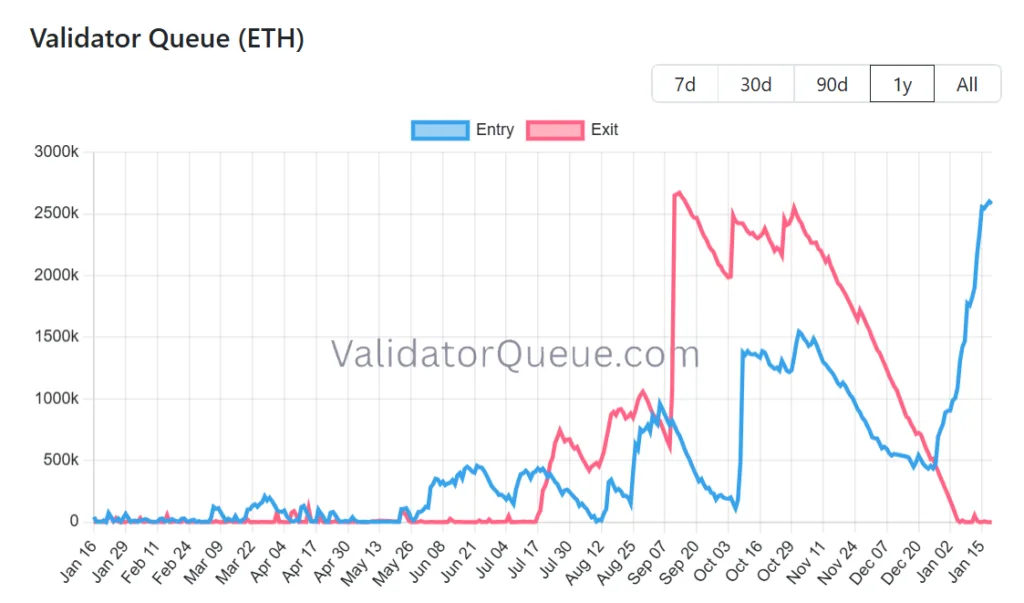
For the uninitiated, the Ethereum exit queue for validators indicates the number of stakers ready to exit the blockchain’s proof-of-stake consensus algorithm and withdraw their ETH holdings.
Since the queue is currently empty, it shows that none of the validators are really ready to exit the network. This shows that Ethereum’s staking incentives are currently in balance, with no immediate pressure from stakers to leave the network.