


For years, if you wanted to buy Bitcoin, you had to leave your bank behind. You created an account on an external exchange, moved money into a strange new digital wallet, and stepped into the often-chaotic world of crypto. That era ended this week with a quiet, almost imperceptible click.
PNC Bank, one of the ten largest financial institutions in the United States, has done something unprecedented. It now allows clients of its Private Bank to buy, sell, and hold Bitcoin directly within their existing digital banking account. There is no link to an external exchange.
The “Buy Bitcoin” button now simply sits alongside options for transferring cash or trading stocks. This seamless integration, powered behind the scenes by Coinbase, is the single most significant step toward genuine institutional crypto adoption in U.S. banking history.
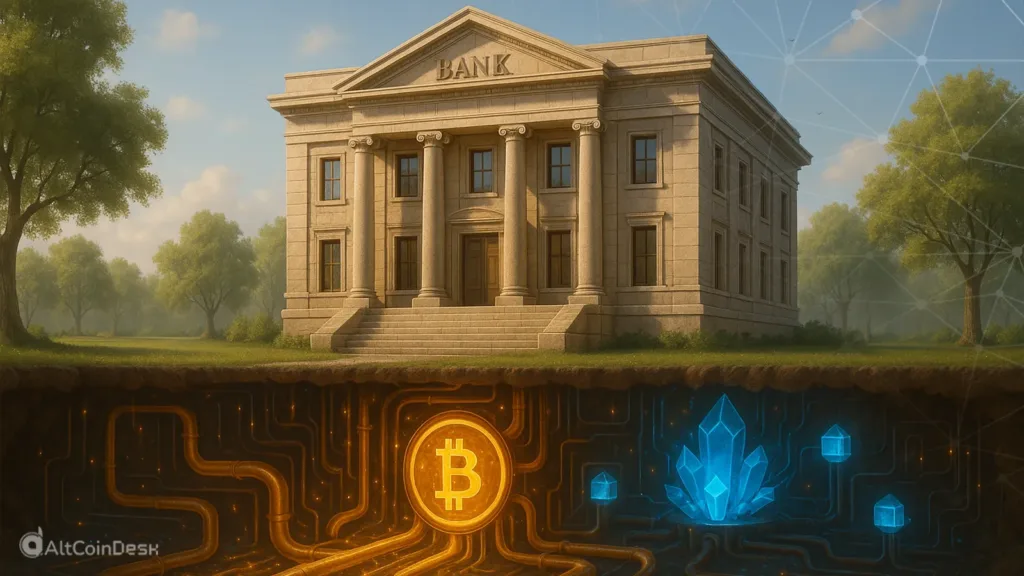
The plumbing behind the button
This move is not really about PNC becoming a crypto expert overnight. It is about a fundamental change in how traditional finance views and accesses this new asset class. PNC is not custodying the Bitcoin itself or building a trading desk from scratch. Instead, it is plugging into Coinbase’s “Crypto-as-a-Service” (CaaS) platform.
Think of it like this: Banks do not generate their own electricity; they plug into the power grid. Coinbase has built the power grid for crypto, and PNC is the first major bank to connect.
Coinbase handles the complex, regulated parts, the secure custody of assets, trade execution, and compliance frameworks, while PNC provides the trusted interface to its wealthy clients. This model is the masterstroke. It allows a cautious, century-old industry to offer a radical new product without bearing all the novel risks itself.
A trend, not an anomaly
Do not mistake this for a one-off experiment. It is the leading edge of a massive institutional wave. The regulatory fog that kept banks on the shore is finally lifting. A global review in 2025 found that about 80% of major jurisdictions saw financial institutions announce new digital asset initiatives because the rules were clearer.
Look at U.S. Bank, the nation’s fifth-largest. It has not only resumed its bitcoin custody service for investment funds but also created an entire “Digital Assets and Money Movement” organization. It is even serving as the custodian for the dollar reserves backing regulated stablecoins. The machinery of mainstream finance is being retrofitted for crypto, and PNC’s clickable button is the first part of that machine a regular client can see and touch.
The real revolution is psychological
The technical integration is one thing. The psychological shift is everything else. For PNC’s high-net-worth clients, Bitcoin is no longer a speculative toy on a risky website. It is a portfolio allocation option, presented alongside bonds and equities by their lifelong wealth advisor.
This normalization is the true gateway. When Bitcoin is just another asset in the portfolio view, the stigma shatters. The mental barrier between “traditional finance” and “crypto” dissolves. This is how institutional crypto adoption filters down to the human level: not with a bang, but with a familiar, secure, and boring banking experience.
What it means for the rest of us
You might ask, “This is just Bitcoin for rich people at one bank. Why should I care?” You should care because paths are paved by the first major traveler. PNC has just proven the model works. Other major banks will follow, driven by client demand and competitive fear.
Furthermore, where Bitcoin goes, other digital assets can eventually follow. The Coinbase CaaS infrastructure that powers this is not Bitcoin-exclusive. Once the pipes are installed and deemed safe for Bitcoin, it becomes exponentially easier for banks to consider offering exposure to Ethereum, or a basket of top crypto assets, or tokenized real-world assets. The first product through the door is always the hardest. Bitcoin has just shouldered it open.
The journey of a thousand miles begins with a single step. The journey of trillions of dollars into the digital asset economy may have just begun with a single, quiet click in a banking app. The age of exit ramps to crypto exchanges is fading. The age of native institutional crypto adoption has arrived.