



The Coinbase-backed Ethereum layer 2 network, Base, is moving from its foundational software to a unified, Base-operated stack. The shift marks a major move from its heavy reliance on Optimism’s OP Stack and other external dependencies, including Flashbots and Paradigm. The transition was announced in a blog post on the Base Engineering Blog titled “A new unified stack for Base Chain.”
‘Unified stack’ – the in-house infra
Base is designed as a high-performance solution that makes Layer 1 transactions faster, cheaper, and more efficient. Currently, the largest network within the OP Stack’s Superchain ecosystem has approximately $3.85 billion in Total Value Locked (TVL). Even so, because of the fragmented architecture, the project has faced growing operational issues.
The code operating various components of Base, such as the sequencer, is owned by multiple teams and spread across multiple repositories, the official announcement stated. By consolidating into a single repository known as base/base and building on open-source components like Reth, Base aims to simplify its infrastructure.
Base aims to cut through the technical drag of managing code scattered across different teams and repositories. By directly optimizing components, this shift is all about speed, with the network planning to double its development pace by rolling out roughly six major upgrades a year.
This move reduces its technical ties to Optimism. As part of this shift, Base will replace Optimism on its Security Council with an additional independent signer.
The team stated in their official blog post that this unification does not mean that Base will be built in isolation. Despite the shift in architecture, OP Labs confirmed that their focus remains on delivering enterprise-grade blockchain infrastructure to their ecosystem, and they will continue to serve Base as an OP Enterprise customer while the network builds out its independent infrastructure.
OP token drops after Superchain’s top contributor moves away
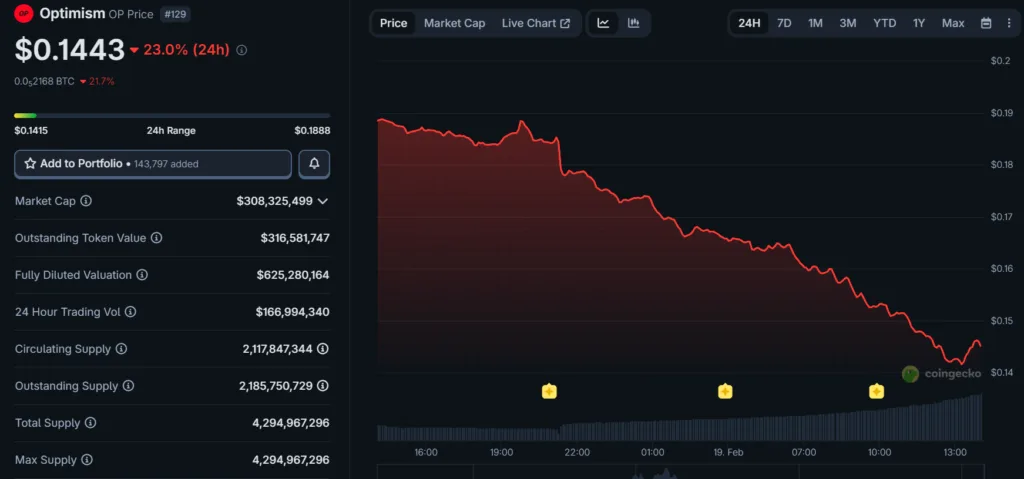
The OP token, which recently passed a resolution to use protocol rewards for token buybacks, saw its token price drop 14 – 23% in the last 24 hours, as investors reacted to the loss of its biggest superchain contributor.