

Blockchain in supply chain is less magic, more reality check. Here’s your plain guide to how shared records are quietly fixing the way things get from point A to point B.
Let’s start with a simple observation. Almost everything you buy has passed through multiple hands before reaching you. A shirt might travel from a factory to a warehouse, then to a distributor, then to a store. Along the way, each company keeps its own records. The factory writes one thing. The shipping company writes another. The store writes a third.
If something goes wrong, nobody can agree on what happened. Everyone points at everyone else.
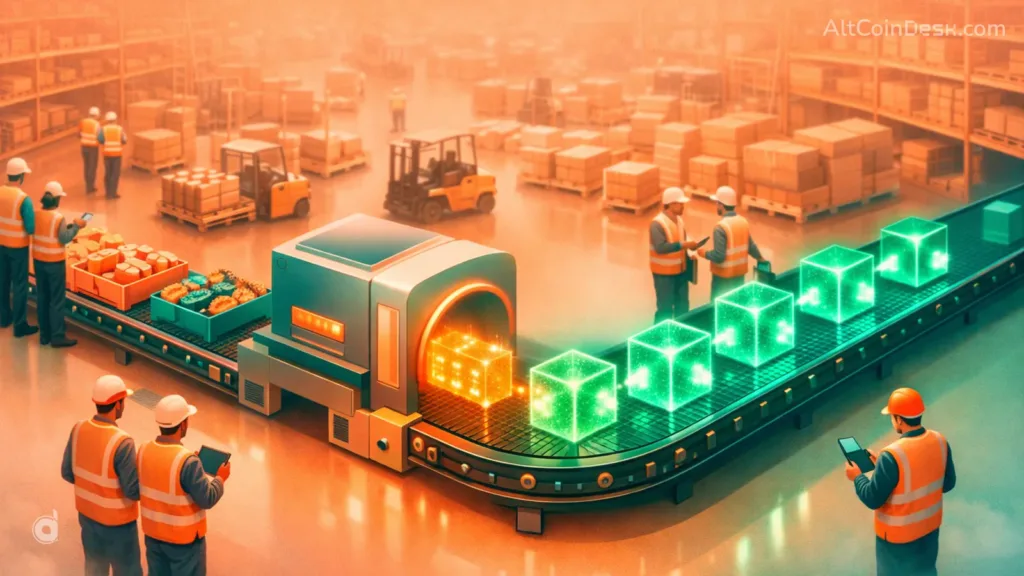
This is where blockchain in supply chain comes in. It does not fix every problem. But it gives everyone a single, shared record that no one can quietly change. Think of it as a notebook that all the companies use together. When one company writes something down, everyone else sees it. No one can erase it later.
Below are five real ways companies are using this technology. No complicated terms. Just straightforward examples.
1. Tracking products from start to finish
How do companies know exactly where things came from?
Imagine a toy that gets recalled because of a safety issue. In a traditional system, the store calls the distributor. The distributor calls the shipping company. The shipping company calls the factory. Everyone searches through emails and paper records. This can take days or even weeks.
With blockchain, every step is recorded in that shared notebook. The factory records when the toy was made. The shipping company records when it left. The distributor records when it arrived. The store records when it was sold.
If a problem appears, the store can look back and see exactly which batch came from which factory. Instead of taking a week, this takes seconds. That means fewer unsafe products stay on shelves, and companies can fix problems faster.
2. Stopping fakes before they reach you
Why do your medicine and expensive items need a verifiable story? Fake products are a huge problem. According to the OECD and EUIPO, counterfeit goods made up nearly half a trillion dollars in global trade in 2021. That is more than two percent of all trade.
Fake medicine can hurt people. Fake car parts can cause accidents. Fake luxury goods hurt the brands that make them.
Blockchain helps by creating a chain of custody. Every time a product changes hands, the transaction is recorded. When you scan a code on a medicine bottle, you can see that it came from an approved factory, went through authorized distributors, and reached a legitimate pharmacy. If someone tries to sneak a fake into the system, the record shows a break in the chain.
In the pharmaceutical industry, the U.S. Food and Drug Administration has pushed for systems that track drugs at the individual package level. Blockchain fits naturally into this requirement because it keeps a permanent, unchangeable record.
3. Making audits and compliance easier
When regulators ask questions, the answers are already there. Certain industries have to prove more than just where a product went. They have to prove how it was handled, who inspected it, and whether it met safety rules.
Traditionally, this information lives in different places. One company has temperature logs. Another has inspection reports. Another has shipping records. When auditors show up, everyone scrambles to gather documents.
With blockchain, all that information lives in the shared notebook. The temperature sensor records that the product stayed cold. The inspector records that it passed. The shipping company records that it arrived on time.
The MediLedger project, which worked with the FDA, tested this approach for prescription drugs. The conclusion was that blockchain worked well for keeping regulatory records and making sure everyone had the same information.
4. Handling paperwork across borders
Why does global trade move faster when everyone shares documents? International shipping involves a mountain of paperwork. A single container might require documents from the exporter, the importer, the shipping line, the port, and customs authorities. Each one keeps its own copy. Delays happen when documents go missing or do not match.
Blockchain can synchronize all these records. Instead of emailing documents back and forth, everyone looks at the same shared set of files. When customs clears the shipment, everyone sees it instantly. When the port confirms the container has arrived, that information is immediately available.
The World Economic Forum has noted that this approach can improve trust and coordination in global trade. Dubai Customs launched a blockchain platform specifically to make cross-border e-commerce smoother.
But there is also a cautionary tale. A well-known platform called TradeLens showed that getting everyone in the shipping industry to join is harder than building the technology itself. The system worked perfectly. But not every company wanted to participate. So while the technology is ready, the people using it need to agree to work together.
5. Automating payments when conditions are met
How smart contracts take the waiting out of getting paid. Here is a common problem in business. A supplier delivers goods. Then they wait. And wait. The buyer needs to verify the delivery, approve the invoice, and process the payment. This can take weeks or months.
With blockchain, you can use a smart contract. A smart contract is a simple piece of code that says, “When this happens, do that.” For example, when the shipping company confirms delivery, automatically release payment to the supplier. When an inspector confirms the product has passed quality checks, automatically release the next payment.
This reduces the need for manual paperwork and chasing people for money. It is especially useful in construction, manufacturing, and any industry where payments depend on completing specific milestones. The World Bank has highlighted that this kind of automation can help small businesses get paid faster and reduce disputes.
How blockchain actually improves supply chains
Let’s pull together the four main benefits in simple terms:
- Shared visibility. Instead of every company keeping its own records and trying to match them later, everyone sees the same information. This reduces arguments about what happened.
- Faster traceability. When something goes wrong, you can trace the problem to its source in seconds instead of days. This means fewer products get pulled from shelves unnecessarily, and problems get fixed sooner.
- Better integrity. Records cannot be quietly changed after the fact. If someone tries to alter a record, everyone can see that the original is still there. This matters for industries where trust is essential.
- Automation. Smart contracts remove the need for back-and-forth approvals. Payments happen automatically when conditions are met, saving time and reducing frustration.
Blockchain only works with good data and willing partners
Now for the reality check. Blockchain does not magically fix supply chains. It only records what people put into it. If someone enters bad information, the system will preserve that bad information forever. That is why experts like GS1 emphasize the importance of standards. Without agreed-upon ways to label products and events, you end up with a shared notebook full of confusion.
There is also the human factor. Supply chains involve dozens of companies, each with its own systems and habits. Getting them all to agree to use the same technology is a coordination challenge, not just a technical one. TradeLens is the clearest example. The technology worked, but the ecosystem did not come together enough to make it commercially sustainable.
So the honest conclusion is this. Blockchain improves supply chains most when the problem is about shared trust and shared visibility across organizations. It is less useful when the real problem is bad operations, poor planning, or unreliable suppliers.
A simple note on scaling: Why this can work for the whole world
One question people often ask is whether this technology can handle the scale of global trade. The answer involves something called layer 2 networks.
A layer 2 is simply a way to process many transactions quickly and cheaply while still relying on a secure foundation. On networks like Ethereum, layer 2 solutions such as Arbitrum, Optimism, and zkSync batch thousands of transactions together and post a summary to the main network. This makes the cost per transaction very low.
Ethereum’s Dencun upgrade in early 2024 made this even more efficient by creating a special space for these batch summaries. Today, these layer 2 networks handle the majority of activity, processing roughly 60 times more transactions than the main network alone could handle.
For supply chains, this matters because putting every product and every shipment on a blockchain only becomes affordable when you can scale the technology. Layer 2 networks make that possible.
Putting it all together
Blockchain in supply chain is not a magic solution. But it solves a real problem. It gives multiple parties a single, trustworthy record of what happened, when it happened, and who was responsible.
The strongest use cases are traceability, anti-counterfeit protection, compliance records, trade documentation, and smart contract automation. The best examples come from food safety, pharmaceuticals, and industries where proving the origin of a product matters.
The technology is ready. The standards are available. The remaining challenge is getting everyone to agree to use them. When that happens, supply chains will finally have something they have always needed: a single version of the truth.