
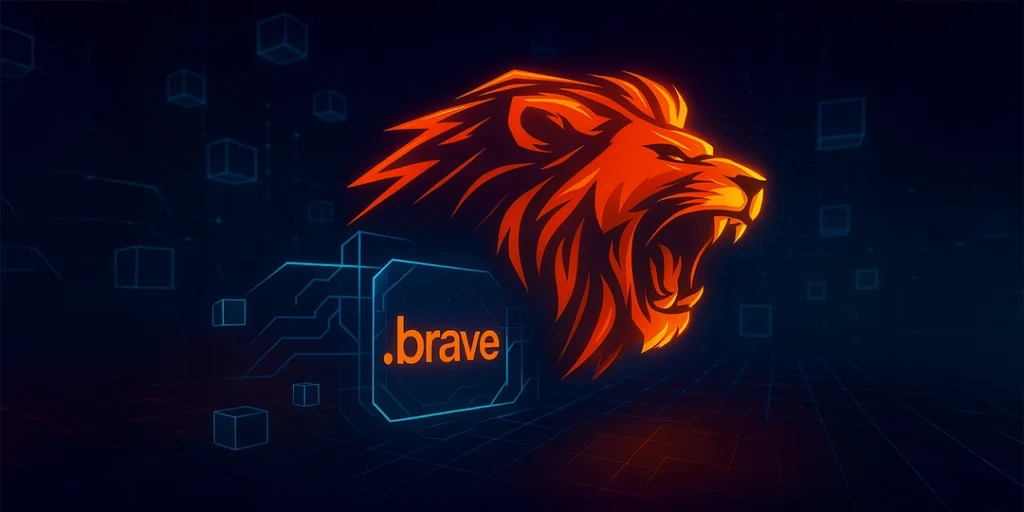

Brave just did something no major browser has dared to try before. It launched its own blockchain-based top-level domain, .brave, and in the process quietly redrew the map of how browsers, identity, and Web3 might actually work together.
In partnership with Unstoppable Domains, the privacy-first browser is letting users replace long, nerve-wracking wallet addresses with simple, readable names. Instead of pasting something like 0x3F5…5BA, you can now send funds to something that looks like yourname.brave. Cleaner, calmer, and far less terrifying if you’re new to crypto.
This is not just a cosmetic upgrade.
Each .brave domain is minted as an NFT on Polygon, which means users actually own it. No renewals. No registrars. No annual reminders threatening to pull the plug. Once it’s yours, it stays yours. These domains also work across multiple chains, including Ethereum, Solana, Bitcoin, Base, and the newer Sonic network, quietly solving one of Web3’s most annoying problems: fragmentation.
Then there’s the browser-native twist. Brave users can host decentralized websites on IPFS and access them directly inside the browser. No servers to shut down. No platforms to deplatform you. Just content that exists as long as the network does. For anyone who cares about censorship resistance or digital ownership, that part matters more than the domain itself.
Brave co-founder and CTO Brian Bondy summed it up plainly:
“Our mission is to put privacy, ownership, and control back in the hands of users. .brave is more than a domain; it’s a user-owned identity layer native to the Brave ecosystem.”
That idea fits neatly with Brave’s roughly 62 million users, many of whom already came for ad blocking and stayed for privacy. For crypto newcomers, .brave lowers the anxiety barrier. For experienced users, it offers something rare: a single identity that travels across chains without friction.
The ripple effects could be meaningful. Easier onboarding brings more people in. Decentralized hosting gives independent creators and DAOs more breathing room. And NFT domains, long dismissed as speculative toys, suddenly feel useful again as living identity hubs rather than flip bait.
Still, questions remain. Will other browsers recognize .brave domains, or will they only work inside Brave’s world? If Chrome and Firefox sit this one out, adoption may stall. And while Polygon is fast and cheap today, real scale always finds the stress points eventually.
Even so, this feels like a bet worth watching. Brave is not just adding a feature; it is turning the browser itself into contested territory for who controls identity online.
If you care about where the decentralized web is heading, keep your eyes here. Brave just made the browser matter again, and this time, it is personal.