
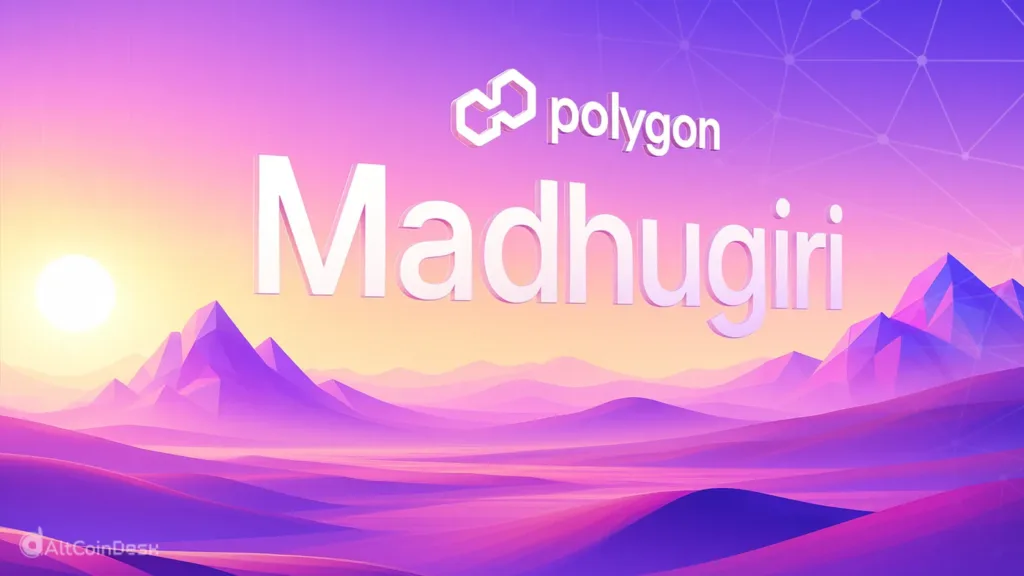

The Polygon network is about to undergo a major upgrade. The leading Ethereum scaling network will implement the Madhugiri hardfork on its proof-of-stake (PoS) mainnet at block number 80084800. As the team executives announced, the hardfork will launch today at 10 AM UTC.
What upgrades does Madhugiri hardfork bring to Polygon?
The Madhugiri hardfork is specifically aimed at boosting the network speed of the Polygon blockchain, alongside other changes.
- Increases transaction speed of Polygon by 33%.
- Enables changes to block timing in the future without the need for another hardfork.
- Improves synchronization between nodes, which avoids them falling behind.
- Strengthens the Ethereum Virtual Machine (EVM) to prevent security issues.
Besides these major changes, Polygon will also experience a few more upgrades, including speeding up the consensus process to one second; an increase in gas cost of MODEXP, a heavy cryptographic operation on EVM, to prevent attacks; a maximum limit in computational work (gas limit) per single transaction, and more.
Additionally, the Polygon Foundation team has clearly specified that user and app developers do not have to take any action when the Madhugiri hardfork releases on the network. In other words, the new changes practically affect node operators, validators, and exchanges.
Polygon’s Madhugiri and Ethereum’s Fusaka upgrades
It is important to note that Polygon’s Madhugiri update is going to happen amid the recent launch of the Fusaka upgrade on the Ethereum network. Fusaka improves the scaling and efficiency of the Ethereum network, including transaction speed settlement, reducing node burdens, and other tweaks that make Ethereum cheaper to use.
As mentioned earlier, Polygon is an Ethereum Layer-2 scaling network, meaning it uses Ethereum by moving high-volume transactions from Layer 1 to a faster and cheaper EVM chain. Polygon is also an EVM-compatible network that helps it execute Ethereum-style smart contracts.
Although Polygon and Ethereum are somehow connected in the ways explained above, it does not mean that Madhuri’s upgrade on Polygon will broadly impact the Ethereum network. However, Ethereum may experience indirect effects like smoother bridging between Polygon and Ethereum.