

Dubai just drew a clear legal line through stablecoin gray zones. The DIFC Digital Economy Court issued a Worldwide Freezing Order (WFO) over $456 million tied to TrueUSD (TUSD) reserves, signaling that reserve governance for dollar-pegged tokens now sits squarely inside enforceable law.
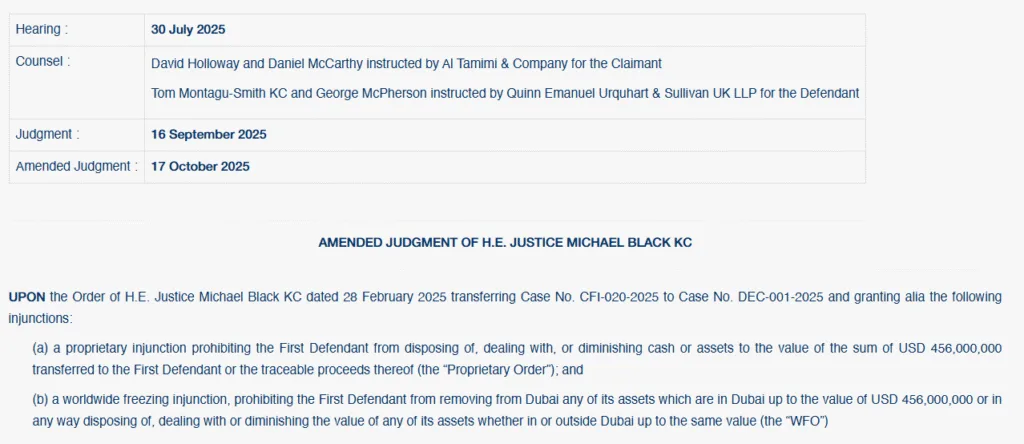
In Case No. DEC-001/2025 (Techteryx Ltd v Aria Commodities DMCC & Ors), Justice Michael Black KC granted a WFO after finding “a serious issue to be tried” and a real risk of dissipation, restraining Aria Commodities DMCC from dealing with $456 million transferred via Legacy Trust and First Digital Trust, including any traceable proceeds. Subsequent orders refined the injunction’s scope and security-for-costs requirements.
But the bailout did not answer the bigger question: how did stablecoin reserves become part of private investments in the first place?
The court that set a global standard
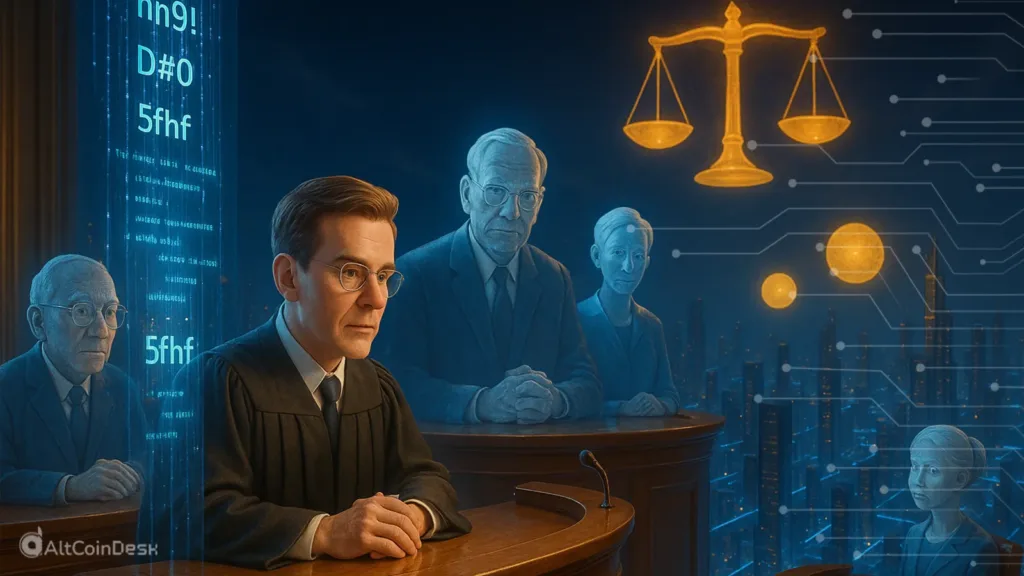
When the Dubai court freezes money on this scale, it is more than a procedural move. It is a message that digital assets are now within the reach of real-world justice. According to filings in the DIFC Digital Economy Court, Techteryx Ltd., issuer of TrueUSD (TUSD), alleges that part of its reserve funds was redirected to Aria Commodities DMCC, a Dubai-based trading firm, for commodity-related transactions rather than being kept liquid for token redemptions.
Techteryx claims those assets are held on constructive trust for its benefit. Justice Michael Black KC found “a serious issue to be tried” and “a real risk of dissipation,” ordering the assets frozen worldwide pending related proceedings in Hong Kong.
The real meaning behind the freeze
For years, the crypto world has thrived on a culture of innovation that often moved faster than regulation. Many projects built reputations on speed, decentralization, and independence from traditional oversight. Yet, this case reveals an uncomfortable truth: trust remains the foundation of finance, whether digital or traditional.
When the Dubai court freezes assets tied to a stablecoin, it forces the industry to confront a difficult question: who is accountable when the promise of stability breaks down? The ruling reminds investors and companies that being part of a decentralized ecosystem does not exempt them from fiduciary duty.
Stablecoins like TrueUSD exist to offer reliability in a volatile market. But that reliability depends entirely on the integrity of the reserves that back them. If those reserves are misused, the foundation crumbles. The court’s decision to freeze these assets highlights that transparency is not an option anymore. It is a requirement for survival.

Lessons for a growing industry
The DEC order demonstrates that digital assets can be subject to the same fiduciary standards as traditional finance. A worldwide freezing order empowers courts to restrict a defendant from moving assets globally, a tool once reserved for major corporate and banking disputes. By applying it to a stablecoin issuer, Dubai has cemented its role as a jurisdiction that encourages innovation while demanding accountability.
The ruling also underscores a broader shift: liquidity claims made by crypto companies must now be verifiable, auditable, and legally defensible. Transparency is no longer a marketing slogan but a compliance requirement.
Where technology meets responsibility
When the Dubai court freezes 456 million dollars tied to TrueUSD, it does more than protect investors. It redefines how we understand responsibility in the digital age. This decision bridges the gap between innovation and integrity, showing that progress without oversight is just another form of risk.
Crypto was built on the idea of freedom, but even freedom needs structure. The Dubai ruling reminds the world that while technology may evolve, the principles of trust, transparency, and accountability remain timeless.