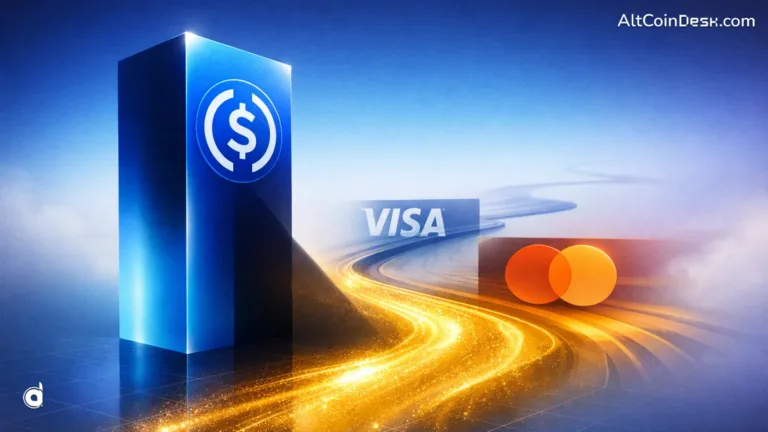


This is the kind of partnership crypto veterans used to joke about and secretly hope for. Chainlink is teaming up with Mastercard. Yes, that Mastercard. The one in over 3 billion wallets worldwide.
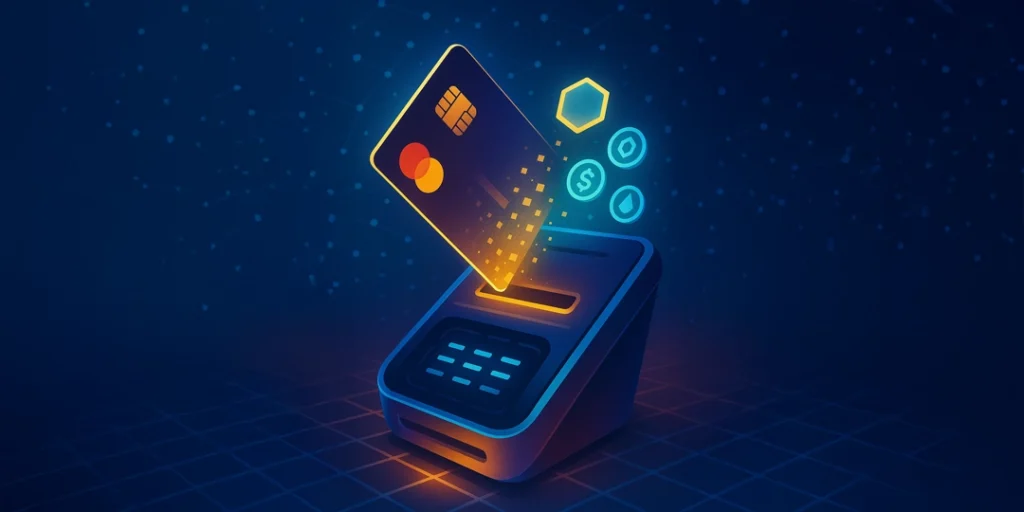
The idea is simple and quietly radical. People could soon buy crypto directly on-chain using their everyday card, without bouncing through centralized exchanges or juggling wallets. Fiat goes in, and crypto lands straight in your self-custodied wallet. No detours. No gymnastics. Just swipe and settle.
LINK’s 5% jump yesterday was not exactly subtle, and honestly, it makes sense.
So… does your wallet now have superpowers?
The best thing about this partnership is that Chainlink is doing what it does best. Its decentralized oracle network is the trusted link that makes sure that fiat-to-crypto exchanges happen in a safe, open, and compliant way.
Picture this. You are using a decentralized app, see an option to pay with your Mastercard, tap it, and suddenly, Ethereum, USDC, or another supported asset appears directly in your self-custodied wallet. No exchange accounts. No manual transfers. No “send a test transaction first” anxiety.
That future is not theoretical anymore. It is actively being built.
The cast behind the curtain
This does not work without a strong supporting lineup, and this one is stacked.
- Zerohash handles the compliance heavy lifting, making sure transactions meet regulatory requirements across regions. That piece is essential if traditional finance is going to play at scale.
- Swapper Finance, XSwap, and Uniswap provide the on-chain liquidity and swapping mechanics, turning card payments into usable crypto without breaking the user experience.
- Shift4 Payments brings deep payment processing expertise, ensuring fiat settlement runs smoothly within Mastercard’s massive global network.
Every part has a job, and together they make the system feel almost boring. In finance, boring usually means it works.
Why this matters depends on where you sit
- For Mastercard, this is a serious step toward staying relevant in a world that increasingly settles value on-chain. It opens the door to new users, new use cases, and direct access to decentralized liquidity.
- For Chainlink, this is a huge vote of confidence. Being trusted as core infrastructure for a network serving billions is not a small endorsement. The market reaction reflects that shift from “important crypto project” to “foundational financial plumbing.”
- For the partners, this kind of integration brings visibility and long term relevance. Uniswap, especially, strengthens its position as a primary liquidity layer for real world on ramps.
- For everyday users, especially newcomers, this could be the breakthrough moment. Buying crypto stops feeling like a side quest and starts feeling like any other online payment. Crucially, it still lands in a wallet you control.
- For the wider crypto ecosystem, this is legitimacy with a capital L. When a payments giant like Mastercard builds with public blockchains, it sends a clear signal that on-chain finance is not a passing phase.
LINK holds steady, and that says a lot
After the initial pop, LINK is hovering around $13.33 at the time of writing. That calm matters. It suggests traders are treating this as a long-term infrastructure win, not a quick headline spike.
The real excitement likely comes when rollout timelines and real user numbers start to appear.
So what just happened, really?
This partnership marks a moment where traditional finance and decentralized finance stopped circling each other and finally got practical. Mastercard brings reach. Chainlink brings trust and technical muscle. The supporting players make it usable.
Buying crypto on-chain is about to feel normal. Almost boring. And that might be the biggest win of all.
The wall between old money and new money just lost a few bricks. Welcome to a future that swipes.