

A new era of energy sharing is dawning, one where your rooftop could power your neighbor’s home.
If you have ever wanted to go solar but balked at the $30,000 price tag, a project called Daylight DePIN might finally flip the switch. The company has raised $75 million to create a decentralized solar energy grid across the United States, one that makes clean power as easy to subscribe to as Netflix.
Instead of paying huge upfront costs for solar panels and batteries, homeowners can now sign up for solar-as-a-service through Daylight DePIN. The idea is simple. You get clean energy without breaking the bank, and in return, you help power a shared network that earns rewards for everyone involved.

Solar power without the strings
Most people love the idea of renewable energy, but cannot afford to install it. That is the barrier Daylight DePIN is removing. The platform lets customers access solar power on a subscription model, taking care of the hardware, installation, and maintenance. In return, users receive “sun points,” which are credits for the energy they generate or share through the network.
Those points will later become part of a planned Daylight DePIN token system, giving participants real ownership in the energy ecosystem they help power. It is not just about saving on electricity. It is about turning energy consumers into energy partners.
Backed by big names and big vision
The $75 million round attracted some of the most respected names in venture capital, including a16z Crypto, Framework Ventures, Lerer Hippeau, M13, Room40 Ventures, EV3, and Turtle Hill Capital.
These are not casual investors. They are betting on what could become the future backbone of America’s renewable infrastructure, a model where energy grids are community-powered rather than corporation-owned.
Daylight DePIN’s testnet, which went live in 2024, is already proving the model works. Users are generating power, earning rewards, and contributing excess energy back to the grid, creating a decentralized loop that benefits everyone.

Why the timing seem right
The timing could not be better. America’s power grid is under immense pressure. Artificial intelligence data centers, crypto miners, and high-performance computing facilities are consuming more power than ever, pushing wholesale electricity prices near data centers up 267% since 2020, according to Bloomberg.
Daylight DePIN’s decentralized model helps solve that problem. By spreading generation and storage across millions of homes, it reduces stress on the grid and makes clean energy more resilient. This is a crucial step as the world’s appetite for electricity continues to grow.
Decentralization isn’t just for crypto
While the word “decentralized” often makes people think of Bitcoin, Daylight DePIN proves that the same principle can power more than just digital money. It can power cities.
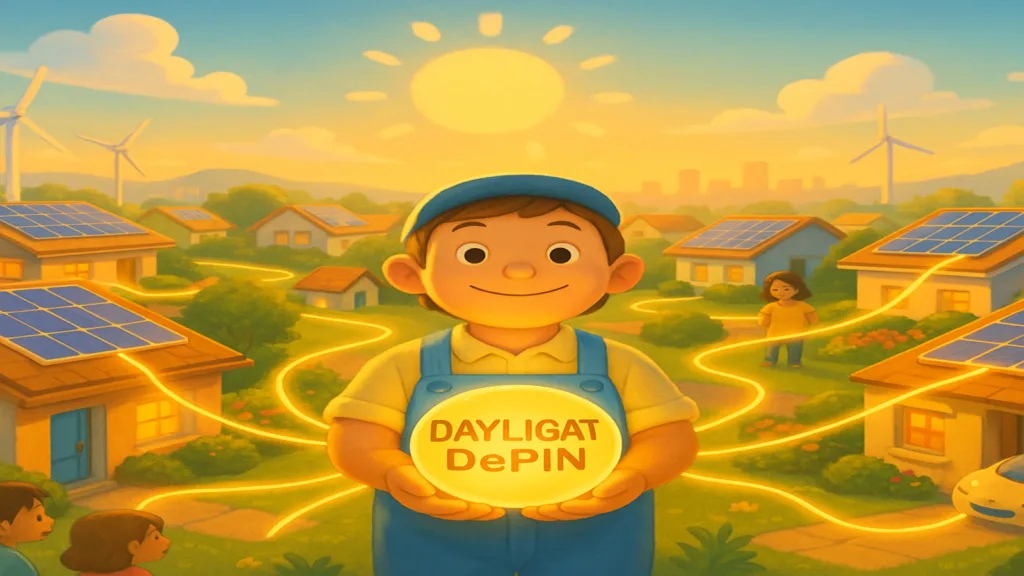
Instead of a few giant utilities controlling how and where electricity flows, Daylight’s model distributes control and reward to everyday people. Every roof, every battery, and every sunny backyard becomes a mini power plant.
This mirrors a broader global shift toward what is called DePIN (Decentralized Physical Infrastructure Networks), real-world infrastructure owned and operated collectively rather than by corporate monopolies.
A Simpler, fairer, cleaner grid
Imagine a neighborhood where your solar panels feed extra power to your friend’s electric car. Imagine everyone earning a small share from the sunshine above their heads. That is not science fiction. That is the Daylight DePIN vision.
By turning rooftops into revenue sources and energy into shared value, the project shows how technology can make sustainability practical, profitable, and personal. And the beauty of it is that you do not need to be a tech expert or a crypto investor to join. You just need a roof or even a subscription.
To wrap up
Daylight DePIN is about empowerment. It is about shifting energy ownership from corporations to communities and turning every watt into a shared opportunity.
While tech giants such as Amazon and Google scramble to secure nuclear and solar deals for their AI data centers, Daylight is giving power, quite literally, back to the people.
In the end, the future of energy might not come from massive power plants but from thousands of homes quietly shining in sync. If Daylight DePIN succeeds, that future will not just be renewable. It will be truly shared.