

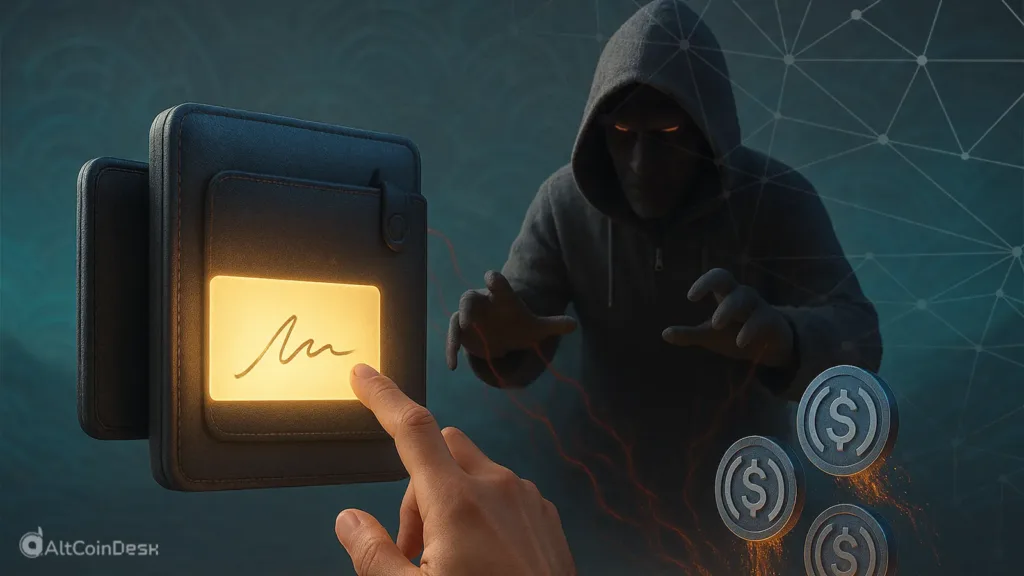

Another day, another crypto hack. But this one is different. It wasn’t a complex code exploit or a stolen password. A person just lost $440,000 by signing their name. This single act reveals everything you need to know about the rising, insidious threat of Ethereum permit phishing scams. They are the new frontier of crypto crime, and they prey on our very humanity.
Your signature is now a blank check
Here is what actually happened. The victim did not send a transaction. They did not enter their secret recovery phrase. They simply approved a signature request, likely thinking it was for a legitimate purpose like claiming a reward or verifying their wallet.
Instead, that signature was a malicious “permit.” In plain English, they unknowingly gave a hacker’s smart contract a permanent, unlimited permission slip to spend all their USDC stablecoin. The thief then cashed that slip, and the money vanished.
This exploit twists a legitimate Ethereum feature designed for convenience. The “permit” function allows users to approve token movements without an extra transaction, smoothing out the experience in popular finance apps. Scammers now weaponize this. They create fake, polished websites that generate a permit signature, granting them full access to your tokens. You see a harmless signature prompt; they get a blank check.
The new whaling season: Fewer targets, bigger hauls
This is not a random crime. It is a calculated hunt. Recent data from Scam Sniffer paints a stark picture of this shift:
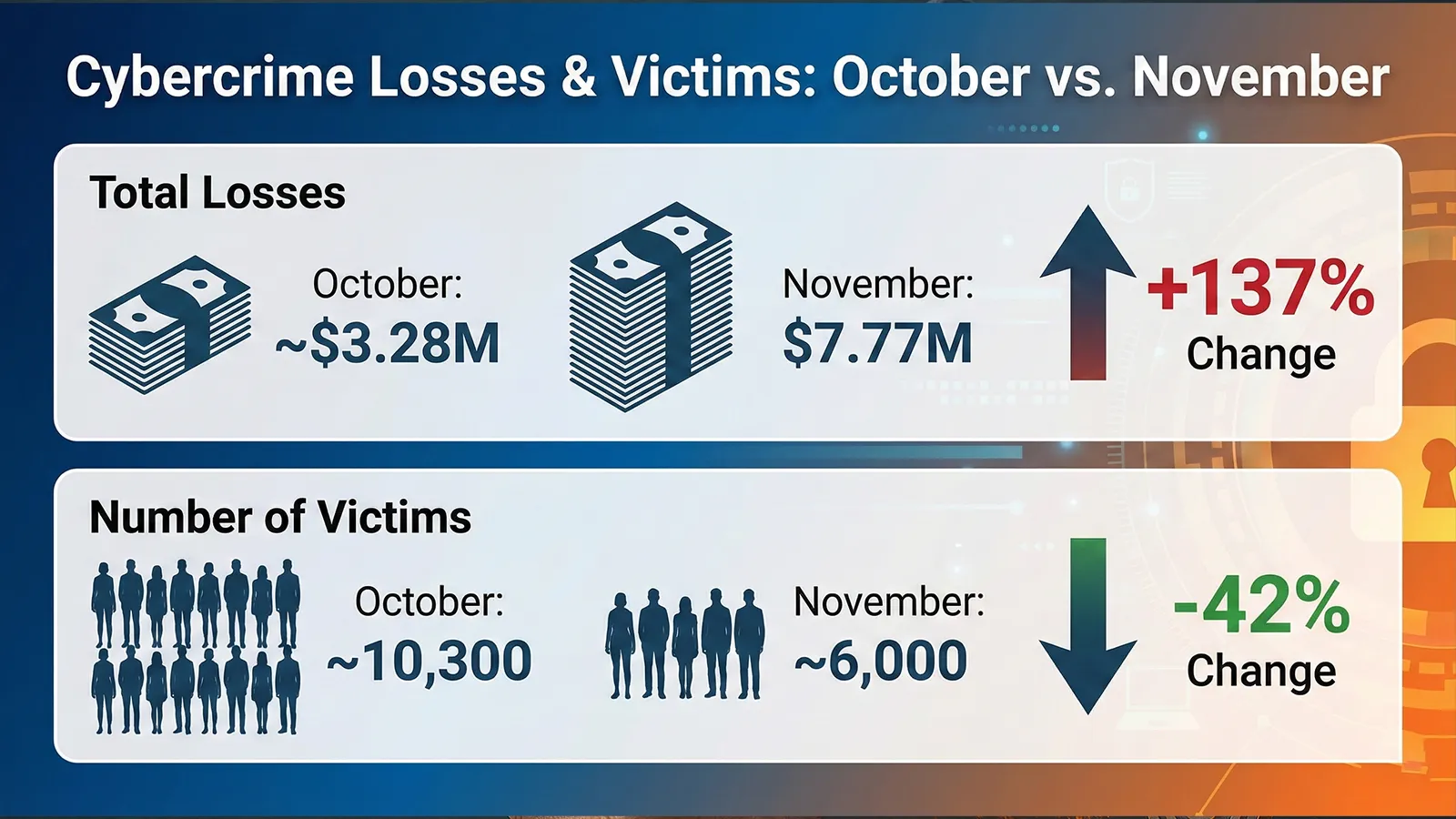
The story is clear. Scammers are moving upmarket. Why waste time on small fry when you can hunt whales? They are now targeting fewer, wealthier individuals with tailored, convincing traps. The $440,000 loss and another noted $1.22 million heist are not outliers. They are the trophies of this new, professionalized whaling season.
Why you cannot get your money back
If you fall for this, your money is gone. As security expert Martin Derka states, the chance of recovery is “basically zero.” There is no bank to call, no fraud department to intervene.
The thief uses automated tools to instantly scatter your funds across anonymous wallets and through mixing services. Law enforcement moves slowly, if at all. Prevention is the only meaningful defense against Ethereum permit phishing scams.

How to arm yourself: Your personal safety checklist
The core vulnerability is human, not technical. It is the urge to click, the fear of missing out, and the trust in a polished website. Your greatest weapon is skepticism and a new habit of slowing down.
- First, treat every signature request with extreme caution. Ask yourself, “What is this actually asking me to do?” If your wallet shows words like “permit,” “approve,” or “allow spending,” pause. You are likely granting financial access.
- Second, check the details you can understand. Does the website’s address look strange? Does the contract address it shows match the official one listed on the project’s true website? Never trust a link from a direct message or a Google ad.
- Third, never grant unlimited spending approvals. Use custom limits if the option exists. Regularly visit allowance management tools like Revoke Cash to clean out permissions you no longer need.
- Finally, internalize this rule: If an offer seems too good to be true, it is a scam. Urgent security warnings, secret airdrops, and exclusive rewards are the oldest tricks in the book, now supercharged with crypto’s irreversible finality.
The landscape of crypto risk has evolved. The blunt force attacks of yesterday have given way to the surgical, psychological strikes of today. Ethereum permit phishing scams represent this new reality. They remind us that in a world of decentralized code, the most critical security protocol still sits between our ears. Protect your wallet by first guarding your curiosity.