

Although perpetual decentralized exchanges (DEX) were all the rage in 2025, posting record numbers in daily trading volumes, they are still far from meaningfully replacing centralized exchanges like Binance, Coinbase, and others, BloFin Research says.
Perp DEXs still have a long way to go
In an X post published today by BloFin Research, perp DEXs are not likely to replace their centralized counterparts as preferred trading venues in the near term. The report comes after a spectacular year that saw perp DEXs like Hyperliquid and Aster experience unprecedented user adoption.
In their analysis BloFin Research noted that Hyperliquid spearheaded the perp DEX narrative in 2025, adding that the “airdrop-driven growth” catalyzed the perp DEX sector.
Weekly trading volumes on perp DEXs jumped from around $81 billion in 2024 to $314.7 in 2025. Similarly, monthly trading volumes breached the psychologically important $1 trillion figure multiple times throughout the year.
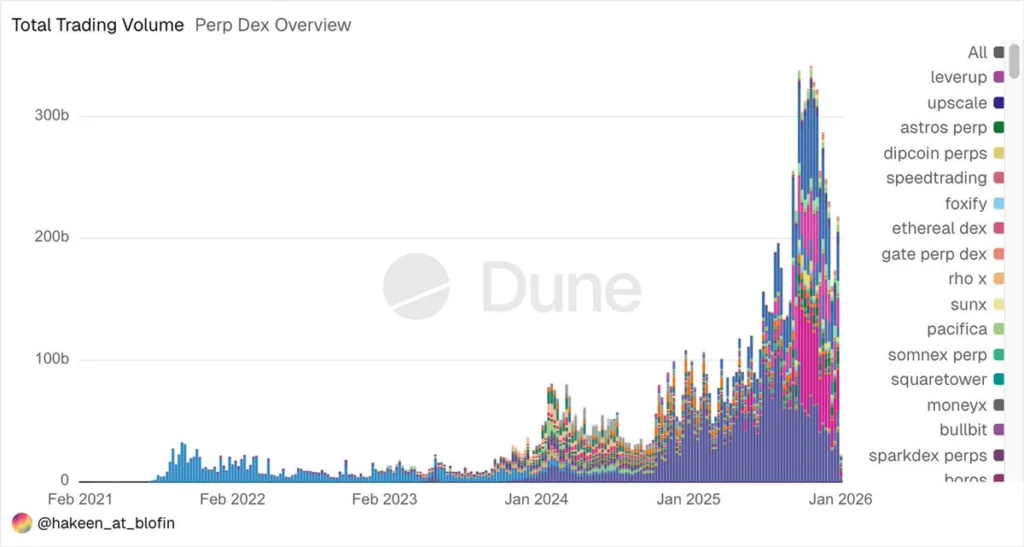
As a result, various institutions felt tempted to try their mettle in the rapidly expanding perp DEXs space. Leading centralized exchange Binance introduced Aster and StandX, while Bain Capital and Sequoia India collectively backed Variational.
In spite of the rapid growth, capital retention among perp DEXs remains low. Latest on-chain data shows the total value locked across the leading five perp DEXs to be close to $7.2 billion, while the aggregate open interest stands around $14 billion – a leverage ratio of 2x.
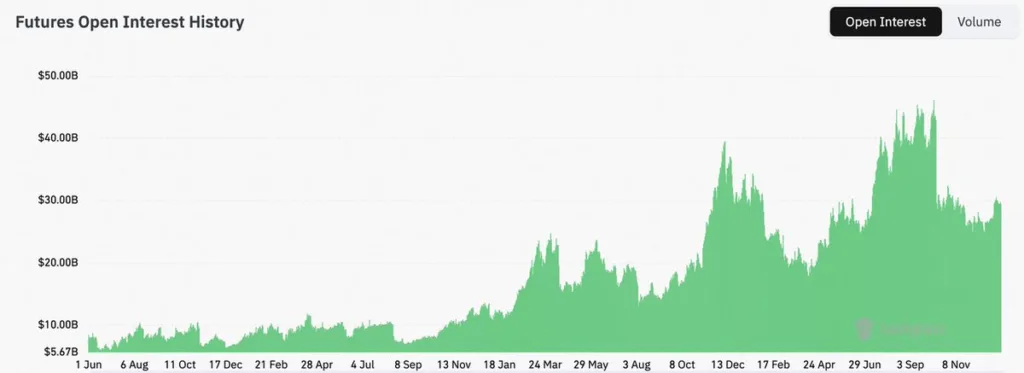
Centralized trading platform Binance currently holds assets under custody worth $200 billion, with open interest close to $30 billion. This confirms that there is still a significant gap between perp DEX and CEXs when it comes to the total value of assets they hold.
Why can’t perp DEXs replace CEXs?
According to BloFin Research, the high leverage ratio of 2x – with some DEXs reporting 3x ratios – pose a threat of auto-deleveraging risk (ADL) or going bankrupt for perp DEXs during times of extreme market volatility.
Such risks are heightened since perp DEXs TVL is a lot lower compared to their open interest. In contrast, perp CEXs have healthy leverage ratios, minimizing any risks of ADLs.
Another hurdle is the low-latency matching. While platforms like Hyperliquid have made significant strides in reducing latency, they are still unable to compete with the microsecond-level matching engines of CEXs.
Centralized exchanges still maintain a definitive edge in slippage control and order book depth when it comes to high-frequency trading and institutional-sized orders. There are also concerns that a lot of inflation in perp DEX trading volume may just be wash trading.