

Hyperliquid lost its monopoly in the perpetuals market after Lighter, Aster, edgeX and ApeX stole its market share in 2025. Although the trading volume tripled in 2025 with Hyperliquid losing its grip on the market, analysts caution that volumes could be deceiving, as incentives, market cycles, and wash trading could skyrocket volume while there is no real shift in trader activity.
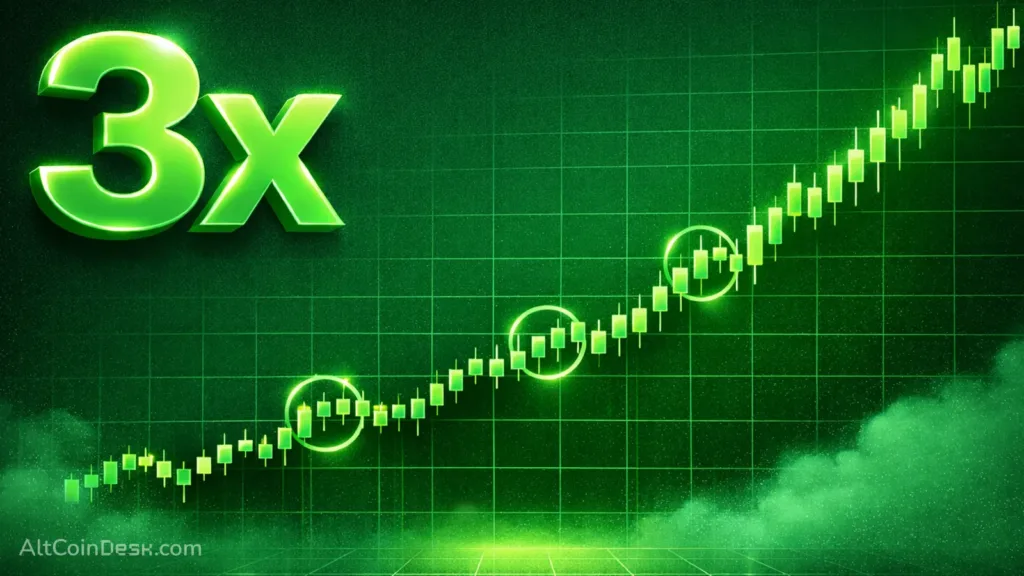
The crypto perpetuals market expanded from $251 billion in January to $836 billion by the end of the year, tripling its volume.
As the market expanded, Hyperliquid exchange, which was dominating with 68% of market volume in January, now commands just 21% of the total volume, as it lost its market share to its competitors such as Lighter, Aster, and others.
Perp volume needs to be read carefully, because incentives and market cycles can inflate activity without reflecting real shifts in trader behavior. Hyperliquid’s airdrop happened in November 2024, so the high volumes seen in January 2025 were after the airdrop, when it was already the largest decentralized perpetual exchange. In many ways, Hyperliquid was the first major success story in decentralized perps, and much of the competition that followed emerged after seeing that model work.
Lavneet Bansal, analyst, 0xThree consulting firm
He added that the volume can also be noisy and may contain wash trading activities. As such, he advised checking the fees and open interest, as they are ‘more reliable signals.’
“Hyperliquid still generates roughly $750 million in annualized fees with about $8.9 billion in open interest, compared to Aster’s ~$358 million in fees and $2.6 billion in open interest, and Lighter’s ~$86 million in fees and $1.4 billion in open interest. That points to a market becoming more competitive, not one where Hyperliquid is losing relevance.” stated Bansal.
When observing the shift in market dynamics, it indicates that the traders have a bigger appetite for risk, as more are participating in leverage positions to book profit on short-term price movement.
The growth in volume shows that the derivatives market is maturing, and the crypto price is being perp-led with funding rates, open interest, and liquidations playing a larger role in driving market swings.
When the market becomes more competitive, liquidity is distributed, and slippages, which often accompany concentrated liquidity, can be avoided.
Additionally, when an exchange dominates the market, there is a high likelihood that it will charge higher fees. However, a competitive market forces the exchange to reduce the fees.