
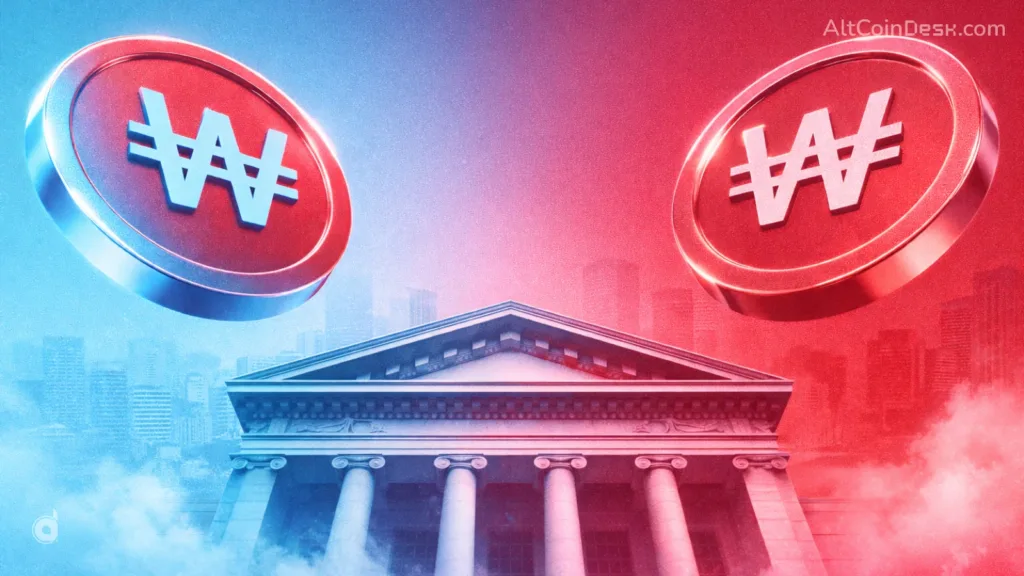

South Korea is making a shift in how digital currency works in the country. The Bank of Korea (BOK) has called on national regulators to restrict the issuance of won-denominated stablecoins exclusively to licensed commercial banks, as per a Bloomberg report. By having the power within the banking system, the BOK aims to prevent stablecoins from being used for money laundering or other illegal activities.
Why limit issuance to licensed banks?
It is all driven by financial stability. The BOK’s proposal is backed by the need to apply strict anti-money laundering (AML) and counter-terrorism financing (CTF) standards, which are already deeply embedded in commercial banks.
Concerns about monetary sovereignty are another factor pushing this proposal. With so many global stablecoins tied to the U.S. dollar, the BOK wants to make sure the Korean won stays relevant and regulated within its own borders. If won-denominated coins are handled by banks, the government can better manage how money flows in and out of the country.
Impact on the South Korean crypto market
Since South Korea remains one of the world’s most active cryptocurrency markets, the introduction of a bank-issued won stablecoin is expected to leave a major ripple effect across the industry. This move will likely increase institutional trust, as large-scale investors who have been wary of crypto-native stablecoins may move toward bank-regulated won tokens. Plus, foreign issuers may face new requirements to set up local branches or maintain won-denominated reserves if they wish to continue serving South Korean retail users effectively.
What’s next for the Digital Asset Basic Act?
The BOK’s move is at the core of the coming Digital Asset Basic Act. If passed, the law will officially categorize stablecoins and create a dedicated committee to oversee market crises, creating a legal framework for digital assets. This move signals a future where the South Korean crypto ecosystem is more controlled and transparent, reducing the potential for fraud and scams while integrating digital assets into the mainstream economy.
For global exchanges, just another layer of complexity. recently as unregistered platforms were blocked from the Play Store, any exchange trying to offer won-based trading pairs will likely need to prove they are using bank-approved tokens. This push for regulation is clearly designed to turn the “Wild West” of crypto into a more stable, bank-led environment.