


America’s digital asset sector is booming, powered not by hype, but by something far more powerful: finally, clear rules.
For years, the story of U.S. blockchain governance was a tale of uncertainty. Projects operated in a gray area, and innovation often sailed for clearer waters abroad. That chapter is decisively closing.
A transformative shift in policy, marked by new laws and a cooperative spirit between once-warring regulators, is forging a new era of streamlined operations and compliance. This is not a future promise; it is happening right now, and the market is responding with billions of dollars in growth.
The GENIUS Act: Taming the stablecoin beast
The first major crack in the dam of regulatory ambiguity was the GENIUS Act, signed into law in July 2025. This landmark legislation, America’s first comprehensive stablecoin law, brings crucial guardrails to a foundational part of the crypto ecosystem.
Think of stablecoins as digital dollars designed for the internet. The GENIUS Act ensures they are built on a bedrock of trust. It mandates that every dollar-pegged stablecoin must be backed by an actual dollar or an equivalent safe asset held in reserve.
This simple, powerful rule protects consumers and prevents the kind of risky behavior that has toppled other crypto projects. By limiting issuers to regulated banks and approved financial institutions, the law integrates these digital assets into the existing financial safety net, giving both everyday users and large institutions the confidence to participate.
The CLARITY Act: Drawing lines in the digital sand
If the GENIUS Act fixed one piece of the puzzle, the CLARITY Act aims to complete the picture. Currently moving through Congress, this bill tackles the long-standing, confusing question: Is a digital asset a security or a commodity?
The CLARITY Act proposes a clear, common-sense answer. It creates a three-tiered system for classifying digital assets, finally moving beyond decades-old laws never designed for this technology. Its most innovative feature addresses the life cycle of a token.
A digital asset sold to raise capital is treated as a security initially, but once it is decentralized and trades on the open market, it can transition to being regulated as a digital commodity. This nuanced approach acknowledges that a token is not static, and U.S. blockchain governance must be equally adaptable.
The blockchain governance: Regulatory agencies join the dance
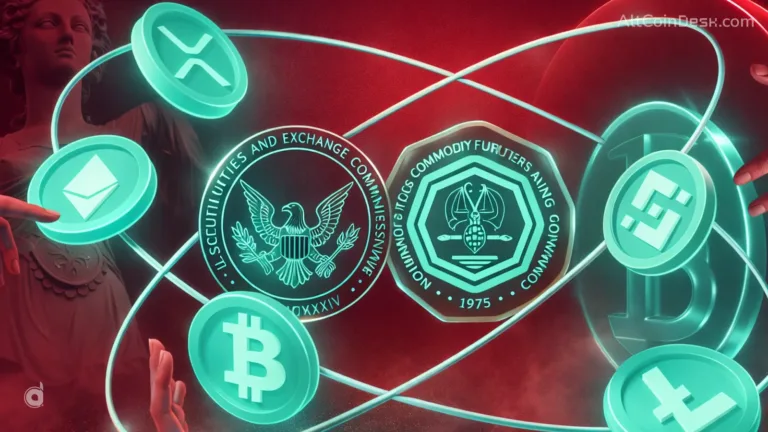
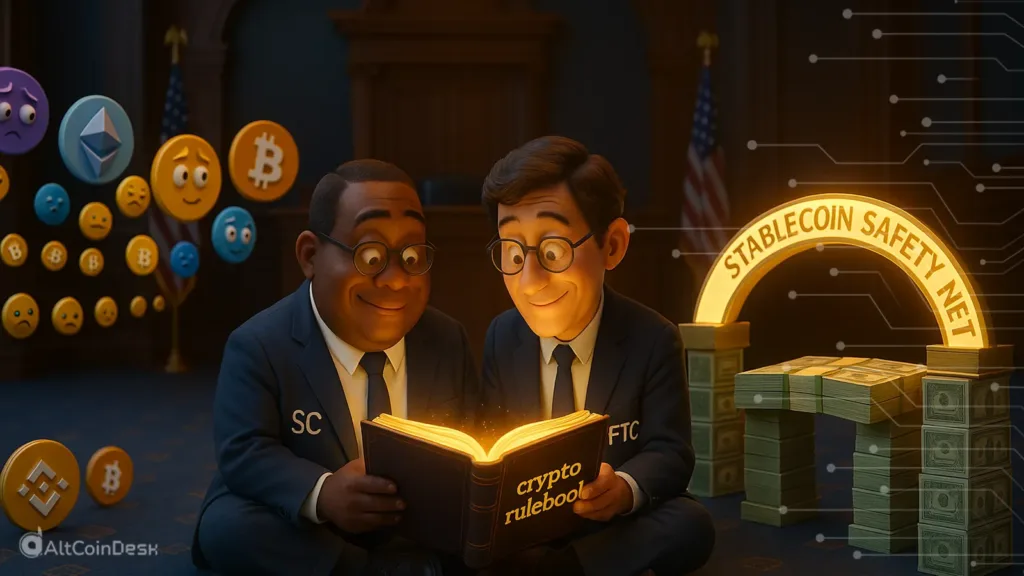
This legislative momentum is mirrored by a dramatic change in tone from key federal watchdogs. The Securities and Exchange Commission (SEC) and the Commodity Futures Trading Commission (CFTC), known for their previous turf battles, are now harmonizing their efforts.
In a historic joint statement, the agencies announced a “new day” and pledged to work together to “provide markets the clarity they deserve.” The SEC has also launched “Project Crypto,” a dedicated initiative to revamp securities laws for the digital age and fast-track the approval of new crypto investment products. This shift from confrontation to coordination is arguably as significant as the new laws themselves, signaling a sustained commitment to thoughtful U.S. blockchain governance.
The market votes with its wallet
Talk is cheap; on-chain data is not. The impact of this regulatory clarity is already measurable in the market. Analysis from TRM Labs shows that U.S. crypto transaction volume surged by approximately 50% in the first half of 2025 compared to the same period in 2024, cementing its position as the world’s largest crypto market in absolute terms.
This growth is part of a sustained, multi-year trend that has been supercharged by the new political and regulatory environment. Furthermore, stablecoins, now backed by the certainty of the GENIUS Act, have reached a record $4 trillion in annual transaction volume, making up 30% of all on-chain crypto activity. This is a powerful vote of confidence from the global market.
The bottom line
The United States is not just participating in the digital asset revolution; it is now actively shaping it. The combination of the GENIUS Act, the potential of the CLARITY Act, and a new spirit of collaboration among regulators is building a mature, compliant, and innovative ecosystem.
For the first time in a long time, builders and investors can operate with a clear view of the rules of the road. This robust framework for U.S. blockchain governance is proving that certainty, not deregulation, is the true catalyst for growth. The quiet revolution is here, and it is just getting