


A quiet announcement in Taipei might have just started a countdown on a seventy-year-old financial rule. Taiwan’s top financial regulator confirmed plans to launch the island’s first fully regulated, New Taiwan Dollar (NTD)-pegged stablecoin by the second half of 2026.
This isn’t just another crypto project. It is a direct challenge to one of Asia’s most rigid monetary defenses: the strict ban on the offshore circulation of the New Taiwan Dollar. For seven decades, this rule has been a bedrock of financial policy. A Taiwan regulated stablecoin could, perhaps accidentally, let the currency flow beyond its walls in a single software update.
The great wall of currency
Since the mid-20th century, Taiwan has maintained stringent control over its currency. The New Taiwan Dollar is meant for domestic use; moving it abroad in size has been a complex, controlled process. This firewall was built to ensure monetary stability and sovereignty. Yet, the world has digitized.
Today, nearly 5% of Taiwanese importers and exporters are already using USD-denominated stablecoins like USDT or USDC for international trade. They are bypassing the old gates because stablecoins are faster and cheaper, settling transactions in seconds for pennies instead of taking days and losing significant value to fees. The firewall is already being tested, not by banks, but by lines of code.
Taiwan regulated stablecoin: Trojan horse pegged to the dollar
Here is where the plot thickens. While Taiwan is building a domestic NTD stablecoin, the immediate, palpable demand is for the U.S. dollar kind. This presents a profound dilemma. If a USD-pegged Taiwan regulated stablecoin is issued and widely adopted locally, it creates a powerful channel for dollarization. People and businesses could effortlessly hold and transact in a digital form of USD, sidestepping the NTD entirely for cross-border trade and savings.
This seems like a global risk: USD stablecoins risk “accelerating unintended dollarization” in emerging markets, eroding local monetary sovereignty. In Taiwan’s context, a regulated, local-issuer version would make this digital dollar stream safer and more legitimate, potentially drawing more capital into its currency. It would not attack the NTD directly; it would simply make it less relevant for anyone looking beyond the island’s shores. The central bank, recognizing this seismic shift, is already demanding a key supervisory role in licensing these new digital assets.
Remittance rails and supply chain roads
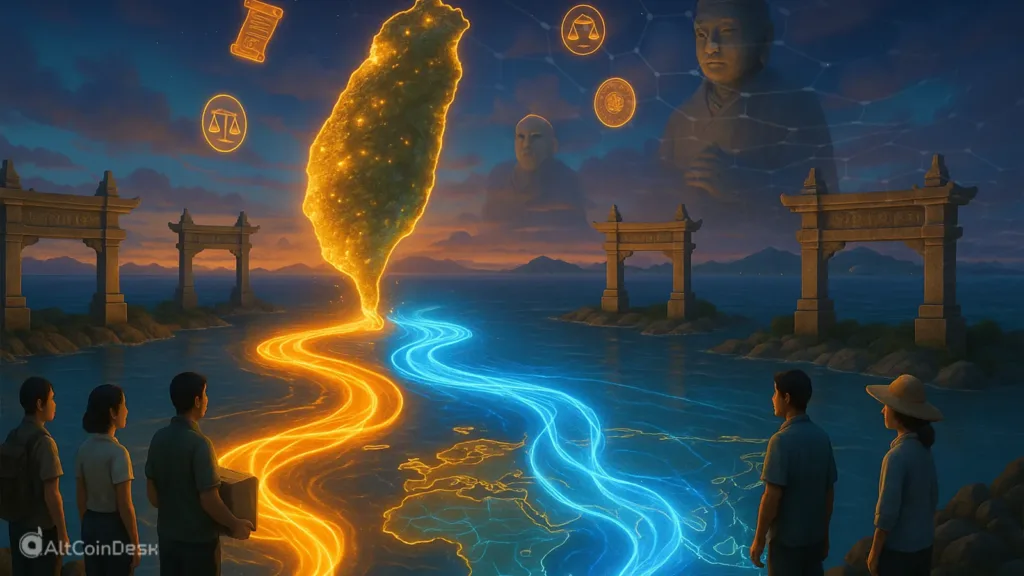
The driving force for this change isn’t just speculation; it’s practical necessity. Taiwan is home to over 800,000 Southeast Asian migrant workers who send money home. For them, a stablecoin, whether NTD or USD-pegged, could cut the cost and time of remittances dramatically, putting more of their hard-earned money into their families’ hands.
Furthermore, as a cornerstone of the global semiconductor supply chain, Taiwan’s businesses crave efficiency. Visionaries like Jaclyn Tsai of the Taiwan FinTech Association argue that integrating blockchain and stablecoins into a “Payment Flow OS” is essential for the next decade of supply chain competitiveness. The country can either build the infrastructure for this new era or be bypassed by it.
Control or irrelevance?
So, does this Taiwan regulated stablecoin spell the end of the old rule? Well, not necessarily, but it forces a dramatic evolution. The government isn’t losing control; it’s scrambling to assert a new kind of control over a digital financial landscape that already exists. The real question is what it chooses to control. Will it focus solely on a digital NTD for domestic use, or will it engage with the reality of global digital dollar flows?
The regulated stablecoin is a double-edged sword. It offers a chance to modernize finance, protect citizens with clear rules, and sharpen Taiwan’s economic edge. Yet, it also opens a door in the financial firewall that cannot be easily closed. The seventy-year rule stood guard against the physical movement of money. It now meets its match in a borderless, digital river of value. Taiwan’s task is not to stop the river but to skillfully navigate its currents.