

When Ripple acquires Treasury, it’s not just buying software but rewriting how money moves in the modern world.
If you blinked, you might have missed one of the most important financial tech stories of the year. While everyone was arguing about memecoins and ETFs, Ripple quietly made a billion-dollar move that could change how companies handle money, both digital and traditional.
Today, Ripple confirmed it acquired GTreasury, a respected corporate treasury management firm, in a deal worth $1 billion. This marks Ripple’s third major acquisition in 2025, following its earlier purchases of crypto-friendly prime brokerage Hidden Road and stablecoin platform Rail.
Ripple acquires treasury: Bold move?
GTreasury may not sound exciting, but it’s a quiet powerhouse. Its software helps large companies manage cash flow, forecast liquidity, and track every dollar across multiple banks and currencies. GTreasury gives CFOs a dashboard for their company’s entire financial life, and Ripple just plugged that dashboard into blockchain rails.
Ripple CEO Brad Garlinghouse put it simply in a statement:
For too long, money has been stuck in slow, outdated payment systems and infrastructure, causing unnecessary delays, high costs, and roadblocks to entering new markets, problems that blockchain technologies are ideally suited to solve.
His vision is clear: combine Ripple’s fast blockchain-based payments with GTreasury’s corporate tools to make moving, tracking, and managing money as easy as sending an email.
This acquisition gives Ripple access to a global client base already managing billions of dollars in treasury operations, from Fortune 500 firms to major banks. Now, they’ll be able to integrate crypto, stablecoins, and tokenized assets directly into their workflows.
The DAT boom
This deal didn’t happen in a vacuum. It comes amid a Digital Asset Treasury (DAT) boom, a growing trend where major corporations are holding and managing crypto assets like they do traditional cash.
Fueled by President Trump’s pro-crypto policies and the GENIUS Act (a new U.S. stablecoin law passed this summer), companies are finally warming up to blockchain-based liquidity.
Leaders like Strategy, the Bitcoin-heavy investment firm now sitting on nearly $70 billion in BTC, have paved the way. As more corporations enter the space, Ripple acquires treasury capabilities that allow these firms to manage both fiat and digital money seamlessly and securely.
Why it matters
Let’s be honest, most people outside finance don’t care about treasury management software. It’s not sexy. But that’s exactly what makes this move so powerful. It’s boring innovation, the kind that underpins trillion-dollar economies.
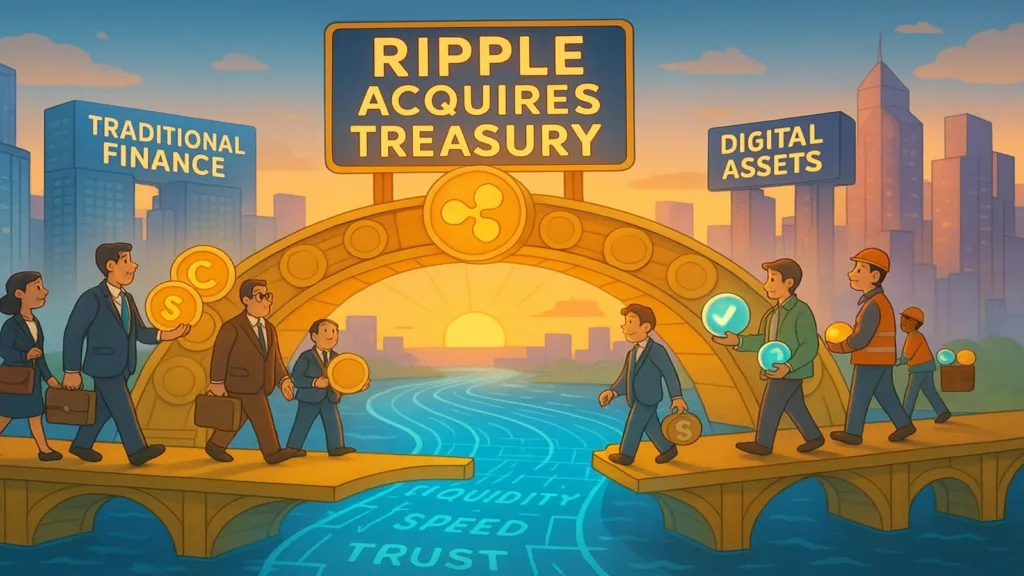
When Ripple acquires treasury, it’s not buying headlines; it’s buying infrastructure. The company is positioning itself as the bridge between traditional finance (the CFOs, the accountants, and the risk teams) and the digital asset economy.
This deal could:
- Speed up how global corporations move funds between subsidiaries.
- Lower transaction costs for cross-border payments.
- Unlock “trapped capital” sitting idle in outdated systems.
- Give U.S. companies a competitive edge in the coming digital economy.
In short, this isn’t about crypto hype; it’s about making global money smarter.
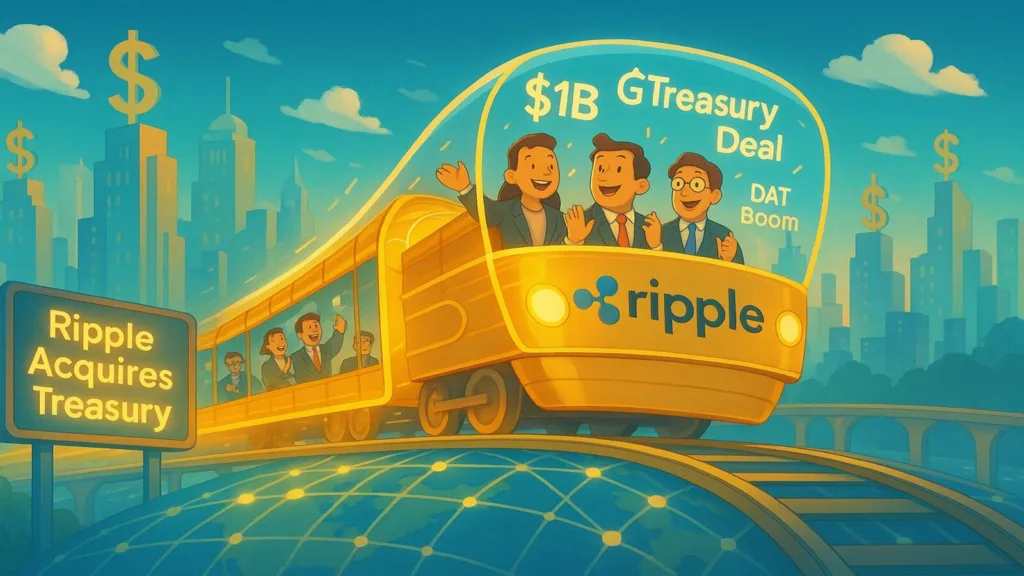
Ripple’s $1 billion message
For Ripple, 2025 has been a year of quiet domination. After facing years of regulatory battles, the company has shifted gears, moving from defense to expansion. By acquiring core financial infrastructure like GTreasury, it’s no longer just a “crypto company.” It’s becoming a digital finance backbone.
In just one year:
- Hidden Road gave Ripple institutional trading access.
- Rail added stablecoin capabilities.
- And now, with GTreasury, Ripple owns the dashboard controlling corporate liquidity itself.
It’s a trifecta that connects trading, payments, and treasury into one ecosystem, a move few saw coming, but many will soon feel.
The takeaway
Ripple acquires Treasury, and it’s not just adding software to its balance sheet. It’s quietly laying the tracks for how businesses from startups to conglomerates will move money in the next decade.
While others chase the next shiny token, Ripple is building the rails that money, crypto, and commerce will run on. And if history has taught us anything, it’s this: The ones who control the rails always end up running the train.