


Every so often, a piece of news makes you pause and take notice. This week, the news is the expansion of the Google AI payment protocol. In a significant move, Google has joined forces with Coinbase, the Ethereum Foundation, and the popular wallet MetaMask to advance its system for machines, called the Agent Payments Protocol.
In simple terms, this is about building a way for artificial intelligence programs to hold and spend money on your behalf. Insane, you must think? Let’s dive in!
Why this is a big deal
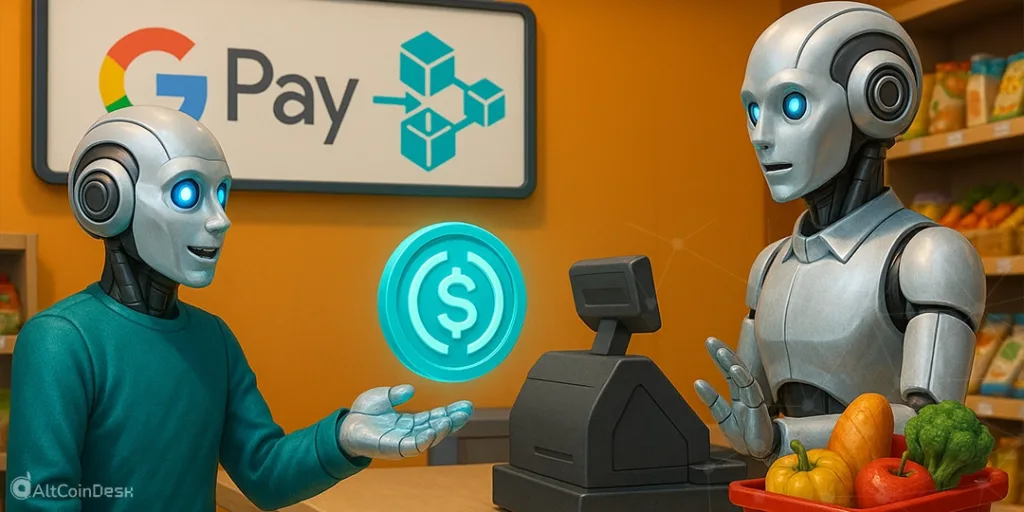
This project is far more than an experiment. Google is building a fundamental backbone for a new kind of economy, one where machines transact with each other directly using digital currency. Imagine a world without payment delays, intermediary banks, or waiting on hold for customer service to resolve a transaction.
This new AI payment system would equip software programs with secure digital wallets filled with stablecoins (digital dollars), allowing them to make instant and automatic purchases, just like checking your email.
This vision is already gaining massive traction. Over 60 global partners, including financial giants like Mastercard, PayPal, and American Express, are involved. When these companies invest their attention, it signals a real shift in how money will move in the future.
Introducing mandates: The rules of the game
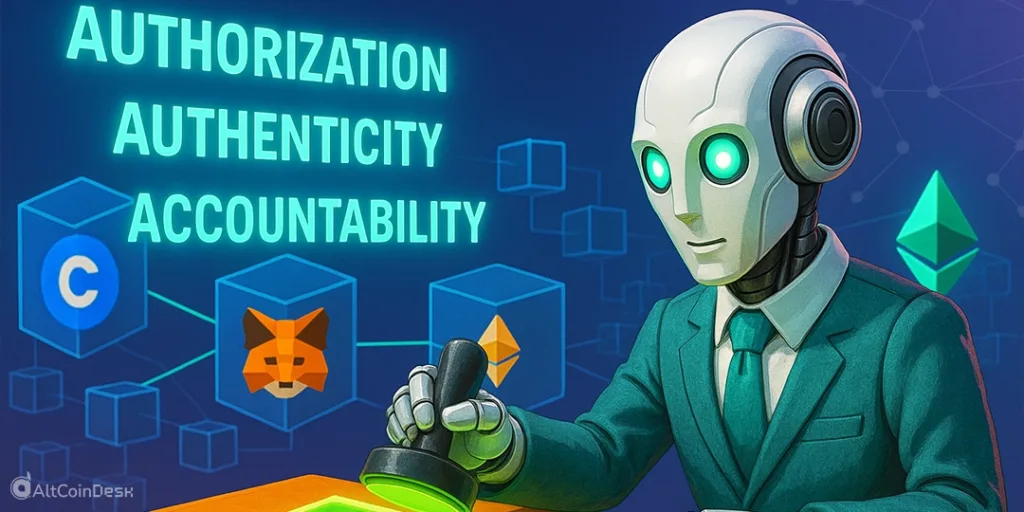
This isn’t about giving bots free rein with a credit card. The protocol introduces a crucial feature called “Mandates.” Think of these as digital contracts that set strict rules for any AI payment, ensuring three critical things:
- Permission: The AI has clear authorization to act.
- Identity: The system can verify that the AI is exactly who it claims to be.
- Accountability: A clear line of responsibility exists if something goes wrong.
Mandates act as a verified receipt and a set of instructions baked directly into the transaction. This creates a system of checks and balances for the digital age.
Why major crypto players are involved
Leaders in the crypto space are partnering with Google on this AI payment protocol for a simple reason: they see its potential to become essential everyday infrastructure.
- Coinbase provides a trusted platform for converting traditional money into digital currency.
- MetaMask offers a digital wallet that millions of people already use and trust.
- The Ethereum Foundation contributes the underlying technology that makes smart, enforceable contracts possible.
Together, they help demonstrate that digital currency is more than an investment; it’s a practical tool for powering the next generation of automation.

The larger impact of the Google AI payment protocol
For years, people have wondered if robots would take our jobs. Now, we’re entering an era where AI tools might also get paid for their work.
Picture an AI travel agent that finds the perfect flight, reserves your hotel, and pays for it all instantly. Or envision a logistics program that automatically orders new supplies from a manufacturer overseas, negotiating the price and handling the payment seamlessly.
This is the ultimate promise of the Google AI payment protocol: a faster, more automated world where helpful programs don’t get stuck waiting for a bank’s business hours or a fraud alert.
Important considerations
Naturally, this new frontier comes with its own set of questions that need answers.
- Who is responsible when using the new Google AI payment protocol? If an AI makes a mistake and sends money to the wrong place, who is liable—the user, the developer, or the company?
- Regulatory Challenges. Governments are still figuring out how to regulate digital currencies. Adding autonomous AI into the equation creates new complexities.
- New Avenues for Scams. Bad actors will inevitably look for ways to trick these systems, potentially automating scams at a terrifying speed.
The built-in Mandates are designed to mitigate these risks, but no system is ever perfect. Constant vigilance will be required.
Also read: Top 5 crypto predictions on X: Stock-to-flow, Ethereum longs and more
Key takeaway
The development of the Google AI payment protocol with its powerful partners is a pivotal moment. It signals a move towards building the plumbing for a new machine-to-machine economy that operates 24/7.
Some may see this as mere hype, while others will view it as a leap into a future where finance is invisible, instantaneous, and infinitely more efficient. The reality likely sits in the middle: this is a bold, complex, and genuinely ambitious step forward. Google is helping build a world where AI can pay for things, and that is a development that everyone should understand.