
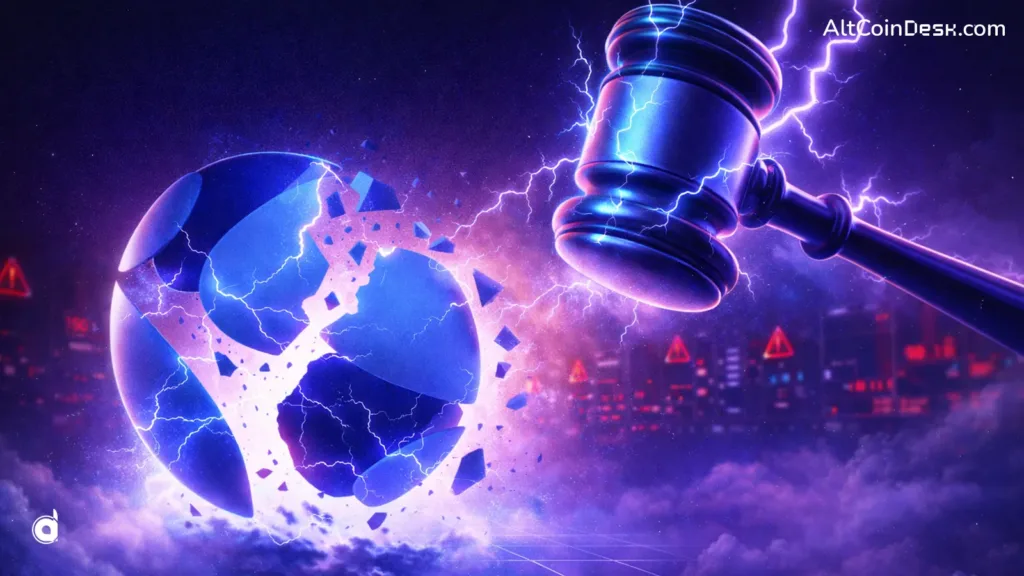

The Terraform Labs lawsuit has moved from bankruptcy cleanup to a potential landmark legal battle. According to reporting by The Wall Street Journal, Terraform’s court-appointed plan administrator has filed a lawsuit in Manhattan federal court accusing Jane Street and certain employees of using material nonpublic information before the Terra Luna collapse in May 2022.
If proven, the Terraform Labs lawsuit could test whether traditional insider trading rules apply to decentralized finance. It also plays directly into ongoing Terra Luna recovery efforts for creditors who lost billions when the algorithmic stablecoin TerraUSD, known as UST, collapsed.
What the complaint alleges
The Terraform Labs lawsuit centers on a narrow window of time, just minutes, that the administrator says made all the difference.
On May 7, 2022, Terraform Labs withdrew $150 million UST (its algorithmic stablecoin) from Curve Finance’s 3pool, a major liquidity pool. According to the filing, within ten minutes of that move, a wallet that “some analysts have linked to Jane Street” withdrew approximately $85 million UST from the same pool. The lawsuit alleges that the timing was not coincidental and may constitute insider trading.
Todd R. Snyder, the plan administrator overseeing Terraform’s bankruptcy wind-down, alleges that Jane Street obtained material non-public information about Terraform’s internal liquidity decisions through a private communication channel. The complaint describes a former Terraform intern, Bryce Pratt, who later worked at Jane Street, and a group chat reportedly called “Bryce’s Secret” that allegedly routed internal Terraform context back to the trading firm. The lawsuit names as defendants Jane Street itself, co-founder Robert Granieri, and employees Bryce Pratt and Michael Huang.
Jane Street’s response
Jane Street is fighting back hard. A spokesperson called the lawsuit “desperate” and “a transparent attempt to extract money” in a statement reported by Bloomberg and Yahoo Finance. The firm’s full response frames the Terraform Labs lawsuit as opportunistic blame-shifting:
“It is well-established that the losses suffered by Terra and Luna holders were the result of a multi-billion dollar fraud perpetrated by the management of Terraform Labs.” That defense points directly at Do Kwon, Terraform’s co-founder, who pleaded guilty to fraud and was sentenced in December 2025 to 15 years in prison.

The bigger picture: A recovery strategy
This lawsuit is one piece of a much larger puzzle. Snyder, the plan administrator, is pursuing what looks like a coordinated recovery strategy against major market players. In December 2025, he filed a separate $4 billion lawsuit against Jump Trading, alleging that the firm also manipulated the Terra ecosystem and profited illegally from its collapse.
The Jump complaint alleges secret “gentlemen’s agreements” that allowed the trading firm to buy Luna tokens at steep discounts, as low as $0.40 when the market price exceeded $110, in exchange for propping up UST’s dollar peg. Jump has denied the allegations.
Together, the lawsuits indicate that the estate is pursuing claims against major liquidity providers. It’s targeting the market structure players who, the administrator alleges, exploited their privileged positions while ordinary investors lost everything.
The thing about the timing
The May 2022 sequence is critical to understanding the Terraform Labs lawsuit. When Terraform pulled $150 million from Curve’s 3pool, it was part of a planned transition to a “4pool” structure. But in crypto, large liquidity movements can signal weakness. The alleged follow-on withdrawal by Jane Street, if proven, would mean the firm moved ahead of public knowledge, protecting its own position while potentially accelerating the death spiral.
Andrew Rossow, a public affairs attorney quoted in Yahoo Finance’s coverage, put it this way: “This lawsuit seems to argue that the most important moves do happen in private chats before hitting the blockchain.”
What to expect
The Terraform Labs lawsuit against Jane Street faces several immediate hurdles.
- First, motions to dismiss. Jane Street will almost certainly challenge the legal sufficiency of the complaint, arguing that whatever information it had didn’t constitute “material non-public information” under securities laws.
- Second, the redactions. The complaint filed in SDNY is heavily redacted, meaning key evidence isn’t yet public. Discovery battles will determine what gets unsealed.
- Third, wallet attribution. The estate must prove that the wallet making the $85 million withdrawal actually belonged to Jane Street—with evidence strong enough for court, not just “analysts link” assertions.
- Fourth, coordination evidence. The lawsuit will rise or fall on whether Snyder can document actual foreknowledge: messages, calls, or communications showing Jane Street knew about Terraform’s liquidity plans before they were public.
What creditors could recover
For Terraform’s creditors, the stakes are simple: money. The wind-down trust was created to maximize recoveries for investors and creditors who lost billions in the collapse. If Snyder succeeds against Jane Street and Jump Trading, the recoveries could run into the billions, money that would flow back to harmed parties through the bankruptcy claims process.
The official claims process is managed through Kroll, the restructuring administrator, and the SEC maintains an investor distribution page with updates for harmed investors.
The bigger question
Beyond the legal arguments, the Terraform Labs lawsuit forces a harder question: Was the Terra collapse a bank run or a coordinated liquidity exit? The lawsuit alleges that informed players with insider knowledge may have accelerated the collapse, extracting their own money before the market understood what was happening.
Jane Street argues that Terra was fundamentally fraudulent and collapsed under its own weight. The court will ultimately determine which position the evidence supports.
Snyder said in the complaint, “Jane Street abused market relationships to rig the market in its favor during one of the most consequential events in crypto history. On behalf of injured parties, we will pursue all avenues supported by the facts and the law.”