
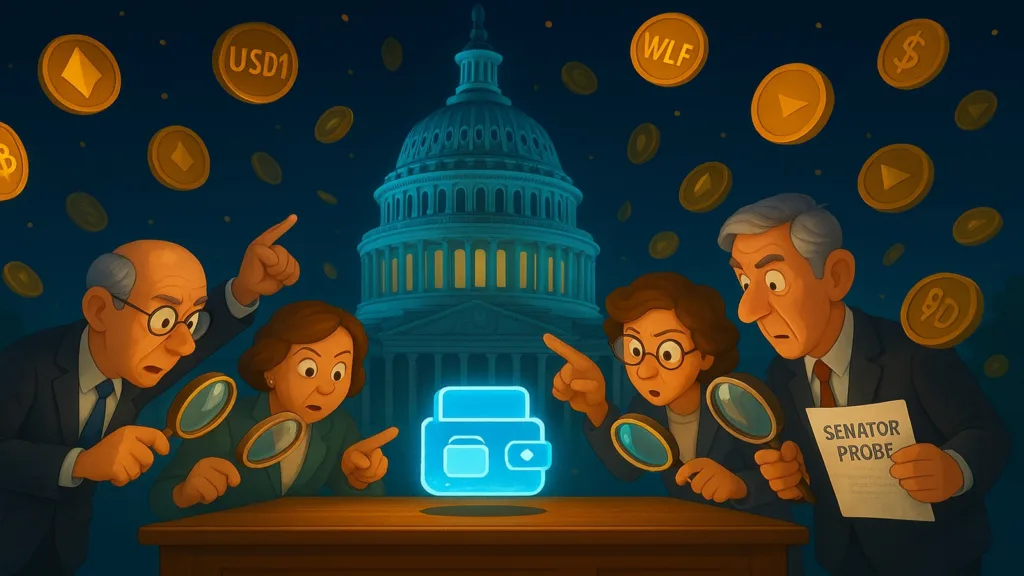

If you thought crypto scandals were just about rug pulls and meme coins, think again. Washington just got its own blockchain-sized plot twist as the senator probes, demanding answers from Steve Witkoff, President Trump’s special envoy to the Middle East, over his ties to a crypto venture linked to the Trump family.
At the heart of the story lies World Liberty Financial, a flashy digital-asset company co-founded in 2024 by Trump’s sons, Donald Jr., Eric, and Barron, along with Zach Witkoff, Steve’s son. While Witkoff himself was supposed to have stepped away, his latest ethics report suggests otherwise.
The $2 billion connection
According to senators leading the senator probe, Witkoff’s disclosure shows ongoing crypto holdings in World Liberty Financial and several related firms. What raised eyebrows wasn’t just the ownership; it was the timing. While Witkoff was representing the U.S. in Middle Eastern talks, World Liberty Financial reportedly secured a $2 billion investment from a United Arab Emirates–linked venture firm.
Around the same time, the White House approved a major tech partnership with the UAE to build an artificial intelligence hub. For lawmakers, that coincidence was too big to ignore. The concern? That diplomatic influence and personal profit might be crossing paths in dangerous territory.
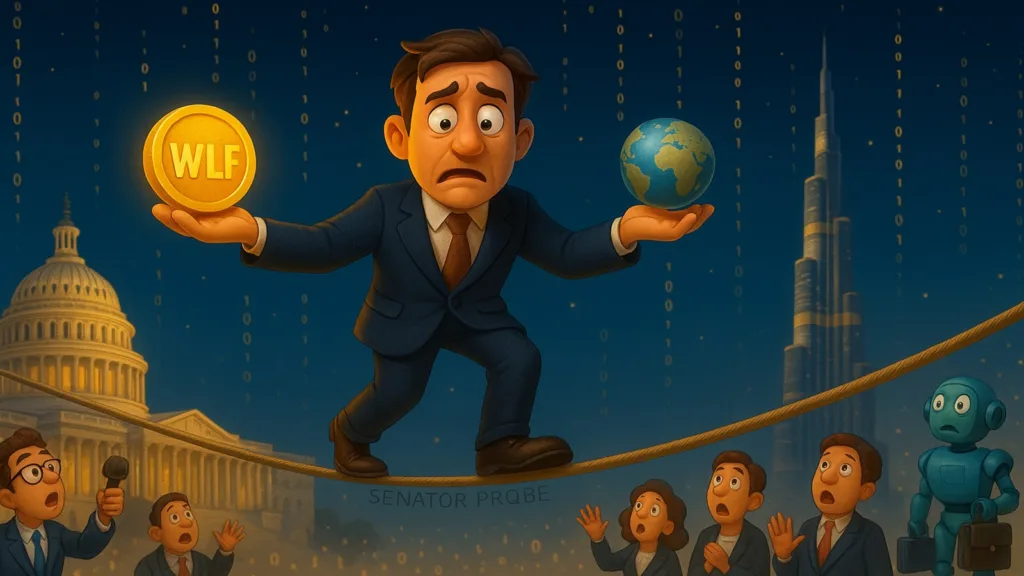
“Divestment” or diversion?
The senators, led by Adam Schiff (D-CA) and joined by seven colleagues, want to know why Witkoff sold off a $120 million real estate stake but kept his crypto holdings. They also want to see whether the White House granted him any special ethics waivers.
Their letter, described by insiders as “firm but formal,” stopped short of alleging wrongdoing but emphasized the importance of transparency. “Public trust depends on clear lines between personal gain and public duty,” it read.
Witkoff’s team has maintained that he has been divesting and no longer plays an operational role in World Liberty Financial. Still, the optics are messy, and in Washington, optics can move faster than blockchains.
Senator probe: The broader ripple
This senator probe lands at a time when crypto is already in the political spotlight. Coinbase CEO Brian Armstrong is in D.C. this week lobbying for clearer market structure rules. The same day the letter dropped, Armstrong told reporters that bipartisan momentum for crypto legislation was “at an all-time high.”
Yet the Witkoff case shows how difficult that road could be. Lawmakers pushing for regulation are also realizing that crypto is no longer confined to digital wallets; it’s now embedded in foreign policy, tech deals, and campaign finances. If anything, the senator probe is less about one man’s wallet and more about what happens when digital assets become diplomatic assets.
Ethics in the age of tokens
For decades, ethics reviews meant stock portfolios and real estate trusts. Now, senators are asking about stablecoins, LLCs, and wallet addresses. It’s a sign of the times and a reminder that crypto’s next frontier isn’t just technological; it’s political.
The next steps? Witkoff has until the end of October to answer the senators’ questions and provide full documentation of his holdings. Until then, Washington insiders are treating the story like a slow-moving market: volatile, unpredictable, and impossible to ignore.
The final word
Whether this senator probe reveals a genuine conflict or just political theater, one thing is clear: crypto has officially entered the Oval Office era. The line between policy and profit has never been thinner, and for an industry fighting for legitimacy, this is one headline it didn’t need. In the end, the question isn’t just about who holds the coins; it’s about who holds the power when money goes digital.