
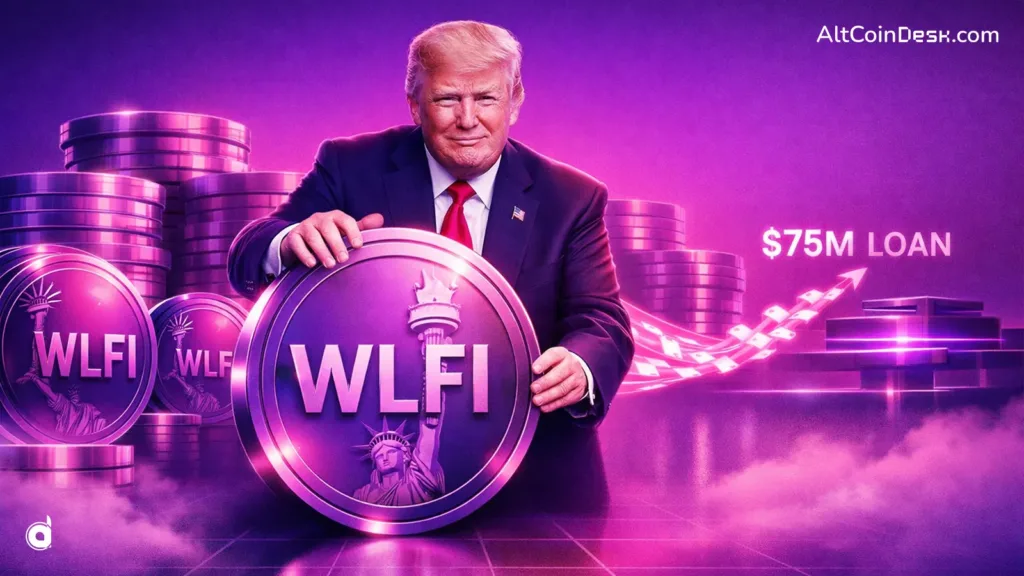

The Trump-family linked crypto firm, World Liberty Financial is facing criticism over the controversial borrowing strategy on the Dolomite Lending platform as they pledged 5 billion WLFI tokens to borrow $75 million in stablecoins.
Lending and borrowing by WLFI
The firm had executed a series of transactions on the DeFi platform called Dolomite, raising major concerns about whether WLFI executives may be receiving privileges due to insider access or if the circular token economics gave them the position to borrow against themselves, or borrow heavily from a shared pool.
Largely, the Defi platform relies on the user deposits to be able to lend. When a single large borrower like WLFI liquidates, the loss impacts the regular users, calling it a concentrated risk. This raises a larger concern.
Timeline of events that raised concerns
According to reports, the sequence of borrowing began on February 8, when WLFI’s treasury deposited 14 million USD1, USD-pegged stablecoin, issued by WLF into Dolomite. They used that as collateral and borrowed 11.4 million USDC against it.
Around $11.45 million USDC was sent to Coinbase Prime, according to blockchain analytics, Arkham. However, two days later, the treasury sent another 12.5 million USD1 to a separate Coinbase Prime deposit address.
The platform is primarily used to convert crypto into fiat or for large institutional trades. The concern rose due to the 12.5 million USD1 that came directly from their own reserves, that is, they held their own stablecoin and liquidated it through an exchange.
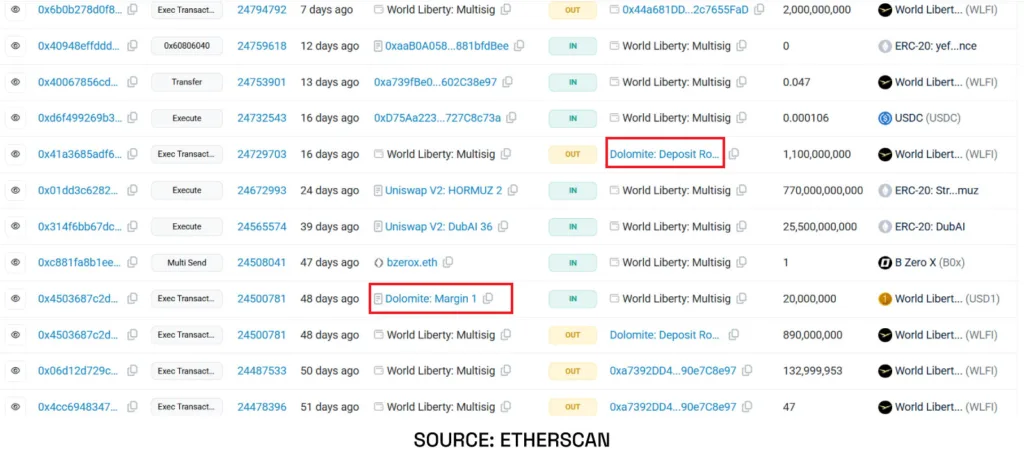
About 12 days later, on February 20, WLFI deposited 890 million WLFI tokens into Dolomite and borrowed $20 million USD1 against it. Similar trends followed the month of March with the treasury receiving roughly 31.4 million stablecoins from the protocol across both episodes.
Another report showed the firm’s activity during the course of the recent ceasefire announcement. The World Liberty wallet used WLFI tokens as collateral on Dolomite to borrow $75 million in both USD1 and USDC stablecoins and at the same time transferred over $40 million to Coinbase Prime,
The project said it did supply WLFI as collateral and borrowed stablecoins, but it is “nowhere near liquidation.” However, analysts are raising the source of collateral backing the WLFI-denominated borrow as a separate concern to be addressed.
The impact of the controversy
Crypto enthusiasts have been claiming that the DeFi firm is letting this happen as their CTO of WorldLibertyFi.
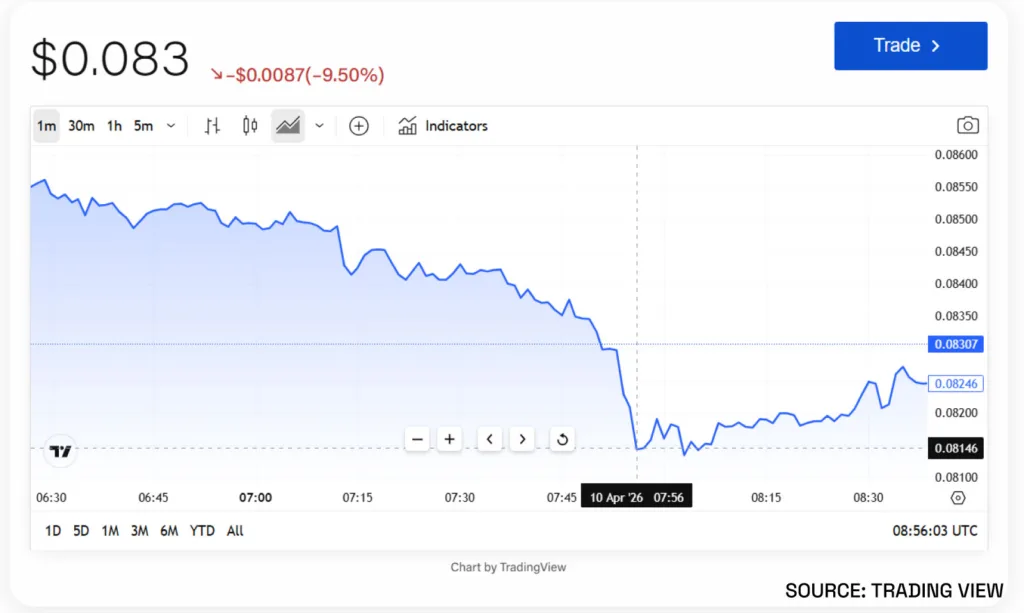
The price of WLFI dropped 5.6% in the past 24 hours as the controversy gained more attention and got more hype on social media. According to trading view analytics, It has remained almost 14% lower over the past seven days.
WLFI respond to controversy
WLFI responded to the controversies and criticism on a recent X post, calling it an FUD- Fear, Uncertainty, Doubt. They said that they use their own token in their lending platform WLFI Markets.
“We are nowhere near liquidation, and frankly, even if markets moved dramatically against us, we’d simply supply more collateral,” the post stated. “That’s not a risk. That’s how this works.”
According to WLFI, this move helps the regular users to gain higher yields on their lending on the platform, while the traditional banks or firms still fail to do so. They described themselves as the ‘anchor’ that makes the whole lending market work better for others.
They stated that their USD1 stablecoin is making about $159.5 million per year in revenue, with consistency. “Over the last 6 months, we have bought back 435,301,344 WLFI tokens at an average price of $0.1507 — totaling $65.58 million in open market purchases,” the post said.
Their claim is that the focus of the critics are on the wrong points, as they showed confidence over what they are building, calling it compound. Yet, they faced criticism for the lack of transparency.
Who is impacted the most by this cycle of events?
The most impacted as per analysis begins with the everyday users depositing stablecoins including USD1 and USDC for yield, because they are the ones to be impacted by a WLFI token crash or forced liquidation.
The next in line to be affected are the early token holders, who may have their tokens locked or unable to sell. The current scenario can cause them damage as the project is using their ecosystem while they can’t access value.