
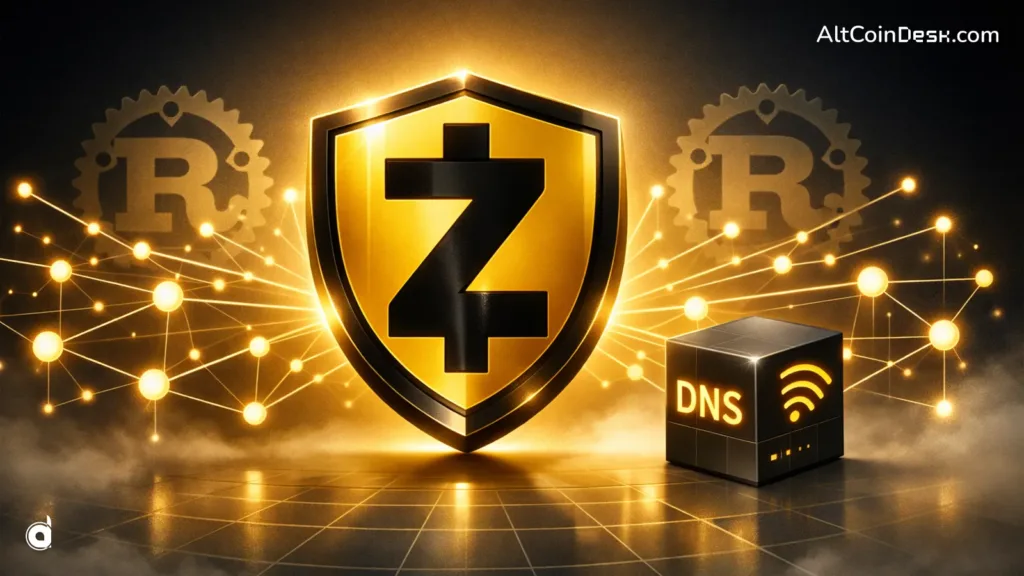

Network upgrades and new feature additions are common in the cryptocurrency space. Zcash Foundation, the platform behind the Zcash privacy coin, has come up with a Rust‑based DNS seeder to enhance reliability on its network.
Like other privacy coins, Zcash’s privacy-based blockchain infrastructure covers transaction details, keeping sender, receiver, and amount private. As Zcash embeds a new Rust-based DNS seeder, it helps the blockchain stay trustworthy among nodes. So, how’s this happening?
How will Rust DNS seeder help Zcash network?
To put it in simple terms, in a Rust-based DNS seeder, Rust refers to a programming language, DNS means Domain Name System, and Seeder is a program/software that helps nodes identify peers on a blockchain network.
As we bring these definitions together, it can be understood that the Zcash Foundation implemented a helper program to check and discover nodes working in the same network. Typically, several nodes participate in a blockchain network to mine a cryptocurrency.
In this case, when a user starts a Zcash node, they need to know what other nodes are active on the network. This is important to connect and form a consensus with blockchain data. The DNS seeder on the blockchain provides information on nodes to other peer nodes.
This procedure helps the network avoid connection problems or prevent fake peer lists. In brief, the Rust DNS seeder will improve reliability, performance, and safety for the Zcash network.
Zcash modernizes network for greater reliability
Before the new open-source tool, Zcash used older tools to discover peer nodes. The blockchain used components from older infrastructure or Bitcoin, which lacked the capabilities required in the modern world.
An official statement by Zcash executives read: “We believe that the best way to support Zcash is to shore up its weak spots. Peer discovery is often overlooked until it fails; by providing a modern, high-performance alternative, we are ensuring the Zcash network remains robust and accessible to everyone”.
The executives have also invited the blockchain community to test the new Rust DNS seeder on both the mainnet (Zcash network) and the testnet.