

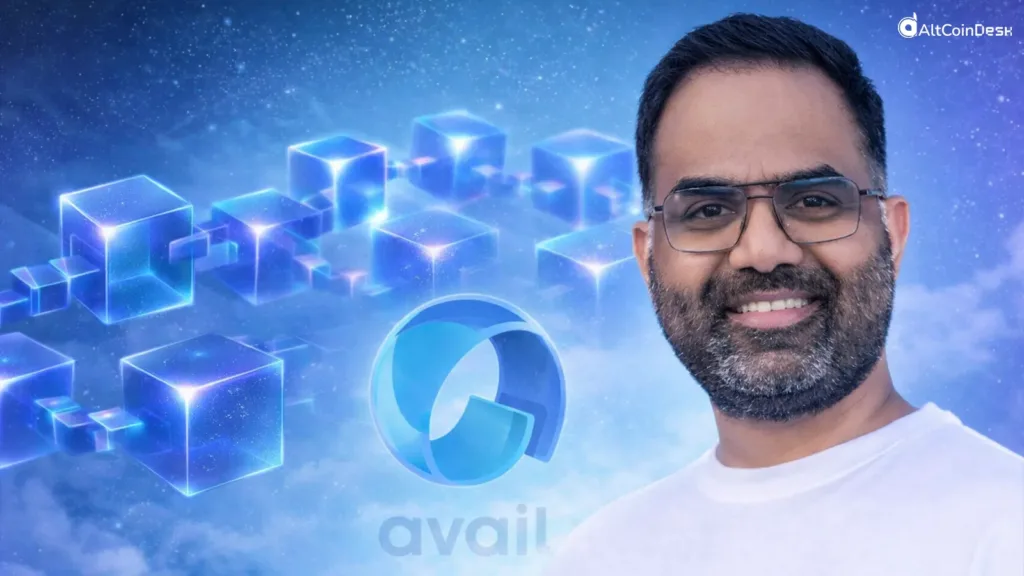

Founded in the year 2017 in Mumbai, India, Anurag Arjun, founder of Avail Project, explains his experience at Polygon. The team witnessed the beginning of blockchain scaling as members started to work on these technologies. Moving from fintech to blockchain, he says he built a world-class infrastructure as Ethereum was becoming expensive.
The Evolution of the Scaling Problem
Nexus is an abstracted, unified blockchain experience for users. It handles the complex orchestration of user intents across various ecosystems.
Anurag states that Avail was a project that began within Polygon back in 2020. Avail primarily solves the fragmentation, complexity, and cross-chain friction that happen within the rapidly expanding multi-chain blockchain ecosystem.
Around 2023, they decided to branch out from Polygon as AI became too large to be run within the same framework, leading to a decision to focus fully on Avail to scale and connect as many existing and future blockchains as possible.
Vision Behind Avail Nexus
Anurag expressed his passion while discussing the vision behind Avail Nexus, which is reportedly live on more than 10 ecosystems. What they aim to achieve is an orchestration that eliminates the need for users to grapple with various chains or even move funds within these chains.
“Now that the industry has matured, we want to take the industry to a point where users don’t really need to know what these chains are. Even if there are thousands of chains underneath, what we want to give them is an abstracted, unified experience,” Anurag said.
Market Expansion and Future Outlook
Anurag stated that the Avail team is seeing traction from crypto-native users and noted that more apps are using Nexus for distribution. According to him, this is because users prefer the flexibility to move their funds within on-chain, from one blockchain to another, bypassing centralized exchanges. This is similar to how you can move money by simply messaging on WhatsApp.
Security strategies under nexus
According to Anurag, Nexus uses a new security architecture. This new approach shifts the focus away from traditional bridging methods where the user is responsible for managing the entire process.
Nexus introduces an entity called ‘solver’, protecting users from malicious attacks. The user pays a smart contract, and the solver immediately pays the recipient on the destination chain.
“Now from a security aspect what this changes to is we move the risk away from the user to a small set of solvers essentially,” Anurag explains.
Nexus integrates with Solana ecosystem
Nexus started its expansion by focusing on the Ethereum Virtual Machine (EVM) ecosystem. According to Anurag’s estimate, the integration with Solana is anticipated to launch in January 2026.
Anurag explained that Nexus is a management or coordination system, not a simple connector between different blockchains. He compared it to payment processors like Stripe, Visa, or Mastercard in traditional finance, suggesting it works on top of the basic blockchain technology.
He concludes by addressing the primary focus of his innovation – on increasing the Total Addressable Market (TAM) for crypto rails by making crypto accessible to a much wider audience, including people new to crypto.