

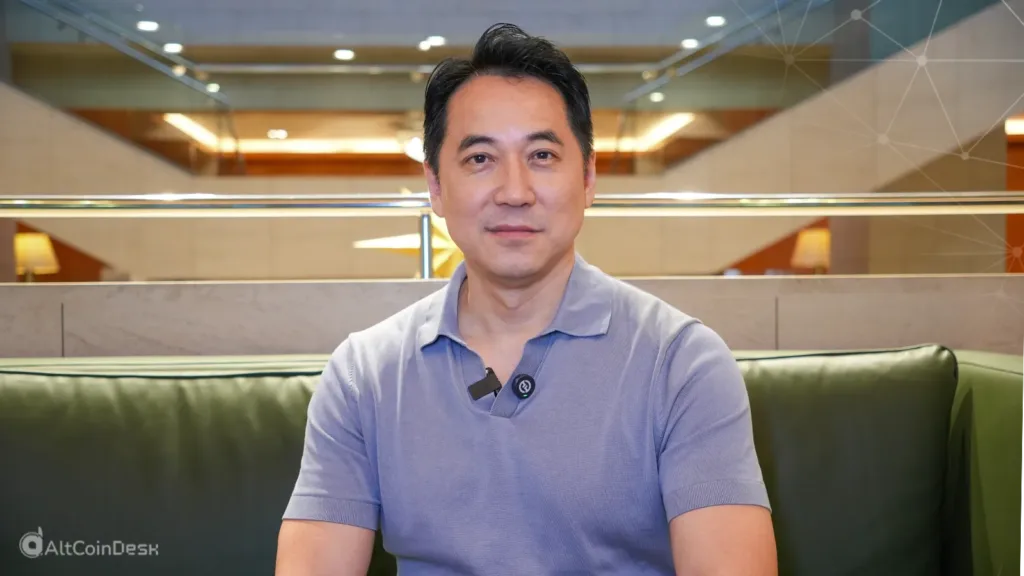

Following the energy of Binance Blockchain Week (BBW), Vincent Chok, founder of First Digital Trust (FDT), spoke with AltCoinDesk in an exclusive interview to discuss the evolving crypto landscape. From the role of regulated stablecoins and custodian wallets to FDT’s position as a critical bridge between Traditional Finance (TradFi) and the expanding world of Web3, Chok views blockchain as the future of finance.
FDT: A bridge between worlds
First Digital was established in 2018 to address concerns regarding custody within crypto. The company gradually evolved to explore stablecoin reserves. Chok described FDT as a traditional trust company navigating the innovative digital space.
Despite the challenges, FDT succeeded in reinventing itself. It now serves as an intermediary connecting TradFi and Web3 and acts as the stablecoin issuer of First Digital USD (FDUSD).
The role of FDUSD
Headquartered in Hong Kong, FDUSD contended with traditional trust and custody cultures to expand into a new asset class. However, concerns did not center on regulations alone, but also on the internal aspects of how to safeguard assets.
Chok finds the Middle East, and especially the UAE, to be the global Web3 hub, thanks to proactive and hands-on regulators. As one of the top three global financial hubs, Hong Kong offers the company a significant advantage due to the absence of both capital and exchange controls.
“The market there is so free, and it is still thriving. Hong Kong is a really great base for us to manage the TradFi side of the business. But for the crypto side, I still think the UAE is a really great place to be, supporting the growth of what we see the crypto space becoming in the near future.”
The shift from speculation to demonstration
The rise of Digital Asset Treasuries (DATs) points toward a fundamental shift in digital assets, moving from merely speculative investments to institutionalized assets with practical utility. According to Chok, institutions prefer to hold these tokens and utilize them as collateral to borrow stablecoins, potentially generating a self-sustaining “flywheel” effect.
“Institutions are having a difficult time using traditional methods to create the additional yield that investors are always looking for,” Chok shared.
‘Stablecoin is the oxygen’
Thin liquidity in crypto suggests a lack of sufficient buyers and sellers, which Chok identifies as a critical vulnerability in the stablecoin ecosystem.
“On stage, I spoke about how stablecoin 1.0 was designed to give exchanges and traders that liquidity. It was a trading tool, and it was important because it moved seamlessly — like water.”
He noted that the “clunky” nature of fiat makes it inefficient for quick trades. As stablecoins address this, exchanges are seeing daily transaction volumes increase, eliminating previous issues with low volume.
“I call it oxygen for the industry. That’s what stablecoin is; it’s oxygen,” Chok said.
The misunderstood role of a custodian

Custodians are often misunderstood as decision-makers for their clients. However, Chok clarified that FDT does not make investment decisions.
“Clients give us instructions on what to do and how to do it. Our role is to safekeep those assets and make sure they are returned on time when the clients need them,” Chok added, referencing the recent public scrutiny regarding $456 million in TrueUSD (TUSD) reserves.
Finance district
Chok claimed 2025 has been the “year of stablecoins” and emphasized the launch of their Finance District during Binance Blockchain Week.
Finance District is a Web3 digital economy designed for the digitized traditional banking sector. Chok anticipates this project represents the future of lending and payment platforms, powered by stablecoins. He also touched upon the role of agentic AI incorporated into stablecoins, noting that seizing a first-mover advantage requires staying ahead of upcoming trends.
The biggest friction point
The most prominent friction point in the expansion from TradFi to Web3 is getting traditional banks to work with crypto-based services for deposits and withdrawals. The reluctance of banks in certain regions remains a major hurdle.
“Although more banks are gradually becoming comfortable with cryptocurrency, this issue has been a persistent friction point,” Chok stated.
Concluding the interview, Chok shared his perspective on the future of fiat currency with a jesting prediction: “I think the world is going to save a lot of ink.”