

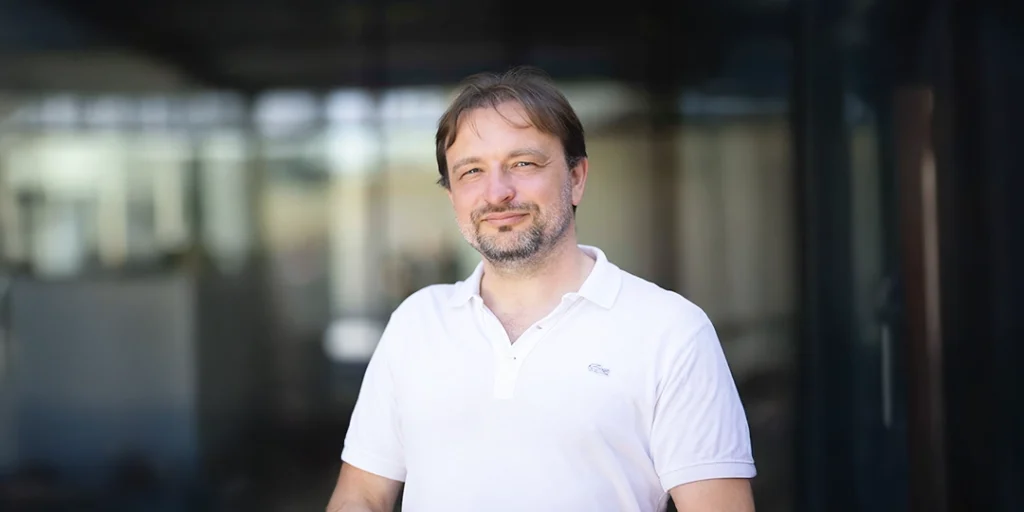

As the CEO of STON.fi Dev, Slavik Baranov has a goal in the fast-paced world of decentralised finance (DeFi): to make DeFi available to everyone. He started out believing in open finance and wanting to make DeFi a part of everyday life. He did this by starting with Telegram, one of the most popular apps in the world.
From Telegram to Ton
Baranov’s lightbulb moment came when Telegram integrated the TON blockchain. “That was a game changer,” he says. “It felt like the perfect chance to bring DeFi to a massive audience that was already there.”
STON.fi was born from this opportunity — aiming to simplify DeFi and make it as easy as chatting with friends. “We weren’t just building a product,” he says. “We were laying the foundation for DeFi on TON.”
Simplifying DeFi: From token swaps to liquidity tools
STON.fi launched with a single goal: make it easy to swap TON-based tokens directly inside Telegram. That simple use case unlocked access for a wider audience. Since then, the platform has evolved into a broader infrastructure project — unifying scattered liquidity and offering tools for developers.
“At its core, it’s still about making DeFi smooth and natural,” Baranov emphasizes.
A tech veteran’s pivot to crypto
Baranov had almost 30 years of experience in software, fintech, and blockchain. He had the technical skills to make scalable solutions because he had built large-scale enterprise systems and led product teams. This was important in the fast-paced DeFi world.
Growth, feedback, and proof
Like any new business, STON.fi didn’t know what to expect in its early days. But early signs of strong user engagement were promising. Baranov says, “It took about a year to see real growth in volume and users.” “But even before that, the feedback we got from our community showed us that we were making something that people wanted.”
Scaling smart: From part-time to full steam
STON.fi started as a part-time effort with a small team, cautiously testing its potential. Things changed after early investment from The Open Platform. “That gave us the confidence and responsibility to go all-in, grow the team, and scale the product,” says Baranov.
Then came a challenge: A 100x traffic spike in early 2024. “It pushed our systems to the limit,” he recalls. “We had to upgrade everything while staying live. It was intense — but it taught us how to build for long-term scale.”
The power of the team
Baranov credits his co-founders — each bringing expertise in tech, operations, and investment — for the project’s balanced foundation. “We all shared the same values,” he says. “We weren’t chasing hype. We wanted to build something real.”
Investor backing
STON.fi gained early support from The Open Platform, then attracted top-tier backers like CoinFund, Delphi Ventures, TON Ventures, and the founders of 1inch and LI.FI. “They brought more than money — their advice and networks were key to our growth,” Baranov notes.
What’s next: Cross-chain swaps and global liquidity
A major milestone ahead is Omniston — STON.fi’s cross-chain liquidity aggregation protocol. It will let users swap tokens between TON and other blockchains seamlessly. “Think of it like messaging — you shouldn’t care what platform it’s on. It should just work,” Baranov explains.
Another focus is concentrated liquidity, giving providers more control and better capital efficiency. STON.fi is also preparing to launch its DAO, empowering the community to shape the project’s future.
Long-term vision: DeFi for everyday life
STON.fi already handles over 56% of all trading volume and 80% of users on TON — a sign of strong user trust. But Baranov has his eyes on a bigger goal: becoming the go-to liquidity engine for DeFi across blockchains.
“In five years, we want to power the tools that help real people use DeFi — every day, everywhere,” he says.
Advice to founders: Listen, simplify, and stay real
For those starting in crypto, Baranov offers this: “Believe in your idea — but stay close to your users. That’s how you adapt and build something that lasts.”
He also stresses simplicity. “DeFi is still complex for most people. If you can make it simple and useful, you’ll stand out.”
Hard lessons: Growth and distribution
Looking back, Baranov admits he underestimated how fast crypto growth can happen. “We planned for scale — but the speed still caught us off guard.”
Another key takeaway: distribution is everything. “Getting into top wallets on TON was huge for us. It’s not just what you build — it’s how people find and use it.”
Staying resilient: Mission over market
Market dips are part of the game. For Baranov, staying focused on the mission keeps things steady. “If you’re solving real problems, that’s what keeps you going,” he says. “And having a team you trust makes it easier to push through.”