

All altcoins go through a cycle, right from inception on a white paper to exchange listings and, in the worst cases, even delisting. Interestingly, not all altcoins are created equal, in that their lifespan may range from a mere few months – like memecoins – to even decades, as we are seeing in the case of Ethereum.
The interesting bit about an altcoin’s lifecycle is that long before an altcoin even gets listed on an exchange, several decisions have already been made that will determine its future trajectory. As an investor, it is critical to understand where the altcoin is in its lifecycle to make better, more informed investment decisions.
The idea before the token
Before an altcoin becomes a token, it starts as a concept on a piece of paper. A team of blockchain developers identifies a burning crypto problem, such as liquidity fragmentation, scalability, interoperability, or even a cultural reference (memecoins), and comes up with a token that is geared toward solving the said problem.
What matters more than the problem is the underlying token’s tokenomics. If the tokenomics of a token are not designed in a sustainable way, then it can lead to the end of the project before it even hits a certain milestone in terms of adoption or market cap. The vast majority of tokens get caught up in this trap due to poor tokenomics design.
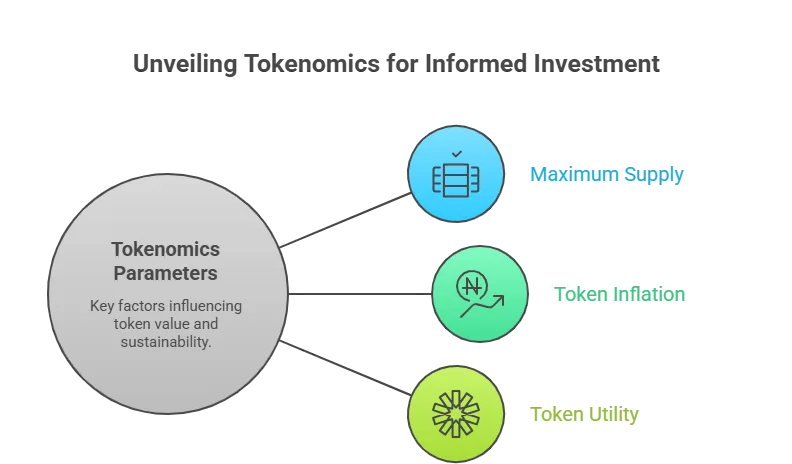
As an investor, pay close attention to various tokenomics parameters, such as the maximum supply, token inflation, and token utility. Factors such as whether the token will be used for governance, on-chain utility, staking, or revenue sharing have a strong impact on the token’s demand in the future.
In addition, it is important to know about token distribution. How much of the total tokens are going to the team, the early investors, the community, and the treasury determines whether the project is extractive or fair once its token reaches crypto exchanges.
The birth of altcoin – token generation event
This is the phase where the token officially comes into existence. The Token Generation Event (TGE) can also be considered the birthday of a token, as it is the moment when the smart contract is deployed, and tokens are minted according to the project’s predefined rules.
That said, many investors assume that following the TGE, the underlying token is immediately tradable. This is not the case. In the vast majority of cases, the tokens are distributed to project insiders, early contributors, and ecosystem partners but remain locked, as they typically follow a predetermined vesting schedule.
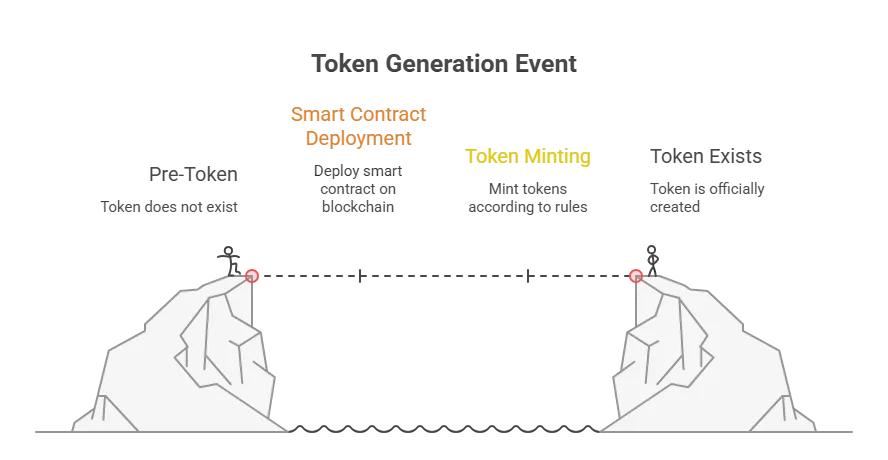
The TGE is of high significance as it sets the token’s clock in motion. Following the TGE, a token’s unlocks, emissions, staking rewards, and supply expansion are no longer just theoretical, they become reality.
Private token sales at high discounts
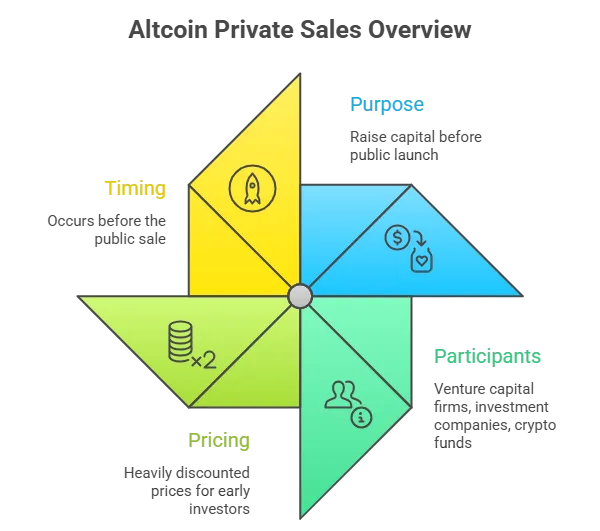
Before any public sale, most altcoin projects raise capital through private sales to accredited investors at heavily discounted prices. Entities such as venture capital firms, investment companies, and crypto funds usually participate in private token sales to buy tokens and follow a vesting schedule that may last up to several years.
While these private token sales rounds are important to fund the development of the project in its infancy, they come with some trade-offs. As mentioned earlier, private investors receive large allocations, and once their tokens unlock, they get the ability to sell their holdings in public markets.
Such delayed selling pressure explains why so many altcoin projects sometimes faced months of excruciating price action despite strong fundamentals and rising adoption. It is because as the token’s adoption rises, the same is reflected in its increasing market price, which encourages private investors to lock in profits.
Moving on to public sales
After the private sales round has concluded, the token moves on to the public sales phase. This phase of the lifecycle finally lets the general public get exposure to the altcoin, as it can be conducted through various forms such as launchpad offerings, exchange-hosted sales, and limited whitelist events.
In a way, public sales can be seen as the transitioning event that bridges the gap between private investors and the general public. Such events help in the wider distribution of the tokens and create early user engagement.
However, these events can also serve as a double-edged sword. Early access to liquidity can prompt some investors to sell their holdings immediately to book profits.
Liquidity – When an altcoin becomes a market
An altcoin doesn’t truly ‘launch’ until it has some market liquidity. Strong liquidity allows buyers and sellers to trade the altcoin without experiencing volatile price swings.
Most new altcoins begin trading on decentralized exchanges (DEX) such as Uniswap, Raydium, Jupiter, and others. The project’s team must inject some initial liquidity into these DEXs to enable normal investors to trade the token in a predictable manner.
If the liquidity is shallow, then even a small trade can wildly change the token’s price in unpredictable ways, raising possibilities of price manipulation by large holders. As a result, the token’s fundamentals and utility are taken over by hype and speculation, where investors are just interested in trading the token to sell at a higher price by benefiting from its volatility. More often than not, they end up losing money.
Early trading and price discovery
This is perhaps the most turbulent time in an altcoin’s lifecycle, as shortly following its listing on a DEX, it enters price discovery. This phase is marked by equal amounts of excitement and fear among investors, as most of them try to follow their strategies for buying and selling tokens at a target market price.
Due to a lack of historical price data, most investors and traders are not confident about their exit plans. At this phase, we also see that social media hype, influencer hype, and big partnership announcements play an enormous role, often superseding the token’s utility and fundamentals.
There are numerous cases where even fundamentally strong projects see their tokens crash for no apparent reason, while memecoins experience parabolic gains in a short period of time. If you are a long-term investor in a project, it’s best to spectate this phase of the market rather than participate in it.
Centralized exchange listing
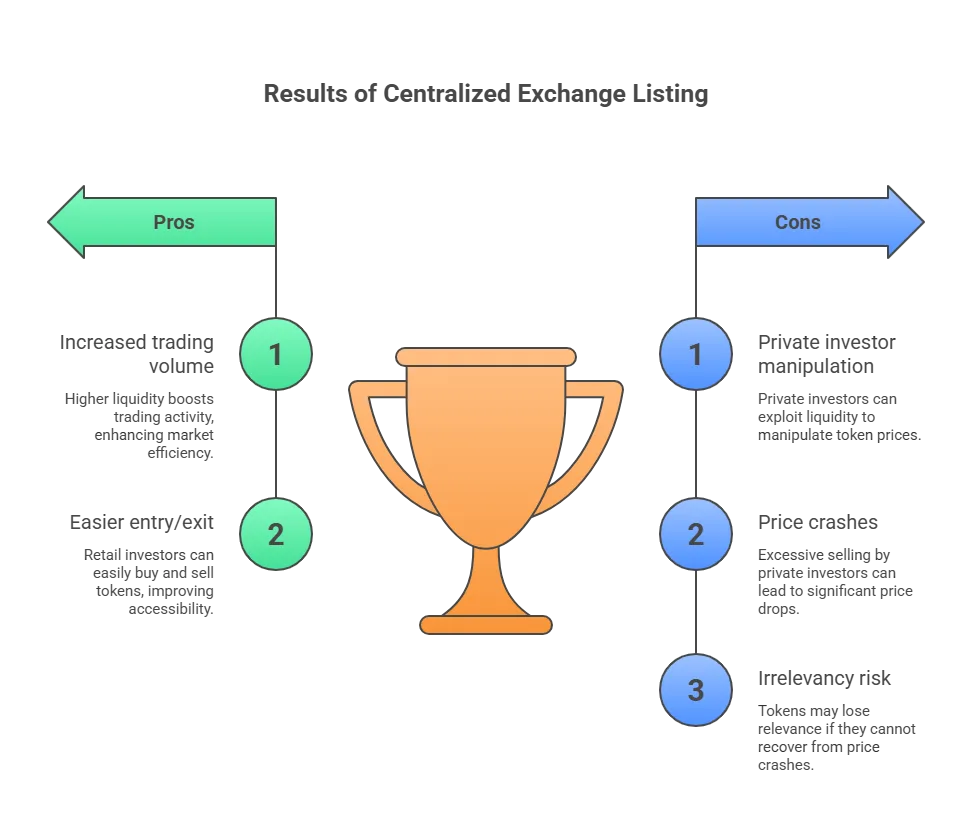
This highly anticipated phase of an altcoin’s lifecycle often proves to be its turning point, for better or worse. This marks the first time a non-native crypto user gets exposure to the token, and, as a result, the floodgates of liquidity open for the token.
When a leading cryptocurrency exchange like Coinbase or Binance lists the token, it typically experiences a short-term price appreciation. However, most often such events turn out to be ‘buy the rumor, sell the news’ kinds of events.
While greater liquidity is often bullish for a token, it has its pitfalls. Private investors can sometimes take advantage of heightened liquidity, often selling their long-held holdings to retail investors, crashing the token’s price. Occasionally, these tokens never recover from the excessive dumping, gradually transitioning into irrelevance.
Post-listing reality
This is the final phase of an altcoin’s lifecycle, as it shifts focus from hype to utility. All the market narratives used to pump the token’s price lose their novelty, paving the way for real utility to shine.
At this time, the token also faces additional pressure as token emissions and staking rewards go live. Weak tokenomics also become visible during this phase. If the token inflation outpaces demand, the token continues to decline in value despite the team’s best efforts at damage control.
The key at this stage is to align token incentives with actual usage. Ethereum is a positive example of a project that has real demand for its ETH token, as all transactions on the blockchain charge a gas fee in the form of the token. On the contrary, most memecoins with a short lifespan bid goodbye to the market after listing.

Final thoughts
In conclusion, the market does not trade an altcoin in isolation. From an investment standpoint, knowing the token’s lifecycle stage is crucial, as it indicates what to expect in the coming weeks or months.
By the time retail investors hear about a token for the first time, it has usually already been listed on a DEX. At this time, it’s important to know about its tokenomics and allocation to team members.
If possible, perform some basic on-chain analysis and track the team’s wallet activities. This way, investors can better equip themselves to handle the turbulence that follows in the altcoin’s lifecycle journey.