



Think of the crypto world as a busy food court. Every restaurant claims to be the best, but the consensus mechanism is like the health inspector; it reveals who actually follows the rules.
Today, we’re cutting through the tech jargon to explain what really keeps a blockchain secure and honest without putting you to sleep. We’ll break down proof-of-work, proof-of-stake, and a mixed bag of new approaches I like to call proof-of-anything.
The one-sentence story for each
- Proof-of-work: Miners use massive amounts of electricity to win a race by solving a puzzle. It’s incredibly expensive to cheat, but easy for everyone to check the winner. Imagine an arm-wrestling match for a receipt.
- Proof-of-stake: Validators lock up their own coins as a security deposit to get a turn at validating transactions. They get rewarded for acting honestly. If they try to cheat, the network “slashes” their deposit, and they lose it.
- Proof-of-anything: These are the new, experimental flavors that aim to be faster, more eco-friendly, or less complex. Some ideas are brilliant, while others are… still just experiments.
How do they keep the ledger safe without algebra?
- PoW: The trick is expense. To attack a proof-of-work network, you’d need to buy massive amounts of hardware and electricity. For honest miners, wasting power is only a loss if they cheat. For an attacker, wasting that much power is a guaranteed loss, especially if they fail.
- PoS: The trick is collateral. You get rewards for acting honestly, but the network will slash or take your staked coins if you act dishonestly. It’s less like running a giant power plant and more like a community-run neighborhood watch.
Cost, carbon, and the power bill you don’t want
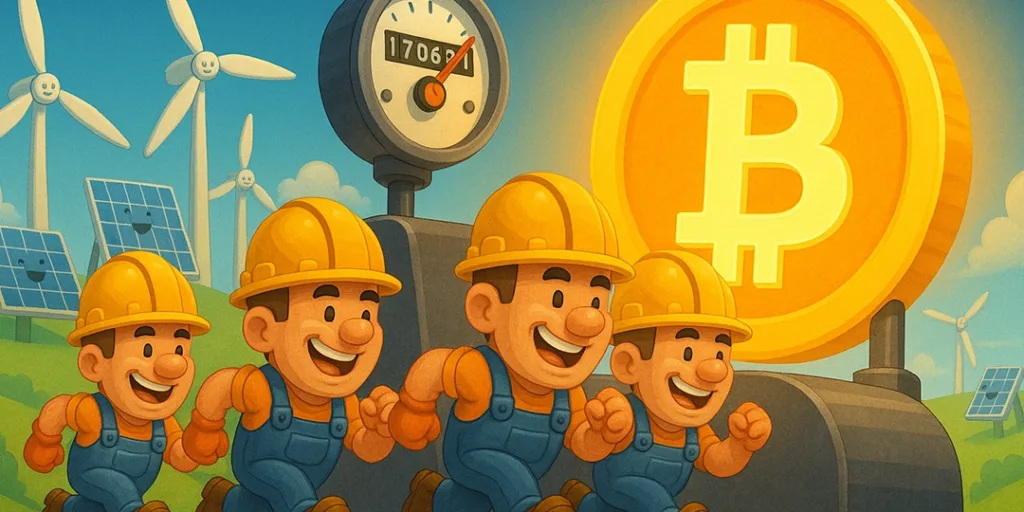
- PoW: Famous for its massive electricity bill. A growing portion of this power now comes from renewable sources like hydro, wind, or excess natural gas that was already being burned off. But fair or not, proof-of-work still has a giant environmental bullseye on its back.
- PoS: It sips power instead of guzzling it. Think of laptops running instead of vast warehouses of computers. This green advantage is a major plus for winning over policymakers and big institutions.
Security: How hard is it to break?
- PoW: To hijack a chain, you must outmuscle honest miners. That means hardware, energy, and time; expensive, noisy, and very public. Cheating on proof-of-work is like robbing a bank with a marching band.
- PoS: To hijack a chain, you need a mountain of coins and the courage to risk losing them. Social recovery (including clients, community, and exchanges) can coordinate a response if something goes wrong.
Decentralization: Many hands or a few fancy keys?
- PoW: Anyone can mine, but gear isn’t cheap, and mining pools can get chunky. The best chains work to keep the pie sliced widely. Healthy proof-of-work looks like many medium bakers, not one mega-bakery.
- PoS: Lower hardware hurdles, but wealth concentration can creep in. Staking with diverse operators (not just the top few) is the adult move.

Throughput and fees: Who’s faster on a bad day?
- PoW: Base layers can be slow and pricey at peak times, so most speed comes from “add-ons” like rollups and payment channels. With proof-of-work, scale often lives on layers above.
- PoS: Finality is quicker, upgrades happen faster, and fees can be calmer—especially when combined with rollups and sharding.
Regulation and narratives: Which story sells?
- PoW: The “digital commodity” pitch resonates. The rules are simple: provide energy, follow the rules, and earn coins. Policymakers might complain about the power usage, but the model is easy to understand, and the proof-of-work’s long track record proves its resilience.
- PoS: The “digital yield” vibe attracts investors and treasuries. The downside? It raises tougher questions about who’s in charge, how decentralized the network really is, and the risk if a small group of big stakers decides to act up.
Proof-of-anything: The speed-round sampler
- Proof-of-Authority: An exclusive group of known validators. It’s fast, but trust is placed in just a few hands.
- Proof of History/Time/Space: Uses clever tricks with time or storage to order transactions and prove real-world resource use. Great for speed, but its success depends on a few key assumptions.
- Proof of Burn: You destroy coins now to earn potential rewards later. It’s an eco-friendlier way to show you have skin in the game.
- Proof of Solvency: How exchanges prove they actually have the money they owe their customers. It sounds boring, but it’s absolutely vital and long overdue.

So… who’s winning?
Wrong question. Better question: winning at what?
- Want something tough and neutral, like a digital commodity? You’ll look toward proof-of-work.
- Prefer lower energy use and quicker updates? You’ll lean on proof-of-stake.
- Need specialized speed for apps or payments? You’ll check out the proof-of-anything aisle.
The market’s already decided: multiple models can win at once. Big networks can play it safe for security, while app-chains chase speed and new features. That’s not indecision: that’s a portfolio.
The trader’s cheat sheet
- If headlines scream “energy,” expect PoS chains to catch a bid.
- If there’s regulatory heat, look for sturdy PoW narratives to shine.
- If fees spike, watch rollups and alt-consensus systems soak the overflow.
- If one giant staking provider hoovers up deposits, diversify your exposure.
So, Proof-of-work, proof-of-stake, or proof-of-anything?
Think of consensus not as a beauty contest, but as the foundation of the system, like different kinds of roads. Some are pretty, some are fast, and some are rough, but they still get you where you need to go. Proof-of-work isn’t going away. Proof-of-stake will keep improving. And new approaches will keep testing wild ideas. And that’s a good thing.
The best strategy is simple: learn how each one works, diversify, and let each do what it does best. That way, your investments won’t have to find out the hard way who’s really keeping the lights on.