

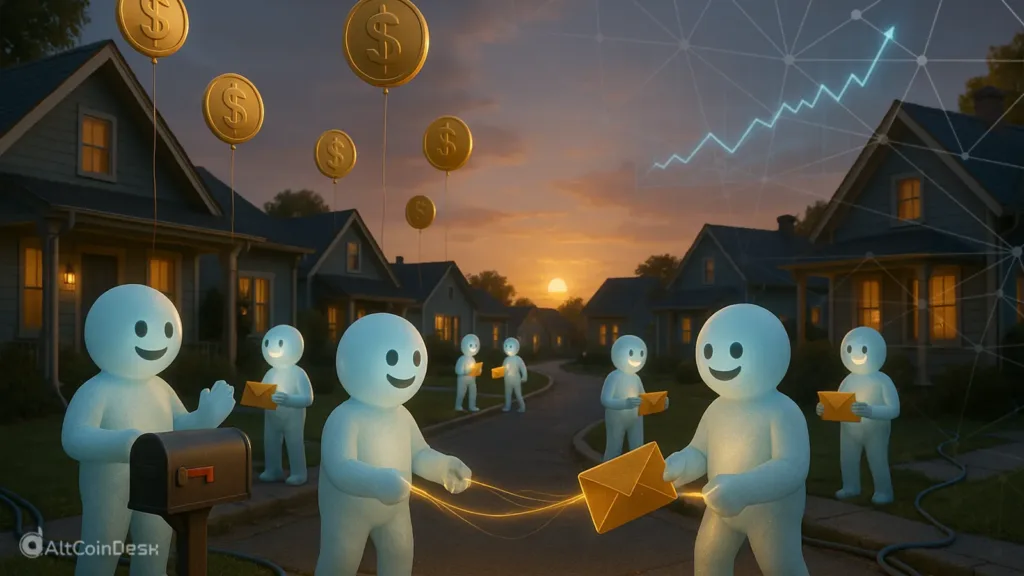

Welcome to the blockchain neighborhood, where the crypto market feels less like Wall Street and more like a cozy suburb with impeccable record-keeping. Here, validator nodes act like responsible homeowners who peek through the blinds every few minutes, not out of nosiness, but out of civic duty. Each one verifies that the neighbor’s parcel, or in this case, transaction, arrived safely and untampered.
Forget skyscrapers filled with brokers. In this world, each house is a mini vault, every porch light a node. Transactions are the morning mail, stamped and double-checked by a street of courteous validators who never sleep and never gossip. The blockchain’s secret isn’t its code; it’s the culture of mutual verification: trust without authority, order without hierarchy, and accountability without asking for permission.
The gossip-free gossip network
Picture this: your neighbor, Node 143B, waves across the digital fence and says, “Hey, did Alice really send that Bitcoin to Bob?” Another neighbor, Node 212X, checks his digital clipboard, smiles, and says, “Confirmed — timestamp 14:02 UTC, signature verified.” And just like that, consensus is reached.
It’s the purest kind of democracy the crypto market has ever seen. No HOA presidents, no central mailmen, no single person in charge of deciding who gets what. If one node slacks off, the others pick up the slack. Everyone’s watching everyone, not with suspicion, but with the friendly efficiency of a neighborhood watch powered by math.
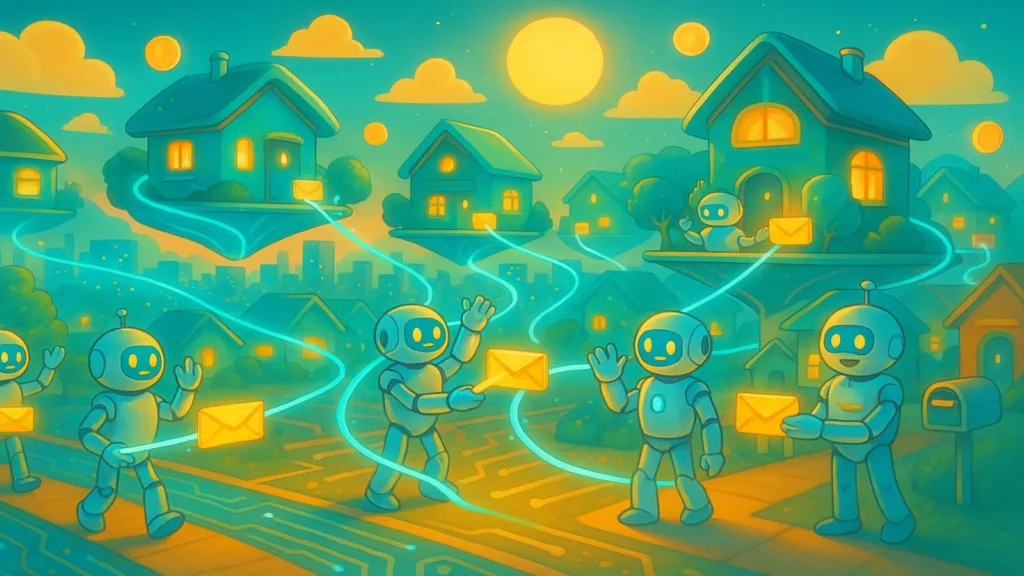
Mailboxes, math, and mutual trust
Think of decentralization as a block party where everyone brings their own locks, ledgers, and snacks. Instead of relying on a single postal worker to deliver truth, the entire street checks the mail at once. Consensus becomes a social event.
Each validator node says, “Let’s all agree this envelope hasn’t been tampered with.” Once everyone nods, the delivery gets recorded in the blockchain’s permanent scrapbook, no erasers, no late deliveries, no shady shortcuts.
And when new neighbors move in? The blockchain doesn’t throw shade; it throws a copy of the entire history their way. Every new node gets a welcome kit: “Here’s every transaction ever, and by the way, we’ll need you to help verify the next one.”
Why centralized cities feel so… crowded
In traditional finance, you live in an apartment tower run by a single landlord; every transaction must go through the front desk. Lose your keycard, and you’re locked out. In decentralized finance, you own your house, your keys, and your privacy.
Sure, it’s more work to shovel your own driveway or audit your own smart contract, but that’s the price of sovereignty. The crypto market thrives on that autonomy: messy, vibrant, and perfectly human.
The blockchain block party
So next time you hear about validator nodes, don’t imagine cold servers humming in dark data centers. Imagine a bright digital suburb, alive with chatter, each house syncing data under a glowing web of shared trust.
Because in the end, the blockchain neighborhood isn’t about technology; it’s about togetherness. It’s how the crypto market proves that collaboration scales better than control and that the best watchdogs are the ones who also bring cookies to the meeting.