
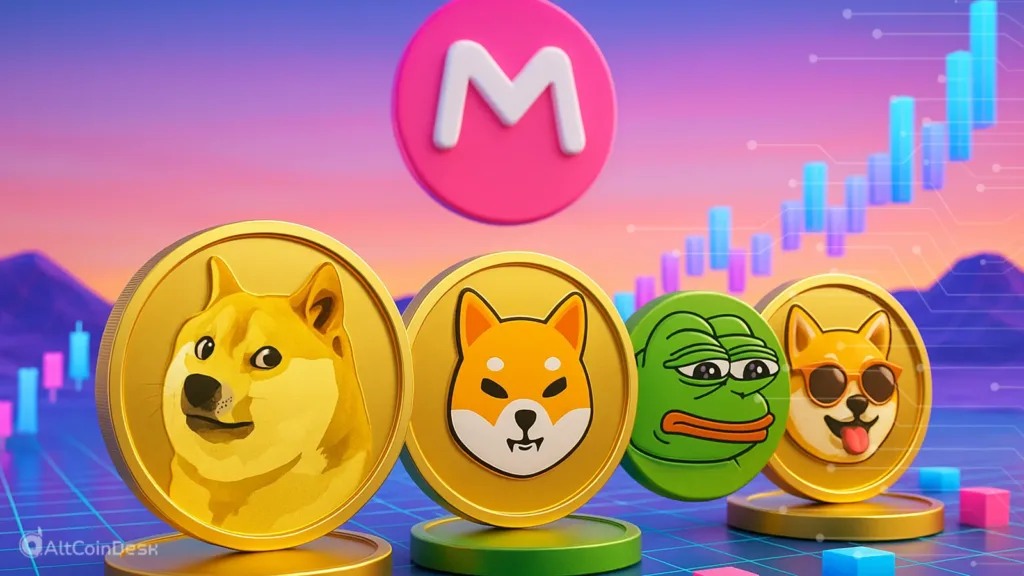

In 2013, a fun and friendly internet coin ignited the way for a spontaneous spark of memecoins! Dogecoin, the first widely renowned memecoin, spread the word of a joke featuring a Shiba Inu dog, which led to the birth of thousands of memecoins in the following years.
Memecoins are born in minutes; some are well-known ones, and the rest, not as much. If you are curious to know about what a memecoin is, why they are popular, the pros and cons of memecoins, and more, this Learn article is for you.
What are memecoins?
Memecoins are a set of cryptocurrencies essentially born out of light-hearted jokes, fun, and even some serious incidents like the demise of a person. A recent example of one such memecoin is the tokens that came out after Charlie Kirk’s death.
Crypto itself is a volatile asset class, and memecoins are highly volatile and speculative in nature, as they are born from a short-lived hype. It is important to keep in mind that most memecoins have little to no real-world utility.
How do memecoins work?
- Driven by internet culture, jokes, and hype, memecoins work like other cryptocurrencies. However, their value relies on community interest.
Their value is also tied to what prominent people say, as with Dogecoin, whose price often surges when Elon Musk comments on it. - Memecoins run on a wide range of blockchain networks like Solana, Ethereum, Avalanche, BNB Chain, Polygon, and others.
- Like other cryptocurrencies, transaction details of memecoins are recorded publicly, you can sell or buy them, and no entity controls the coin.
- As mentioned, their price varies when influencers/famous personalities talk about a coin, social media trends highlight it, which can lead to a huge number of people buying it.
- You can buy and sell memecoins on both decentralized and centralized exchanges.
Memecoin tokenomics
Memecoin tokenomics is about how a memecoin is distributed, the number of existing tokens, the tokens that are minted, and the number of tokens that are burned.
A short history of memecoins
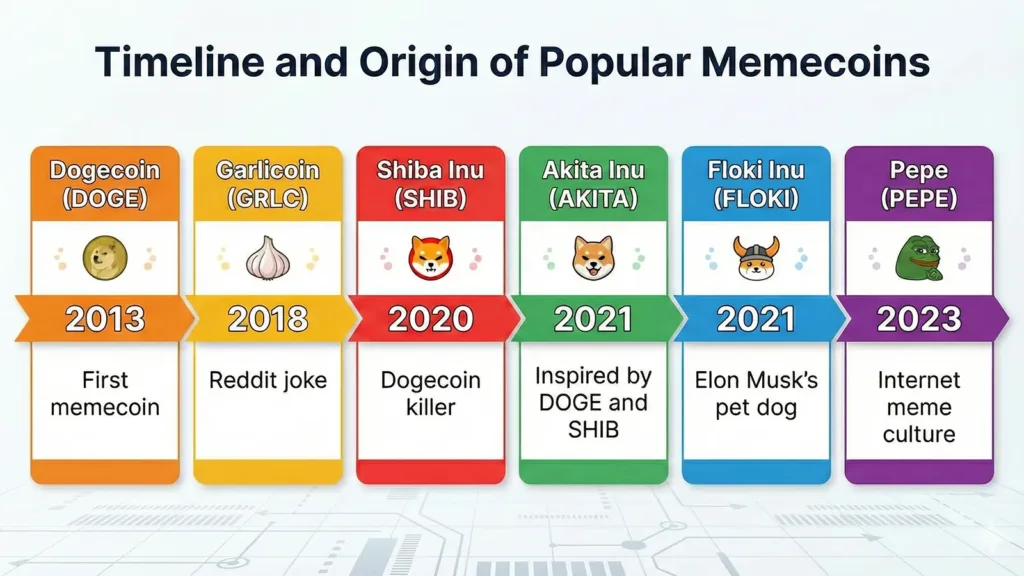
Dogecoin paves the path forward
With software engineers Billy Markus and Jackson Palmer putting Dogecoin into the memecoin niche in 2013, the crypto industry saw exponential growth in memeculture. Memecoins like Shiba Inu, Bonk, Pepe, and several other coins exploded in popularity.
Dogecoin killer rises
Shiba Inu, described as the Dogecoin Killer, entered the industry in 2021. Ryoshi, an anonymous developer, built the token on the Ethereum blockchain.
More than just a memecoin, Shiba Inu expanded its access to decentralized finance (DeFi) as its ecosystem relies on Ethereum, the blockchain that spearheaded the DeFi system.
Social media trends follow memecoins
In 2021, the crypto market was in the midst of a bull run, and memecoins gained immense popularity. It was at this time that social media communities raised supportive slogans for memecoins, and famous personalities like Elon Musk endorsed memecoins like Dogecoin.
In later years, the industry saw the rise of Bonk, the first major dog-themed memecoin on the Solana blockchain, and Dogwifhat, built on the same network.
The current status of the memecoin industry
These days, you can see memecoins coming out almost every other minute, especially after the launch of Solana’s Pump.fun memecoin launchpad. This is a user-friendly launchpad that allows memecoin creators to easily launch tokens in a few minutes.
Just go to Pump.fun platform, no need to log in. You can see new coins launching in seconds!
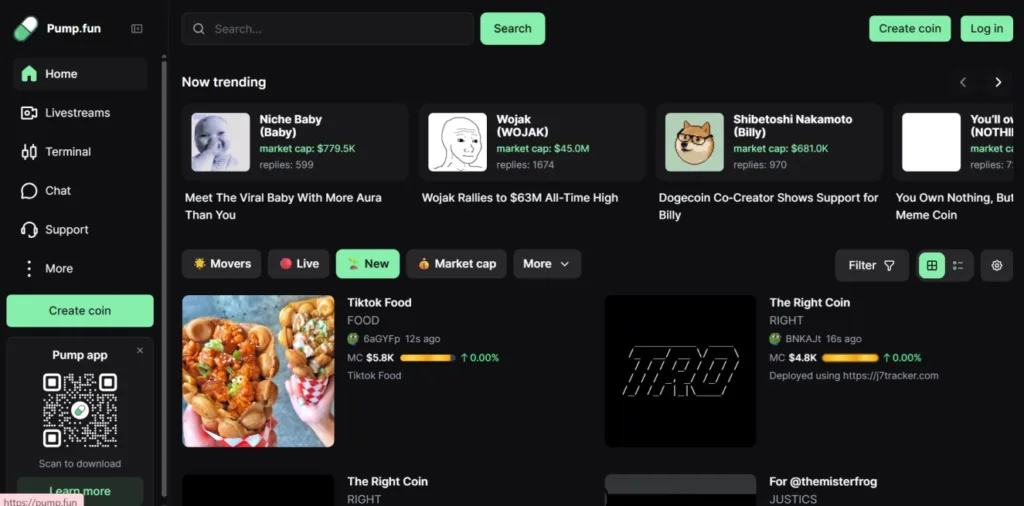
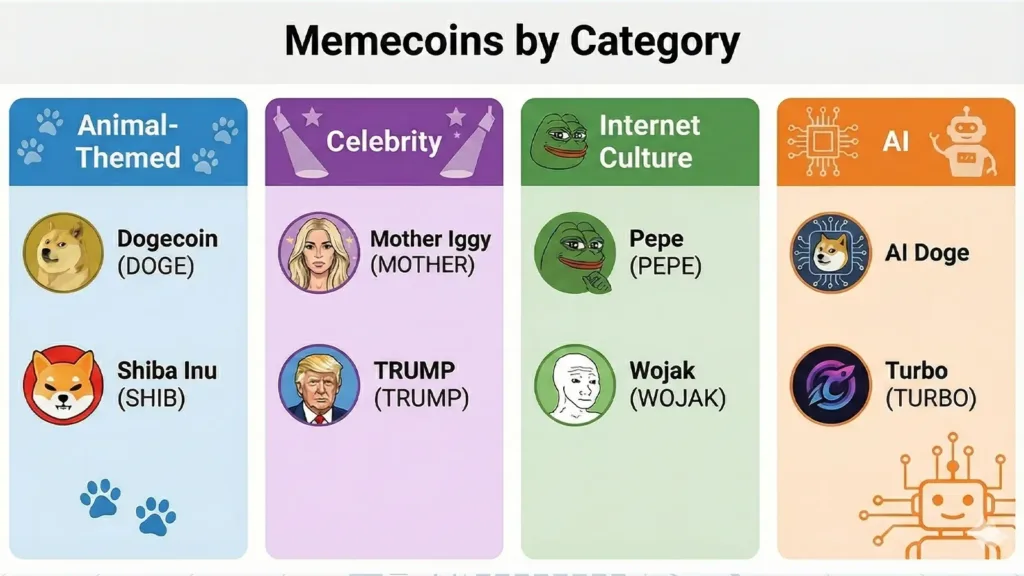
Apart from jokes and fun, memecoins flourished, drawing inspiration from themes related to personalities, pop culture, the environment, celebrities, gaming, and more. Although the memecoin market sometimes experiences dips, new coins and trends always keep the market awake.
Why is Dogecoin so unique?
If you think Dogecoin is unique because it was the first memecoin launched, then you are wrong. It is the first memecoin, but it has its own standalone blockchain, real miners, blocks, mining rewards, transactions, and uses the Proof of Work (PoW) mechanism.
Dogecoin is forked from Litecoin, which itself is forked from Bitcoin. Since it has a humorous and fun-filled origin with the longest history, it is considered the de facto memecoin.
Why memecoins are popular and launch every minute
More fun, more hype
As it is very evident now, fun, hype, and virality are boosting the popularity of memecoins.
Active community and its culture
Most of the memecoins have a strong online community, where memecoin lovers join social media groups like Discord, X, and Reddit to discuss the coin, trending memes, and anything related to the niche.
Trends push memecoins
Any trending personality, event, incident, or meme can be easily encashed to create new memecoins. Some creators wait until a designated time to launch new memecoins, whereas others randomly reveal them.
Low price and accessibility
Memecoins are relatively very low in price, with most valued at just a fraction of a cent. As their token supply is very high, the price remains low. Anyone with a crypto wallet can buy these coins through a few simple steps.
Now, what could be the reasons for memecoins launching every minute?
Easy to create and access
Unlike other cryptocurrencies, memecoins do not require a long process to create a token. Once you enter the details of the coin to be minted, the smart contract you deployed will create a token supply based on the details of your coins.
No need for whitepaper
Not all memecoins have whitepapers. Their purpose is to speed up the process of token creation and gain profits quickly.
Transaction fees are low
From memecoin creation to trading, transaction fees are relatively low for memecoins.
Popular examples of memecoins
Risks and challenges of memecoins
Vexing Volatility
Memecoins are highly sensitive to price, which changes according to momentary trends, hype, and online sentiment.
Lack of Utility
Less intrinsic value determines their lack of utility. Memecoins with some utility value are,
-Dogecoin – payments and tipping
-Shiba Inu – metaverse, DeFi, and transaction fees on Shibarium
-Floki Inu – DeFi, gaming, NFT, payments
Shady nature
Rug pulls, pump and dump schemes, and other scams are very common in memecoins. Some memecoin creators generate hype and lure investors to their projects. Once the project owner gets significant funds, they often abandon the project and vanish.
Highly manipulative
Whales or large memecoin holders manipulate memecoin prices by creating fake hypes, buying or selling huge amounts of coins, artificially inflating volume (wash trading), or other methods.
Short hype, so short lifespan
Hype boosts a memecoin’s presence in the market, and people start buying it; however, hype is short-lived. When hype dies, trading volume drops, price melts down, and memecoins become inactive or disappear.
Hype also leads to fear of missing out or FOMO. People develop a feeling of missing out when a memecoin spirals up due to high hype and virality.
It is also difficult to find the exact goal of a memecoin project, as most of them do not follow a whitepaper — another challenging factor.
A launchpad that aims to speak transparency
Amid the furious and dusty nature of memecoins comes Thrust, a Solana-based memecoin launchpad, revealed in November 2025. The key goals of the platform are,
- stop pump-and-dump memecoins,
- bring transparency through legal contracts,
- build long-term sustainability,
- enhance safer access for investors and fans.
Although Thrust primarily focuses on celebrity-based memecoins, the platform boasts of transforming the typical meme culture in the industry.
Things to note
With the birth of Bitcoin in 2009, little did we all know that a massive number of memecoins would arrive, reaching more than 5000 in total known tokens, according to CoinMarketCap. A report by BDC Consulting shows that nearly 40,000 memecoins are launching in a single day.
That said, these coins emerge from viral trends, sentiment, hype, and community support. Never dip your toes in fake memecoin projects. Do your own research before jumping into such coins.