

A very serious financial strategy that started with a typo! Let us start with a confession. Many people enter crypto asking the same question: what does HODL mean, and why do people say it like it is a sacred mantra?
The funny answer is that one of the most famous strategies in finance began with someone spelling a word wrong. Yes. Really.
In December 2013, Bitcoin was falling. Hard. The kind of drop that makes people stare at their screens and reconsider their life choices. Somewhere on the internet, on the old Bitcointalk forum, a user named GameKyuubi wrote a dramatic message titled “I AM HODLING.” He meant to write “holding.” He did not change it but left the typo, and the internet never let it go.
That moment became the history of HODL in crypto, and today the word has grown into a philosophy that millions of investors repeat during market chaos. Because sometimes the best financial advice is surprisingly simple. Do nothing.
The night the internet invented HODL
The original post is legendary in crypto circles. GameKyuubi explained that he was a terrible trader and had been drinking whisky. His conclusion was brutally honest.
Trading was too stressful. Timing the market was impossible. So he would simply hold his Bitcoin, or as he typed it, HODL.
The community loved it not because it was elegant, but because it felt real. Crypto investors understood the pain of watching prices swing wildly. Panic selling was common. Regret was even more common.
Soon, the word spread everywhere. Memes appeared. Shirts were printed. And someone later invented the backronym “Hold On for Dear Life.” But historically, the answer to “What does HODL mean in crypto?” is still the same. It was a typo that captured a feeling.
Why people actually HODL
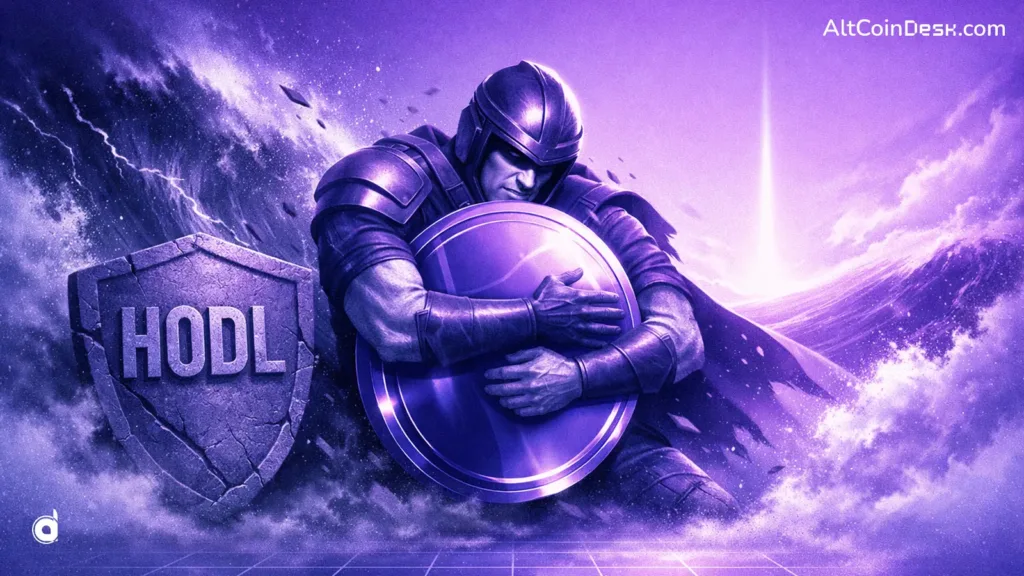
Now, let us step away from the jokes for a moment. There are real reasons why this idea survived for more than a decade.
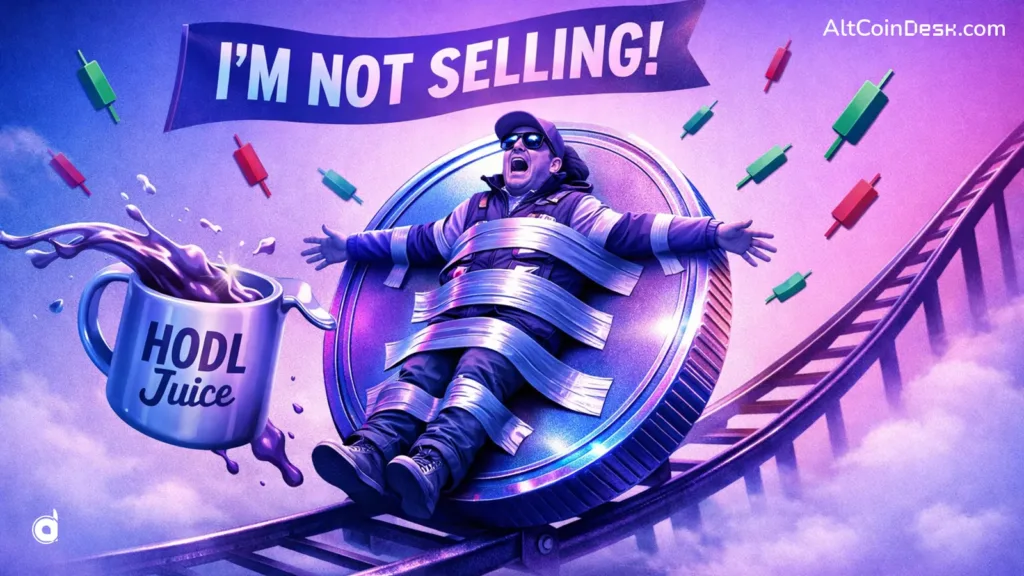
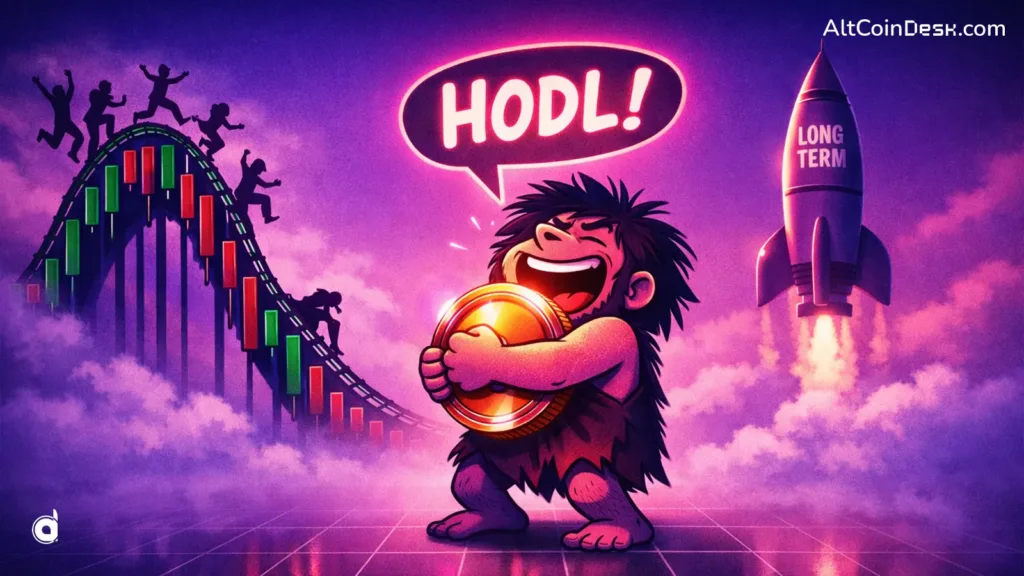
Reason one: Crypto prices behave like roller coasters
Bitcoin can jump twenty percent in a week and then drop fifteen percent the next. Anyone trying to trade every move eventually discovers something painful. Humans are emotional. Fear sells the bottom. Greed buys the top.
So HODL became a simple rule that protects investors from themselves. When everything is falling, you hold. When everyone is shouting on social media, you hold. When your cousin suddenly becomes a trading expert, you still hold.
Reason two: The data shows that many coins barely move
On-chain data actually confirms that many people follow this idea. Analytics firm Glassnode tracks how long Bitcoin stays in the same wallets. They categorize holders based on time. Anyone holding coins longer than about 155 days is considered a long-term holder.
As of March 2026, long-term holders control about 14.48 million Bitcoin out of a roughly 19.99 million circulating supply. That means about 72 percent of Bitcoin is held by long-term investors.
Even more interesting. Around 42 percent of Bitcoin has not moved for at least three years. Think about that. Nearly half the supply is sitting quietly somewhere while the internet argues about prices every day. That is HODL in action.
The famous HODL waves
Researchers also created something called HODL waves. No, it is not a surf competition for crypto traders. It is a chart that shows how old coins are. Some coins moved yesterday. Some have not moved in years. When the older bands grow larger, it means people are holding their coins longer.
Over time, these charts reveal something surprising. The longer people hold Bitcoin, the less likely they are to sell. Apparently, patience is contagious.
Scarcity makes HODL stronger
Another reason the idea survives is Bitcoin’s limited supply. Bitcoin will never exceed 21 million coins. More than 95 percent of that supply is already in circulation today. The final coins will take more than a century to mine.
So when someone asks again, what does HODL mean? The answer is not just emotional. It is also mathematical. If something is scarce and demand grows over time, holding it for years can make sense. Of course, this logic only works for strong assets. Holding weak projects forever is less of a strategy and more of a hobby in disappointment.
When HODL works and when it does not
HODL is simple, but it is not magic. It works best when people hold assets with real staying power. Bitcoin and Ethereum are the usual examples because they have large networks and long histories.
It becomes risky when applied blindly to small tokens that disappear after a few years. In other words. HODL can be wise. But stubborn HODL can turn someone into a very loyal bagholder.
Crypto slang explained for beginners
If you are new to crypto, HODL is only the beginning. The industry speaks a strange dialect that sounds like it was invented by sleep-deprived internet comedians. Here are a few classics in crypto slang explained for beginners:
- FOMO: Fear of missing out. The moment when everyone else is making money, and your brain screams, “Buy now.”
- FUD: Fear, uncertainty, and doubt. Often used when someone spreads negative news about a project.
- REKT: A dramatic way of saying someone lost a lot of money.
- WAGMI: Short for “we are all going to make it.” Usually said during bullish optimism.
- NGMI: The opposite. Someone who makes terrible decisions is “not going to make it.”
- Whale: A person or institution holding enough crypto to influence markets.
- Diamond hands: Someone who refuses to sell even during painful price drops.
- Paper hands: Someone who sells too quickly.
If this sounds ridiculous, that is because it is. But that strange language also reflects the culture that grew around crypto. Finance rarely had this much humor.
The future of HODL
Even as the crypto industry becomes more professional, HODL refuses to disappear. Institutions have held Bitcoin for years through ETFs. Companies add it to treasury reserves. Investors use long-term storage and hardware wallets.
But the spirit remains the same. People are choosing patience over panic. And that takes us back to the original question.
To sum up: What does HODL mean
So what does HODL mean today?
- Technically, it means holding crypto instead of trading it constantly.
- Historically, it means remembering a drunken typo from a forum post in 2013.
- Culturally, it represents patience in a market famous for chaos.
- And psychologically, it reminds investors that sometimes the smartest move in finance is the hardest one.
Sit still, ignore the noise, and HODL.