
The Commodity Futures Trading Commission (CFTC), which watches over the U.S. financial system, is sending strong signals that there will be a big change in the way Americans can trade cryptocurrencies. “Perpetual futures contracts,” or “perps,” are what we’re talking about. These high-risk, high-reward financial instruments aren’t widely available to regular investors on regulated U.S. platforms yet, but that could change very soon.
The CFTC recently asked the public for their thoughts on these one-of-a-kind contracts. This is an important step towards making official rules. This is happening because big crypto exchanges are already racing to offer perpetual futures in places like Europe, where the rules are clearer.
Important people in the crypto world are telling U.S. regulators to move forward. They say that with the right protections in place, perps could change the way trading works, giving experienced investors safer and clearer choices.
What are crypto perpetual futures contracts?
“Forever trades” on digital currencies
Think of Bitcoin, the digital currency that is known for its price changes. Now, think about how you might want to guess whether the price of Bitcoin will go up or down without actually buying any. That’s exactly what crypto perpetual futures contracts let you do.
What is it?
A perpetual futures contract is a type of financial agreement that lets you bet on the future price of a cryptocurrency, such as Bitcoin, without actually owning the coin itself.
The “perpetual” part is very important: you can keep your position for as long as you want, which is different from most traditional derivatives that have an expiration date.
It’s a simple market stance: if you think the price will go up, you “go long,” and if you think it will go down, you “go short.”
How does it work?
The “seesaw” effect
This is the smart (and sometimes hard) part: How do these contracts keep the price of your position in line with the real price of Bitcoin when they never end? That’s where the “funding rate” system comes in.
Think of a seesaw:
If most people in the market think prices will go up: The seesaw is leaning a lot to one side, which is the “long” side. To keep things in balance, people who are long (the “longs”) pay a small fee to people who are short (the “shorts”) every few hours. This small payment makes it less appealing to hold a “long” position and encourages others to take the opposite side, which helps keep the contract’s price close to the real market price of Bitcoin.
If most people in the market think prices will go down: The seesaw is leaning to the other side, the “short” side. In this case, the “shorts” pay a small fee to the “longs.” It’s the same thing to do.
The “funding rate” is the amount of money that is paid out in small, regular amounts. They are like a gentle, steady push to keep the trading market in line with the real crypto market.
What about leverage? (The glass that makes things look bigger)
This is where things get interesting and a lot more dangerous.
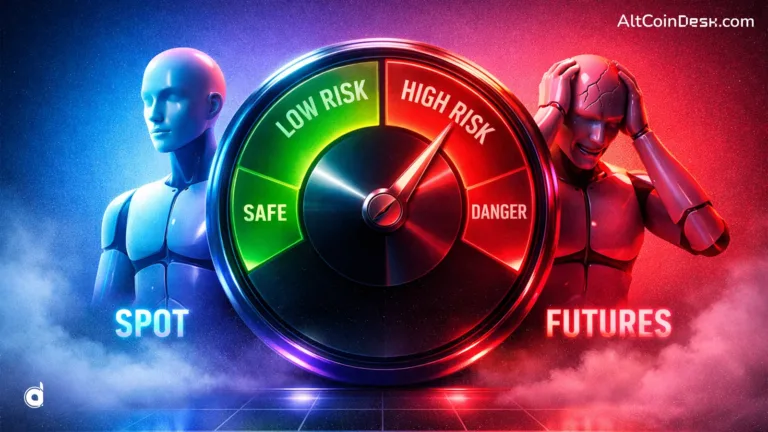
With leverage, you can control a much bigger financial position with just a little bit of your own money. With only $100, you might be able to trade like you had $1,000 or even $10,000!
The good news is that if your prediction is right, you can make a lot more money because you’re trading with more money than you actually put in.
The bad news is that if your guess is wrong, your losses are also bigger. The trading platform will automatically close your position (called “liquidation”) if the market moves too far against you to get back the money you “borrowed.” This can happen very quickly, and you could lose all of your money right away. It’s like walking a tightrope with your money!
What are they used for?
- To make money when prices go down: If you only own Bitcoin and its price goes down, it’s hard to make money. But with perpetual futures, you can bet that the price will go down and make money if you are right.
- To “insure” your crypto assets: You can open a “short” position in perps if you own a lot of Bitcoin but are worried about a temporary drop in the market. If the price of Bitcoin goes down, the money you lose on your real Bitcoin might be made up for by the money you make on your “short” position, which acts like a safety net.
- For the excitement and high stakes: Using leverage can lead to huge potential gains, which makes it appealing to experienced traders who like the thrill (and risk) of the market.
- A warning: this is not for the weak of heart.
Being a sports commentator who can call the game’s outcome without ever stepping onto the field is like trading futures all the time. You’re just looking at the price (the scoreboard) and making a guess about the market. The “perpetual” nature means that your position can last forever, but the “funding rate” is the cost of staying in the game.
Adding leverage makes your voice (your position) louder, like a microphone. But be careful: a strong microphone can also make a lot of noise and feedback.
Perpetual futures are very useful, especially for experienced traders. They give you options and the chance to make a lot of money, but they also come with a lot of risks. If you’re new to crypto or trading in general, it’s very important to fully understand these risks and how things work before you start. If you don’t, it might be better to just watch from the sidelines.