

From gene editing to mind decoding, artificial intelligence is merging with biology — creating a future where disease, thought, and identity are programmable.
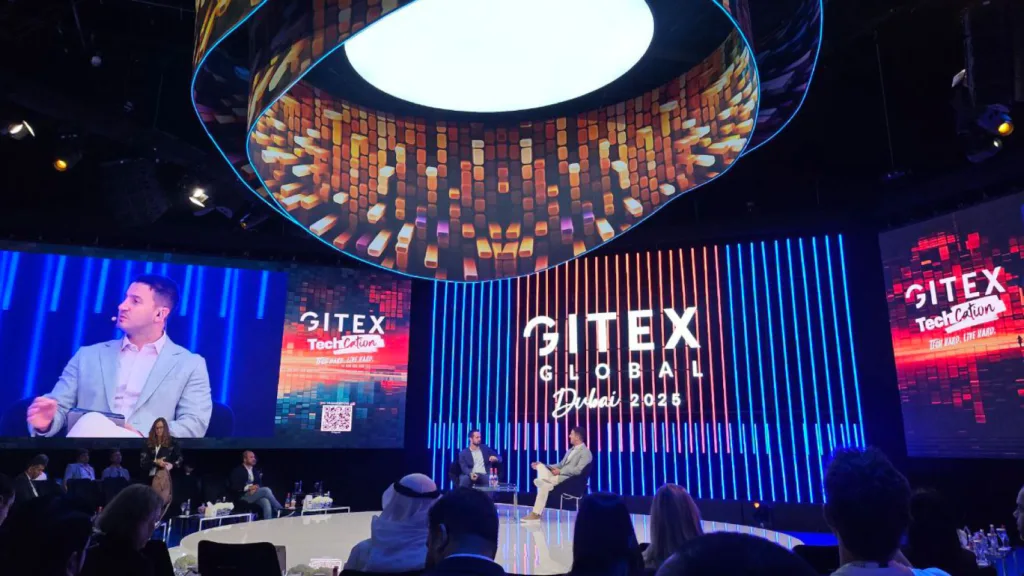
At GITEX Global 2025, two conversations stole the spotlight — not about new apps or trading platforms, but about how AI is starting to edit and interface with life itself.
In back-to-back sessions at the Power Summit main stage, Trevor Martin, CEO of Mammoth Biosciences, and Matt Angle, CEO of Paradromics, explored how artificial intelligence is turning both genomes and neural networks into systems that can be analyzed, rewritten, and optimized.
Together, their visions sketched the architecture of something far bigger than “AI for health” — an AI-human convergence, where intelligence extends beyond the digital realm and into our own biology.
AI + CRISPR: The algorithmic body
Mammoth Biosciences, co-founded by one of the Nobel Prize–winning inventors of CRISPR, is using AI to guide gene editing like code refactoring — finding, replacing, and correcting errors in human DNA.
“CRISPR is like a search-and-replace tool for life,” Martin explained. The company’s AI models help identify genetic sequences that cause disease and simulate millions of possible edits before they ever enter the lab.
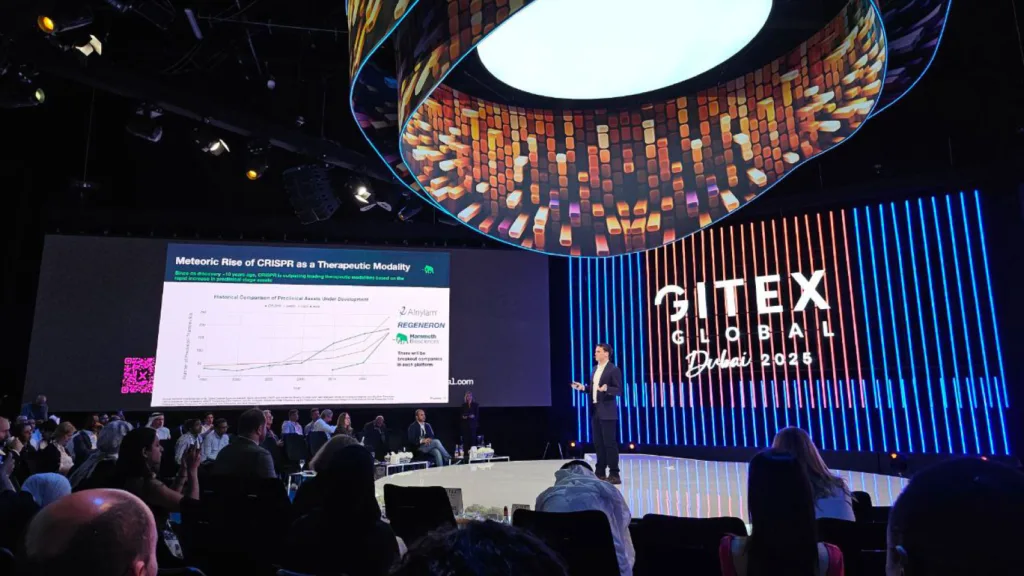
Their goal: make the Cas9 protein, the molecular tool that performs the “edit,” deliverable to any tissue in the body — the biological equivalent of deploying a universal software patch.
The vision borders on science fiction: a single injection that rewrites faulty genes, cures chronic disease, or even enhances traits like muscle growth, metabolism, or cognitive performance.
It’s biology informed by AI — and powered by computation.
AI + the brain: Decoding thought, restoring connection
While Mammoth rewrites the body, Paradromics is focused on decoding the mind.
Its brain–computer interface (BCI) uses advanced AI models to interpret brain signals and translate them into speech, motion, or even art. “Everything you experience comes as neural activity, and everything you do comes out as motor activity,” said CEO Matt Angle.
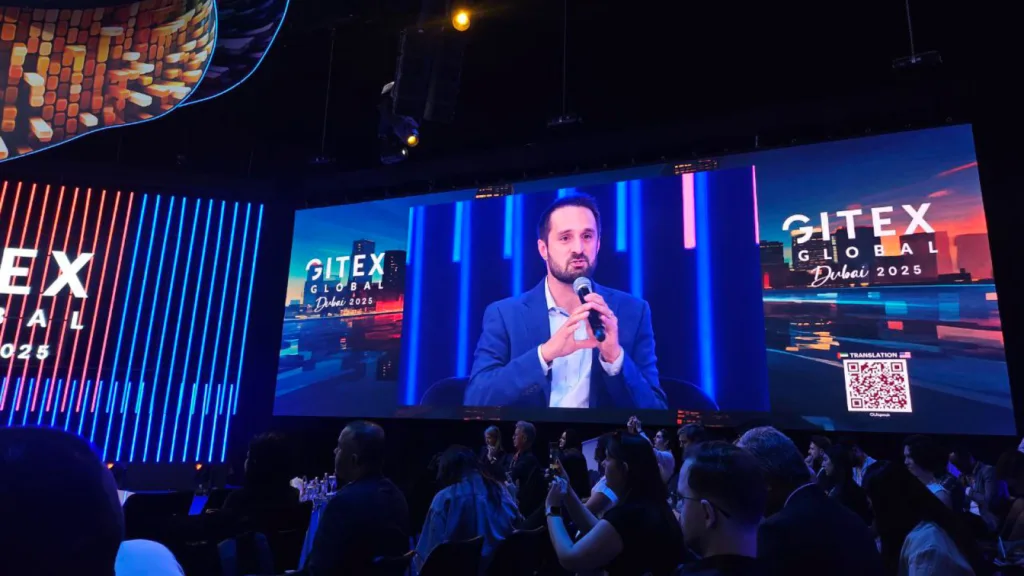
By implanting a high-bandwidth neural device — one that processes 20 times more data than Neuralink — Paradromics has achieved breakthroughs in neural data transmission. Tests in animals have mapped patterns tied to movement and speech; human trials come next.
The implications go far beyond medicine. AI can already reconstruct speech from brain waves — the next frontier is creativity. “There will be people who create digital art directly from thought,” Angle said.
But this also raises questions of control. If AI can decode and amplify the brain, who owns that data? “Our mission,” Angle emphasized, “is to affirm humanity, not diminish it.”
The new intelligence stack: Biology, data, and trust
Each layer depends on secure, verifiable data — genomic, neural, or personal. For blockchain innovators, this convergence opens new territory: how to anchor biological and cognitive data in trusted systems.
As AI gains access to what makes us human — our DNA, our emotions, our neural patterns — digital trust becomes the real infrastructure of the future.
This isn’t just about smarter algorithms anymore. It’s about turning AI into the connective tissue of humanity itself.