

Spinning fiction as fact, this is what the social media platform groups and several news media outlets were doing over the misunderstood idea that OpenAI has partnered with the UAE government to allow free ChatGPT access to the residents and citizens. But, what is the reality???
The truth inside OpenAI’s partnership with the UAE
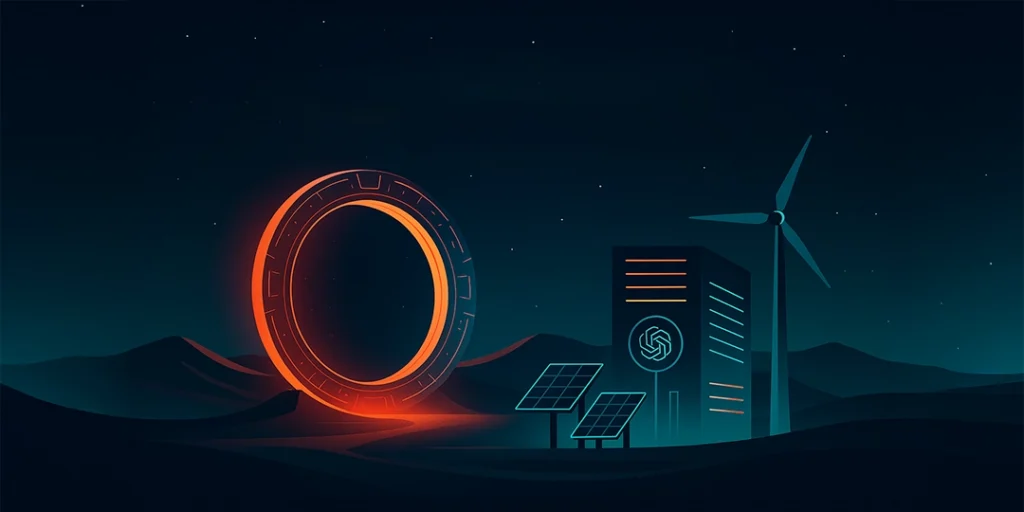
OpenAI, the AI company behind ChatGPT, announced in a press release that it has teamed up with the UAE government to bring the Stargate Project, an AI infrastructure initiative, to Abu Dhabi. The AI tech company, in collaboration with Oracle, SoftBank, and the Abu Dhabi-based investment firm MGX, is building Stargate UAE in the capital city.
What made several media reports the news differently is the following statement from the press release.
“Under the partnership, the UAE will become the first country in the world to enable ChatGPT nationwide — giving people across the country the ability to access OpenAI’s technology.”
The statement simply means that OpenAI will enable its access to several sectors with the help of the UAE government and did not even mention the word “free” throughout the report. The press release also clearly specified that the partnership will help the UAE in “leveraging OpenAI’s tools across critical sectors”: government, energy, healthcare, education, and transportation.
Leveraging energy resources, including renewable ones from the UAE
Moving in lockstep with the UAE, OpenAI is bringing its facility (Stargate) for the first time outside the US. The UAE is gifted with natural resources such as petrol and gas. And, that’s how the country started developing since the discovery of oil in the 1960s.
With OpenAI’s plans to launch Stargate UAE, the tech company aims to drive a juggernaut of AI innovation across the region. Besides, the tech giant consumes nuclear, solar, and gas energy — some renewable and non-renewable energy resources, to support the working of the new AI project.
AI deploys immense computational power for its operation. This process requires reliable and powerful energy resources to enhance uninterrupted operations.
Energy resources empower AI infrastructure
- The UAE is providing its available energy infrastructure to enhance the operations of the Stargate UAE project
- Nuclear and gas energy provide stable and continuous power to run high-performance computing calculations devoid of any interruptions.
- Renewable energy resources such as solar energy reduce the carbon footprint of AI. Mostly, the carbon footprint (total amount of greenhouse gases emitted) is quite high due to the intense energy used by AI platforms.
- Consuming solar, nuclear, and gas energy enables scalable, secure, and sustainable AI innovation across the country.
- Reportedly, the country is actively working to expand its energy mix (solar, nuclear, gas). This energy mix ensures high scalability for smoother AI operations as it can rely on various energy resources rather than depending on a single resource. Energy mix insinuates sustainability!
A part of the UAE Energy Strategy, put forward by the government portal, reads that it “aims to promote the deployment of renewable and nuclear energies, enhance energy efficiency, drive R&D and innovation in energy technologies”. The strategy also intends to “increase local clean energy capacity and encourage investments in the country’s renewable and clean energy sector.”
Energy stations in the UAE
- Barakah Nuclear Plant, Abu Dhabi
- Noor Abu Dhabi solar power plant
- Mohammed bin Rashid Al Maktoum Solar Park, Dubai
- Shams Solar Power Station, Abu Dhabi
- Jebel Ali Power and Desalination Plant (natural gas)
- Fujairah F2 Integrated Water and Power Plant
AI innovation is cumulatively increasing in the UAE with the adoption of Web3. From real estate tokenization and crypto-based payment options to AI adoption, integrating energy resources, the country is becoming a typical example of how technology and sustainable development go hand-in-hand.