

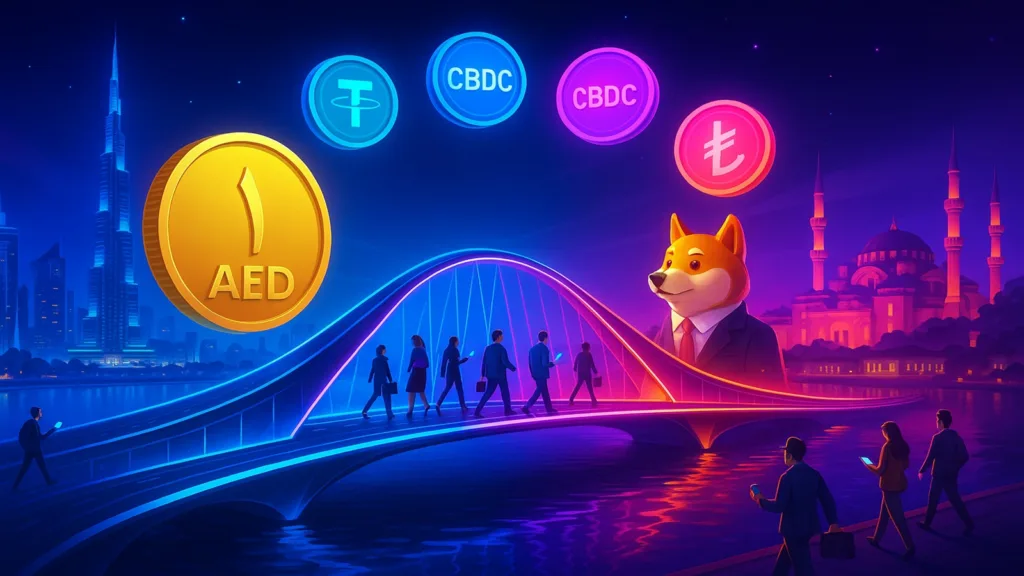

When central banks shake hands, crypto traders should pay attention; this currency swap deal may open the door to digital finance. Who knows?
The currency swap deal signed between the United Arab Emirates and Turkey this week may look like a purely traditional finance story. But dig deeper, and it could have ripple effects across crypto, stablecoins, and even central bank digital currencies (CBDCs).
On October 2, the UAE Central Bank and the Central Bank of the Republic of Türkiye confirmed an agreement worth 18 billion dirhams ($4.9 billion) and 198 billion lira. At its core, the deal is designed to provide local currency liquidity and make cross-border trade easier, no more scrambling for U.S. dollars every time a Turkish exporter wants to settle with a UAE partner.
Why crypto should care about a currency swap deal
To crypto natives, it’s tempting to dismiss this as “TradFi paperwork.” But it’s more than that. The UAE and Turkey are building a bridge for local currency settlements that bypass the dollar. And every time a country experiments with alternatives to dollar dominance, the crypto industry sees an opening.
Stablecoins like USDT and USDC exist largely because businesses want dollar-like stability without touching actual greenbacks. If swaps like this one succeed, it’s not hard to imagine dirham- or lira-backed stablecoins gaining traction.
And with both countries exploring CBDCs, the UAE already piloting digital dirham experiments, this currency swap deal could double as a test run for how future blockchain-based money moves across borders.

From payment pipes to digital rails
The agreement wasn’t just about liquidity. Two memorandums of understanding were signed, focused on:
- Encouraging the use of dirhams and lira in transactions.
- Linking payment and messaging systems between the two countries.
Think of it as upgrading the plumbing of finance. Today it’s fiat. Tomorrow, those same pipes could carry crypto settlements, CBDC flows, or tokenized assets. If Dubai is serious about becoming a fintech hub and Ankara wants to attract digital capital, this infrastructure lays the groundwork.
De-dollarization and digital assets: Currency swap deal
Why now? The world is in the middle of a de-dollarization trend. From BRICS nations pushing alternatives to Gulf states exploring oil payments outside the dollar, financial systems are being rewired. Crypto has always pitched itself as part of that solution: borderless, fast, and independent of U.S. policy.
This currency swap deal doesn’t put Bitcoin or Ethereum on the table directly, but it makes the world friendlier to the idea that money doesn’t always have to flow through Washington. That cultural shift matters as much as regulation.
What businesses and traders should watch
- Stablecoin opportunities: Will UAE- or Turkey-based firms experiment with tokenized versions of their currencies?
- CBDC pilots: The UAE already has the digital dirham in testing; Turkey is exploring a digital lira. A swap framework could accelerate trials.
- Crypto adoption narrative: When governments show that alternatives to the dollar are possible, crypto advocates gain stronger talking points.
Closing thoughts
The UAE–Turkey currency swap deal is not about Dogecoin or Solana mooning tomorrow. But it is about the architecture of money changing in real time. By reducing dollar dependence and creating new rails for local settlements, both nations are edging closer to the kind of financial flexibility crypto has promised for years.
For investors and builders, the message is clear: if the traditional system is experimenting with new pipes, expect crypto to follow or lead through those same channels.
Stay glued to altcoindesk.com for more!