

For years, the internet has been a place where humans click, scroll, compare, and pay. That assumption just cracked. Last week, MultiversX announced that it had integrated Google’s Universal Commerce Protocol and enabled x402, a web-native payment standard originally developed by Coinbase.
On the surface, it sounded technical. Underneath, it marked something bigger. This was one of the first real moments where machines were given the ability to discover services, negotiate value, and pay each other without waiting for a human to approve every step. That shift is what the industry is now calling the agentic payments protocol, and it matters far beyond crypto.
The quiet power move everyone missed: What actually changed
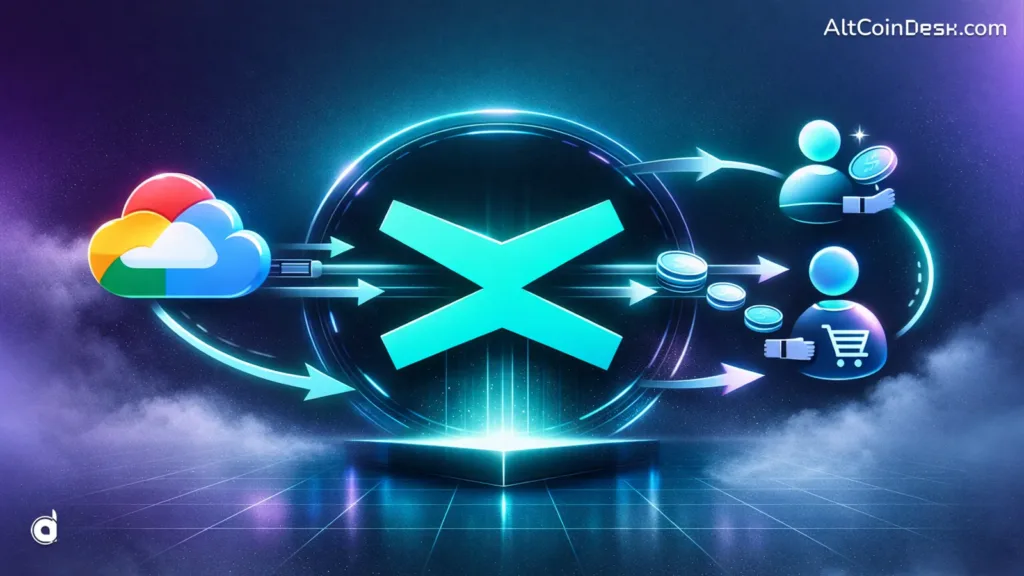
Google has been building a new way for AI systems to complete real-world tasks. Not just recommend products, but actually buy them. Not just suggest services, but pay for them. To do that, Google created the Universal Commerce Protocol, a shared language that lets AI agents talk to merchants, service providers, and payment systems in a consistent way.
MultiversX connected its blockchain infrastructure to that system. It also enabled x402, which revives the long-ignored HTTP 402 “Payment Required” response, allowing software agents to pay for access to APIs, data, or services automatically. Together, this creates a working agentic payments protocol where an AI agent can request a service, see the price, pay for it, and receive the result, all in one continuous flow. No checkout pages. No card forms. No human clicks.
Why this is not a crypto victory lap
It would be easy to frame this as a win for blockchain. That would miss the point because this is not about tokens going up or chains competing for attention. It is about payments becoming invisible infrastructure.
In this setup, blockchain does not sit at the center of the experience. It sits underneath, quietly handling settlement, identity, and automation while the interface belongs to AI systems built by companies like Google. That is why this moment feels different. Crypto did not win the interface. Payments did. The most important crypto integrations are the ones where crypto disappears from the headline, even as it powers the system.
The rise of non-human economic actors
The deeper story is not commerce. It is an agency. For the first time at scale, non-human actors can hold budgets, compare prices, and execute transactions on their own. An AI agent can decide that a dataset is worth paying for. Another agent can charge for compute, storage, or analysis. These agents do not get tired, emotional, or distracted. They optimize relentlessly.
This is where the agentic payments protocol becomes more than plumbing. It becomes the foundation of a post-human economy, where machines transact with machines at speeds and volumes humans cannot manage directly. The internet was built for people. The next economy is being built for software.
Why Google’s involvement changes the stakes
Google does not integrate lightly. It experiments loudly and commits quietly. By allowing its Universal Commerce Protocol to connect to a public blockchain stack, Google is signaling something important. It is not endorsing speculation. It is selecting infrastructure that is predictable, composable, and boring enough to trust at scale.
That choice matters because Google controls discovery. Search, assistants, and AI-driven interfaces shape what gets used. When Google builds commerce standards, the ecosystem tends to follow. This makes the agentic payments protocol less of a niche experiment and more of a directional signal.
What to watch next
If this transition is real, the proof will show up in specific places:
- First, named merchant launches. Not endorsements, but live agent-driven transactions inside Google-powered surfaces.
- Second, developer adoption. Real tools, real integrations, real production traffic using x402 flows.
- Third, payment volume. Agents paying agents is only meaningful if it happens repeatedly, reliably, and at scale.
- Finally, governance. When machines spend money, someone has to define limits, rules, and accountability. That conversation has barely started.
Why this moment will age well
Most technology shifts feel obvious in hindsight and confusing in real time. This one feels small because it is quiet. No flashy consumer app. No viral demo. Just protocols clicking into place.
But history favors infrastructure moments. The ones that remove friction rather than add features. The agentic payments protocol is not about shopping bots. It is about who gets to act in the economy. For the first time, the answer is not just humans. And once machines can pay each other, the rules of the internet change permanently.