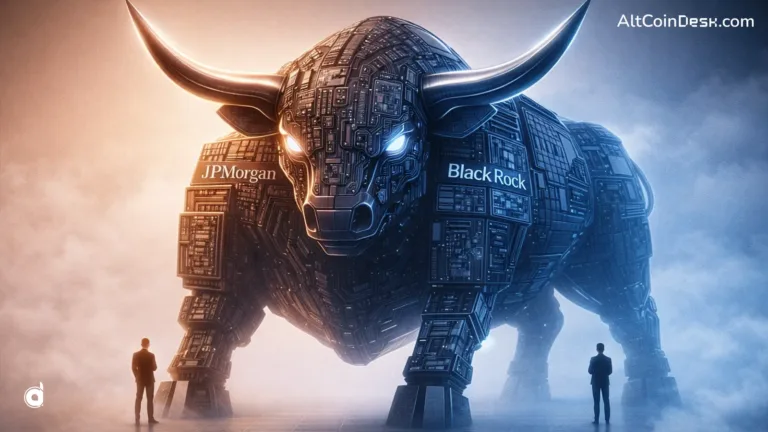



The rapid jump of Real-World Assets (RWA) from a niche crypto experiment to a market worth approximately $55 billion is the biggest story of 2025. Institutional adoption by major players like BlackRock and Franklin Templeton has fundamentally shifted the RWA narrative.
For years, crypto was just part of a circular economy where people traded tokens for other tokens. Then came RWAs, bringing real value, like the interest from government bonds or the rent from an apartment, on to blockchain.
This shift has also transformed how we trade. For instance, you can now buy or sell a fraction of a commercial building or a gold bar at 3:00 a.m. on a Sunday or a public holiday, something that was nearly impossible in traditional finance.
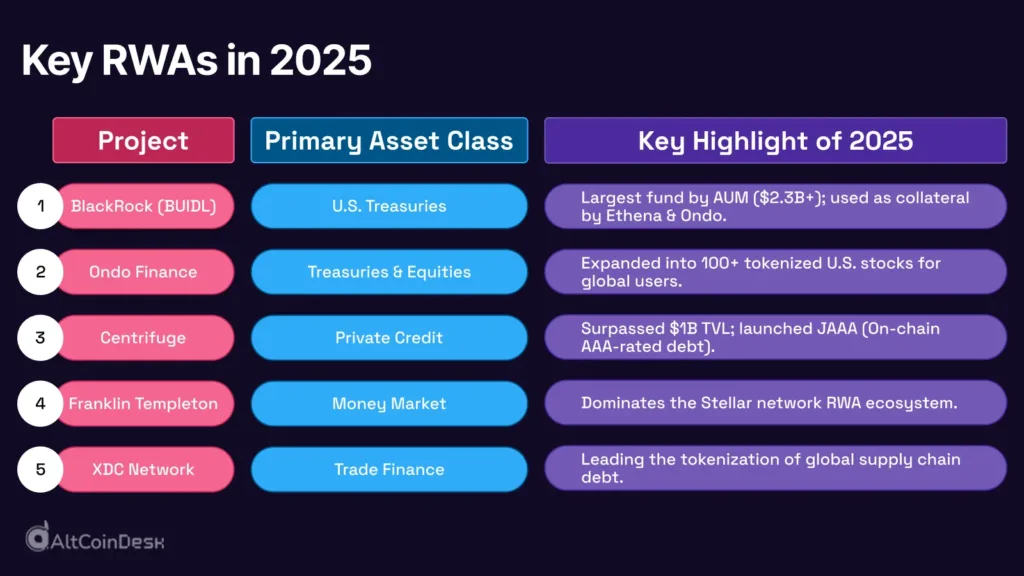
Furthermore, RWAs provide stability when crypto prices are volatile; a 4% to 5% yield from a tokenized treasury bond offers a dependable investment option. Tokenization also removes intermediaries like brokers, lawyers, and bankers, drastically reducing costs. According to market reports, the cost of managing these assets dropped by nearly 40% in 2025.
When Centrifuge and MakerDAO, the architects of RWA, entered the space in the early 2020s, they took only baby steps. Centrifuge provided the technical bridge to tokenize assets, while MakerDAO provided the necessary capital (liquidity).
By 2025, the space had exploded. The entry of BlackRock’s BUIDL fund and the passage of the GENIUS Act in the U.S., which allowed banks to handle tokenized assets, changed public perception and gave RWAs a definitive stamp of approval.
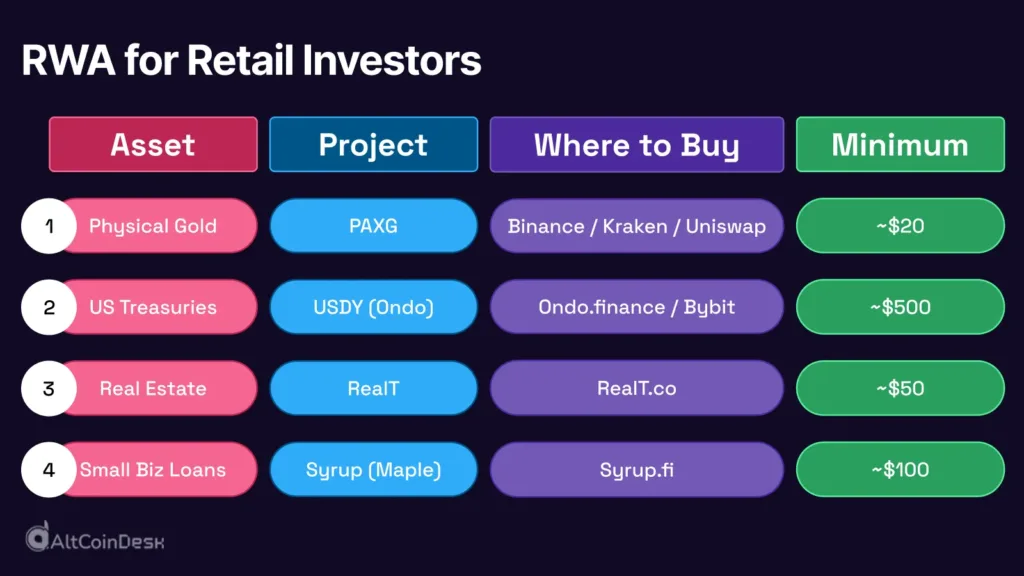
The results are palpable; even cautious retail investors have started putting their money into tokenized assets, especially gold and real estate. Gareth Warren, a Dubai-based investor, moved into real estate through RWAs in 2025. “I invested around $500 and started earning interest. I also hold gold ETFs, but RWAs are providing better returns at the moment,” said the British citizen living in the UAE.
Experts and analysts, including those at Boston Consulting Group (BCG), argue that tokenization is the only way to save the aging financial system from “settlement gridlock.” They believe RWA applications will be the catalyst that takes blockchain mainstream.
Financial experts predict the RWA market will reach $1 trillion by 2030. They envision a world where your digital wallet doesn’t just hold crypto, but also your house deed, car title, and even a fractional share of a space station, all earning interest.