



The Ripple–Kyobo Life partnership has now redrawn finance as Korea’s Insurance Capital tests tokenized government bonds and signals a new era of institutional blockchain infrastructure.
Such an arrangement is unusual in South Korea, and almost no one is reacting the way they should. The Ripple–Kyobo Life partnership is being framed as another corporate collaboration, but that reading misses the real story entirely.
This is not about crypto adoption in the usual sense. It is about infrastructure. It is about who controls the rails beneath finance. And more importantly, it is about what happens when one of the most conservative pools of capital in the world, insurance money, quietly begins testing blockchain settlement. The Ripple–Kyobo Life partnership is not loud, not flashy, and not designed for retail headlines. That is precisely why it matters. Because when the quiet layers of finance start moving, the market usually realizes too late.
The core development of what is happening
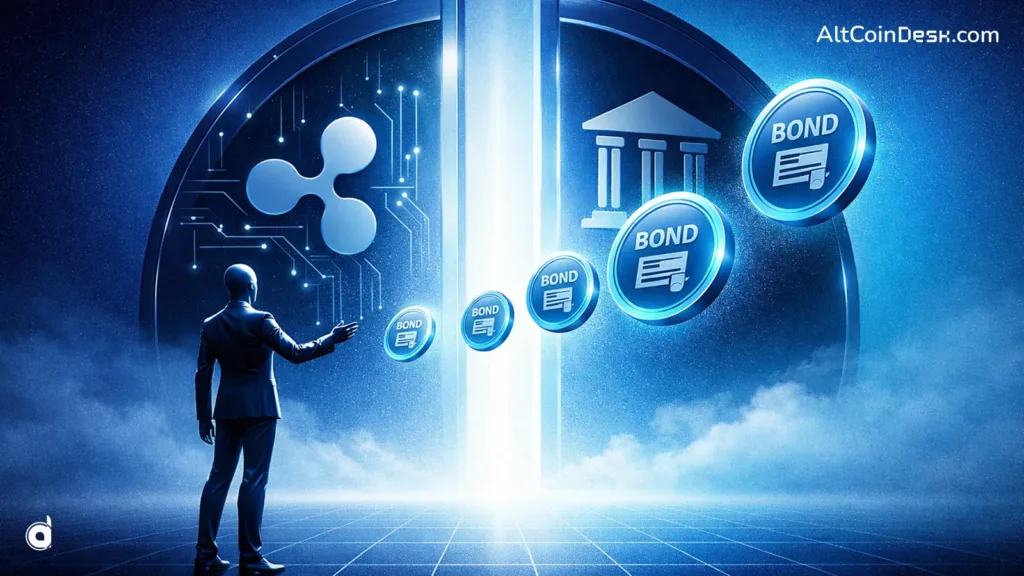
At the center of this shift is the Ripple–Kyobo Life partnership, a collaboration between Ripple and Kyobo Life Insurance that focuses on something far more important than trading tokens, tokenized government bonds.
The official announcement makes one thing clear: the initiative is not a marketing experiment. It is a structured pilot designed to test regulated digital asset custody and settlement using Ripple Custody.
Kyobo Life becomes the first major Korean insurer to integrate this infrastructure, marking a quiet but meaningful shift. Instead of asking whether blockchain can support finance, the Ripple–Kyobo Life partnership assumes it already can and begins testing how deeply it can be embedded.
Recent commentary across Ripple’s official channels reinforces this positioning. The messaging is consistent: the focus is on institutional-grade infrastructure, not speculative crypto exposure. The emphasis is on compliance, custody, and capital efficiency, words that matter far more to insurers than token prices.
Why does this approach matter to South Korea?
South Korea has always been treated as a retail-heavy crypto market, but that narrative is outdated. The Ripple–Kyobo Life partnership exposes a deeper truth: Korea is becoming one of the most important institutional testing grounds for blockchain finance.
This is a country where:
- Digital adoption is already mature
- Financial regulation is strict but evolving
- Institutional players are influential and cautious
That combination creates a rare environment. Innovation is allowed, but only when it fits inside the regulatory structure. The Ripple–Kyobo Life partnership fits that mold perfectly. Instead of bypassing regulation, it works through it. Instead of targeting retail users, it targets capital allocators. That shift alone changes the tone of adoption.
Why Kyobo Life is a big deal
To understand the weight of the Ripple–Kyobo Life partnership, you have to understand what insurance companies represent. They are not traders. They are not speculators. They are long-term capital managers responsible for:
- Pension-linked assets
- Government bonds
- Stable yield strategies
Kyobo Life sits inside that system. Its involvement signals something deeper than experimentation. It signals institutional curiosity backed by capital discipline. When insurers begin testing blockchain settlement, it suggests that tokenization is no longer being treated as a fringe concept. It is being evaluated as a potential upgrade to core financial operations.
The Ripple–Kyobo Life partnership is significant precisely because insurers move slowly. If they are moving at all, it usually means something has already matured.

What exactly is being tested?
The Ripple–Kyobo Life partnership centers on three layers of financial transformation:
Tokenization
Government bonds are converted into digital representations on blockchain infrastructure. These are not new assets. They are existing instruments, restructured.
Custody
Through Ripple Custody, these assets are stored in a secure, institutional framework designed to meet compliance requirements. This is critical. Without custody, institutions do not participate.
Settlement
Traditional bond settlement takes time. Blockchain allows for near-instant settlement, reducing counterparty risk and operational friction.
The Ripple–Kyobo Life partnership is effectively testing whether these three layers can work together in a regulated environment. If they can, the implications extend far beyond Korea.
Where this fits in Ripple’s strategy
The Ripple–Kyobo Life partnership is not a one-time thing. It fits into a bigger plan for change.
Ripple has been slowly moving away from:
- Payment systems
- Solutions for liquidity
To:
- Infrastructure for custody
- Frameworks for tokenization
- The financial plumbing of institutions
This is a small but important change. Ripple is not trying to compete with banks; instead, it is positioning itself as a provider of underlying systems. The Ripple–Kyobo Life partnership strengthens this direction. It shows that Ripple doesn’t want to take the place of traditional finance. It is trying to fit in.
The bigger trend: Tokenization of real-world assets (RWAs)
The Ripple–Kyobo Life partnership sits inside a much larger movement, the tokenization of real-world assets. Global institutions like BlackRock, JPMorgan Chase, and Franklin Templeton are already exploring similar directions.
The logic is simple:
- Financial assets already exist
- Blockchain makes them more efficient
Tokenization is not about creating new value. It is about unlocking efficiency in existing markets. Government bonds alone represent tens of trillions in value. If even a fraction of that moves onto blockchain rails, the implications for liquidity, settlement speed, and transparency are enormous.
The Ripple–Kyobo Life partnership is one of the clearest real-world implementations of this trend to date.
Ripple–Kyobo Life partnership: The regulatory angle
The Ripple–Kyobo Life partnership would not exist without regulatory alignment. South Korea has taken a cautious but deliberate approach to digital assets. The focus has been on:
- Protecting investors
- Control of exchanges
- Frameworks for institutional participation
It is unlikely that this pilot operates without oversight. More likely, it exists within a structured environment designed to test outcomes without exposing systemic risk. That matters. Because institutional adoption does not begin with hype. It begins with permission.
Why is this a turning point and not just another partnership
The Ripple–Kyobo Life partnership stands out for four reasons:
- It moves into insurance capital: This is one of the most conservative segments of finance. Entry here is rare.
- It focuses on basic financial tools. For example, government bonds are not speculative assets; they are basic assets.
- It starts the custody infrastructure, which is the first step to getting involved in institutions.
- It grows in Asia: Ripple makes its mark in a part of the world that is already open to structured innovation.
Each of these layers compounds the significance of the Ripple–Kyobo Life partnership.
Hidden insight most coverage misses
The Ripple–Kyobo Life partnership is not about token prices. It is about control of infrastructure. Retail markets focus on volatility. Institutions focus on systems. This move suggests that the next phase of blockchain adoption will not be driven by hype cycles. It will be driven by:
- Efficiency gains
- Cost reduction
- Settlement improvements
The companies that control these systems may ultimately matter more than the tokens themselves.
Risks and challenges
Even with its potential, the Ripple–Kyobo Life partnership faces real challenges:
- Regulatory shifts could slow expansion
- Institutional adoption may remain gradual
- Competition from banks and global networks is strong
- Technical interoperability is still evolving
These are not small issues. But they are typical of early infrastructure transitions.
Market and technical implications
From a market perspective, the Ripple–Kyobo Life partnership introduces a different kind of signal. This is not a short-term catalyst. It is a long-term structural indicator.
Market View
- Institutional narratives tend to lag in pricing
- Infrastructure adoption often precedes capital inflows
- Tokenization trends may attract institutional capital over time
Technical Narrative
- Blockchain is being tested as a settlement layer
- Custody solutions are becoming central
- Integration with traditional systems is increasing
If this model proves successful, similar frameworks could be replicated across:
- Pension funds
- Sovereign wealth funds
- Global insurers
The Ripple–Kyobo Life partnership may not move markets immediately. But it changes the direction they are likely to move.
What happens next?
In the short term, the Ripple–Kyobo Life partnership remains a pilot. In the mid-term, it could expand to additional institutions within Korea. In the long term, it could evolve into a broader framework for:
- Tokenized bond markets
- Cross-border settlement systems
- Institutional blockchain integration
Each stage builds on the last. And each stage reduces uncertainty.
To sum up the real narrative
The Ripple–Kyobo Life partnership tells a story that is easy to miss. Crypto is no longer trying to disrupt finance from the outside. It is being integrated from within. That shift is quieter. Slower. Less dramatic. But historically, those are the shifts that last.