
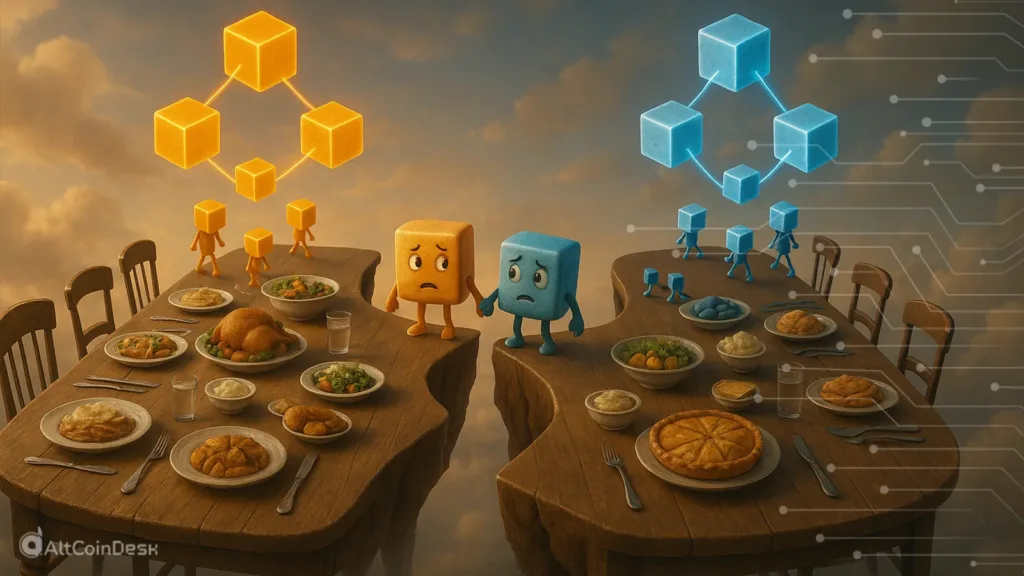

Let’s try explaining blockchain forks to you folks! You are at a family dinner. Everyone is smiling at the beginning, the table looks peaceful, and the food smells heavenly. Then someone brings up politics, or a long-standing inheritance disagreement, or that one sibling who swears they were the chosen child. Suddenly, the room divides into factions, each claiming they hold the true family legacy. Two groups leave the dinner believing they are the rightful heirs to the same story.
A blockchain fork behaves exactly like that moment.
Part 1: The familiar scene
Imagine a shared group chat with your siblings. You all use it to plan trips, argue about who owes money, and drop random voice notes no one asked for. One day, half of your siblings decide the chat needs rules. The other half insists the group chat should stay chaotic forever. Both sides feel strongly. No one wants to back down.
So the chat splits in two at the same time.
Same people. Same history. Different future.
Part 2: Blockchain fork is like…
A blockchain fork is like that family group chat dividing into two separate chats. Everything before the split is identical. Every message, every emoji, and every embarrassing photo is part of the same past. But from the moment the disagreement happens, the history branches. Now each chat has its own messages and its own culture. At the moment of separation, they still share DNA. After that point, they grow into entirely different households.
Part 3: How it is similar, and where it is not
Just like your imaginary siblings, developers and miners often disagree about a network’s future. Should the blockchain process bigger blocks? Should transactions be faster? Should it stay conservative or push innovation? These arguments lead to the code equivalent of an emotional family split.
Here is where a blockchain fork becomes technical.
A soft fork is the polite version. It changes the rules in a way that is still compatible with the past. Think of it as your siblings creating a second chat while still quietly reading the original one. No hard feelings. Everyone still shows up to family birthdays.
A hard fork is the loud, dramatic version. It breaks compatibility. It creates two chains that no longer speak the same language. It is the equivalent of a sibling saying they are starting an entirely new family tree, and the old one can stay stuck in the Stone Age. Both chains believe they are the rightful future. Both chains continue onward. Each gains its own community, culture, and identity.
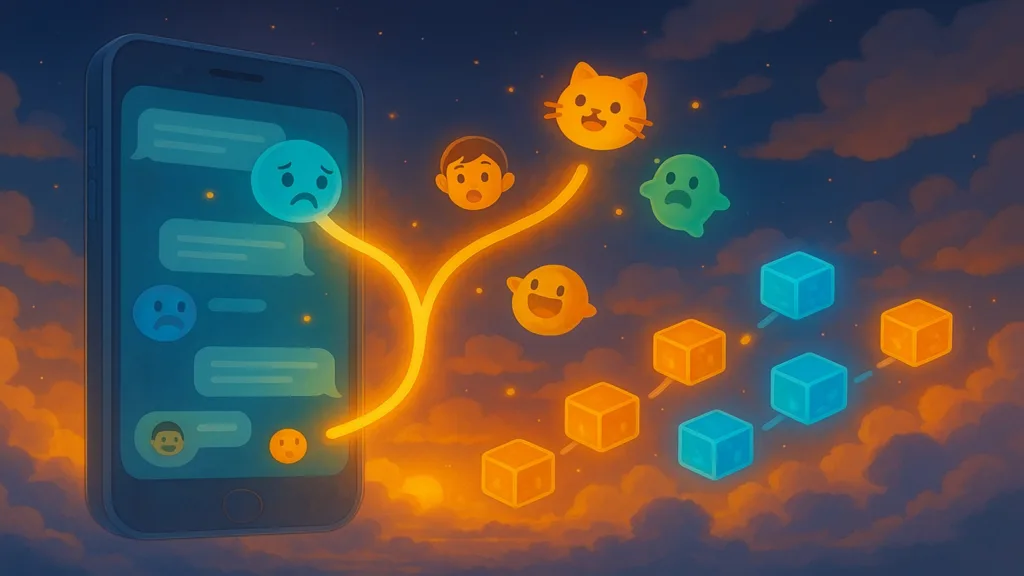
This is how Bitcoin and Bitcoin Cash were born. This is how Ethereum and Ethereum Classic became siblings who barely acknowledge each other. A blockchain fork is not a tiny glitch. It is a philosophical split that becomes permanent architecture.
And unlike real families, the blockchain keeps perfect receipts. The entire history of the network is copied at the moment of separation. It is the cleanest divorce paperwork ever written.
Part 4: The human insight
The deeper truth is simple. A blockchain fork shows what happens when power, ideology, and code collide. There is no central judge. No parent to end the argument. No sheriff to declare a winner. The network votes with computing power, participation, and belief. A fork does not destroy a blockchain. It reveals what each side is willing to fight for.
This is the quiet miracle of decentralized systems. In traditional finance, disagreement is handled behind closed doors by committees wearing identical suits. In crypto, disagreement becomes visible architecture. It becomes two roads, both real, both irreversible, and both open to anyone brave enough to walk them.