

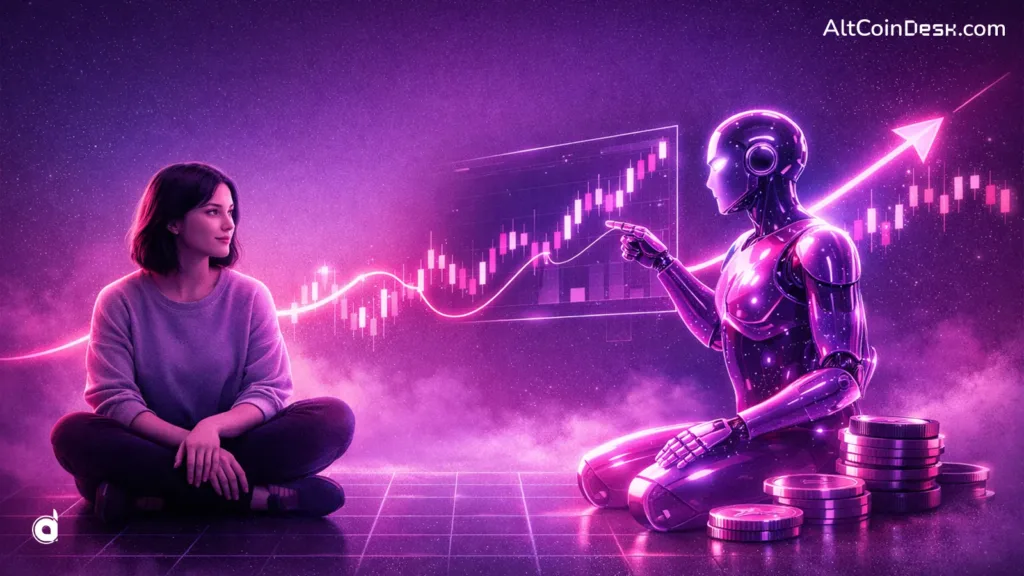

For a long time, trading crypto was a sport reserved for people who liked squinting at squiggly green and red lines at 3 a.m. while chugging energy drinks. It was a full-time job for night owls with great internet connections.
Then, something sneaky happened. While everyone was blinking at their screens, the computers got bored and started doing the work themselves.
Welcome to the era of AI crypto trading. Instead of a human staring at a chart until their eyes cross, we now have clever bits of software that scan the markets, spot patterns, and buy and sell all by themselves. These digital brainiacs can chew through mountains of info: prices, trades, angry tweets, and blockchain receipts, in the time it takes you to blink.
The result? The crypto market now runs on autopilot. Rumor has it that over 70% of all crypto trades are done by robots. That means most of the time, you’re not trading against some guy in his basement; you’re trading against a very enthusiastic toaster.
If you’re new to this, understanding AI crypto trading is now just as important as knowing that Bitcoin isn’t actually a coin you can put in a piggy bank.
What does “AI crypto trading” even mean?
AI crypto trading is basically teaching a computer to watch the market and gamble, sorry, “invest” for you.
Old-school trading tools are like a basic coffee maker. You put water in, you push a button, and you get coffee. Same rules, every time. AI is different. AI is like a barista who learns your order, notices you’re grumpy on Mondays, and makes you a double espresso before you even ask.
These robo-traders look at a bunch of stuff at once:
How much are people buying? Is everyone on Twitter panicking? Are the big whales (people with huge wallets) moving their money?
For example, an AI might notice that a few big investors just moved their coins to an exchange (usually a sign they want to sell) while everyone on social media starts yelling “TO THE MOON!” The AI puts two and two together, predicts a price drop, and sells before the chaos even starts.
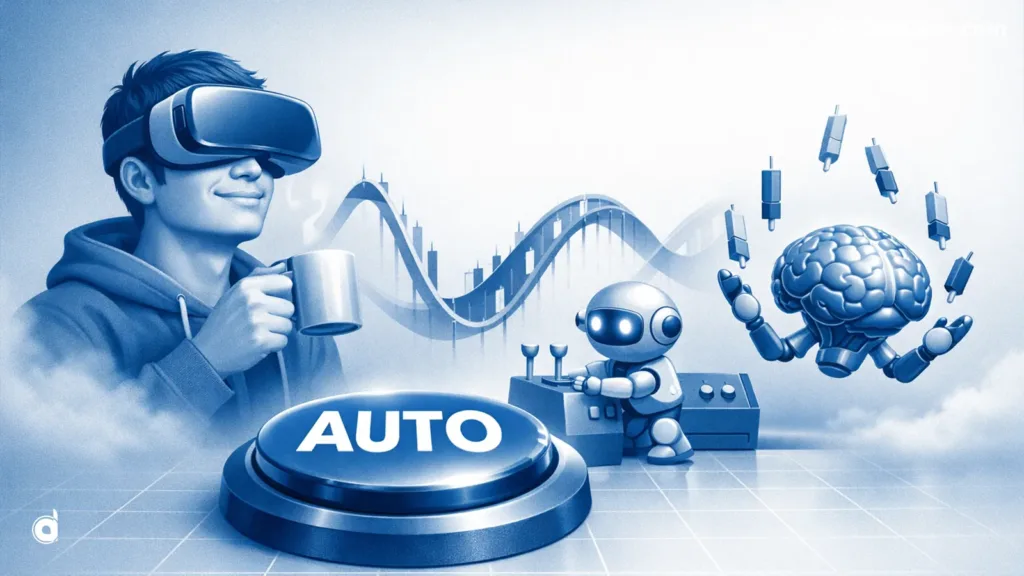
The best part? AI crypto trading doesn’t need coffee. It doesn’t sleep. It just sits there, watching the casino 24/7, waiting for a good hand.
Why is everyone letting bots take over?
Why is AI crypto trading spreading faster than a meme coin on Reddit? A few reasons:
- First, speed. These algorithms can analyze a billion things per second and trade faster than you can type “HODL.” By the time your finger hits “buy,” the robot has already been to the moon and back.
- Second, chill vibes. Humans are emotional disasters. When prices drop, we panic. When prices rise, we get greedy and think we’re geniuses. AI has no feelings. It doesn’t get scared. It doesn’t get excited. It just follows the plan like a bored robot accountant.
- Third, extra eyes. You might watch five charts at once. An AI can watch five hundred. It’s like having a thousand interns staring at screens so you don’t have to.
- Lastly, it’s about keeping up. The big money players have been using robots for years. If you want to play in the big leagues, using AI crypto trading tools is how you stop feeling like a minnow in a shark tank.
What do these robot traders actually do?
So, you’ve rented a robot trader. What’s its strategy? Here are the popular kids on the block:
- Trend Following (AKA “Jump on the Bandwagon”): The robot sees the price going up. It buys. It sees the price going down. It sells. It’s simple, but it works until the market decides to take a sharp left turn.
- Arbitrage (AKA “The Middleman”): This is the robot equivalent of buying a cheap apple at one store and immediately selling it for a profit at the store next door. If Bitcoin is $30,000 on Exchange A and $30,050 on Exchange B, the AI buys it cheaply and sells it expensively. Pocket money!
- Grid Trading (AKA “Selling Low and Buying High… on Purpose”): This sounds like bad advice, but hear me out. The robot sets up a bunch of buy and sell orders in a specific price range. If the price bounces around like a ping-pong ball, the robot scoops up tiny profits on every little bounce.
- Mind Reading (AKA Sentiment Analysis): Fancy AIs scan the internet, news, tweets, and memes to see if everyone is happy or angry. If the internet is throwing a tantrum, the AI knows a storm is coming and prepares accordingly.
The robot revolution is making bank (for some people)
The robot uprising isn’t just happening in crypto; it’s happening everywhere. The market for AI crypto trading bots was worth a cool $1.6 billion in 2024. By 2032, it’s expected to balloon to over $5 billion. That’s a lot of digital pocket change.
In the normal stock market, robots already do 60-75% of the trading. Crypto is just following the herd (of robots). Young traders, especially Gen Z, love this stuff. Surveys show that about two-thirds of them have dabbled in AI crypto trading at least once. Why stare at a chart when your phone can do it for you?
The fine print: How robots can burn your cash
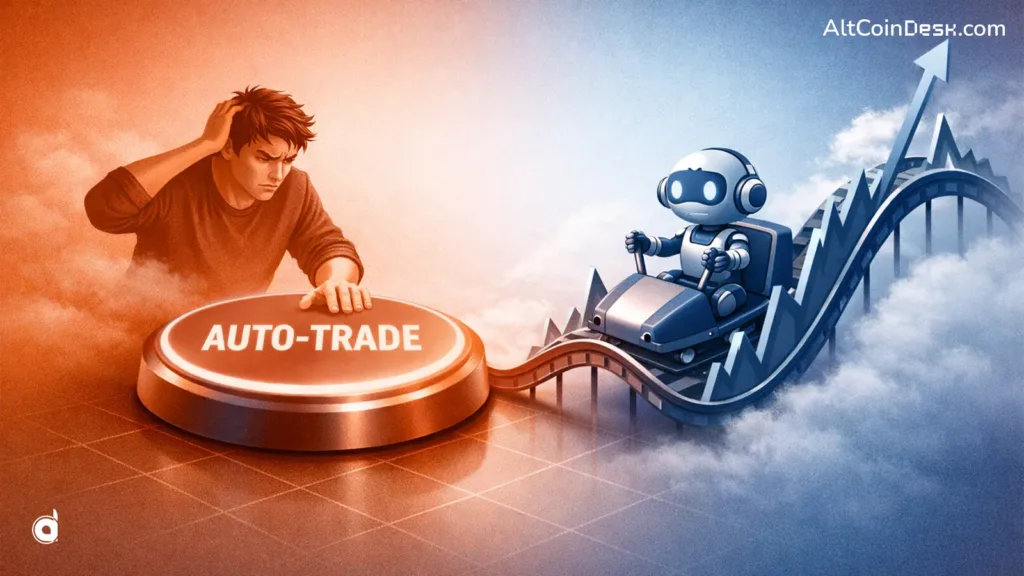
Before you sell your car to fund your new robot army, let’s talk about the risks. AI crypto trading is not a printer for money.
- The Robot Gets a Virus: Trading bots run on code. Code breaks. The internet goes down. The connection to the exchange fails. If your bot glitches, it might buy a thousand dollars of a coin called “DoggyWoof” when you told it to buy Bitcoin.
- The “Perfect Record” Trap: AIs are great at looking at history. “If we had used this strategy last year, we’d be rich!” But markets are moody. What worked yesterday might cause a disaster today.
- The Scammy Bots: The internet is full of smooth talkers selling “revolutionary AI trading systems” that promise to turn $10 into a million overnight. They are lying. They want your $10 (and probably your identity). Be very wary of any AI crypto trading tool that promises guaranteed riches or asks you to send crypto to a random website.
What’s next? The robots are getting smarter
The future of AI crypto trading is getting weird (and cool). We’re starting to see “autonomous agents,” AIs that teach themselves to trade better just by playing the market like a video game. They learn from their wins and losses without a human telling them what to do. Other bots are getting nosy. They’re snooping on the blockchain, watching where the big players move their money, and trying to predict the next move before it happens.
Researchers are even building AI teams, where multiple bots compete or work together to make better trades. It’s like “The Wolf of Wall Street,” but with less shouting and more coding.
The future: Will you be fired by a robot?
So, what’s the long-term plan for humans? Are we obsolete? Probably not. Regulators are starting to pay attention. They’re worried that a bunch of trigger-happy robots could cause a market crash. Soon, there might be rules to keep the bots on a leash.
For normal people, the future of AI crypto trading isn’t about the robots taking over. It’s about the robots being your assistant. You’ll still make the big decisions, but the AI will do the boring stuff, like crunching numbers and staying awake all night.