



Solana validators dropped drastically after large validators charged 0% fees, which eventually pushed the smaller validators to exit the network. With the validator count drastically down, there are questions being raised about the network being centralized.
The validator count on the Solana network drastically dropped from its peak of 2553 back in March 2023 to 796 as of yesterday, dropping nearly by 70%. The validators, who are responsible for adding new blocks to the network, usually charge a percentage of the reward for their service. However, as the larger validators charge a 0% fee, the smaller validators have no profits, and they have been forced to go offline.
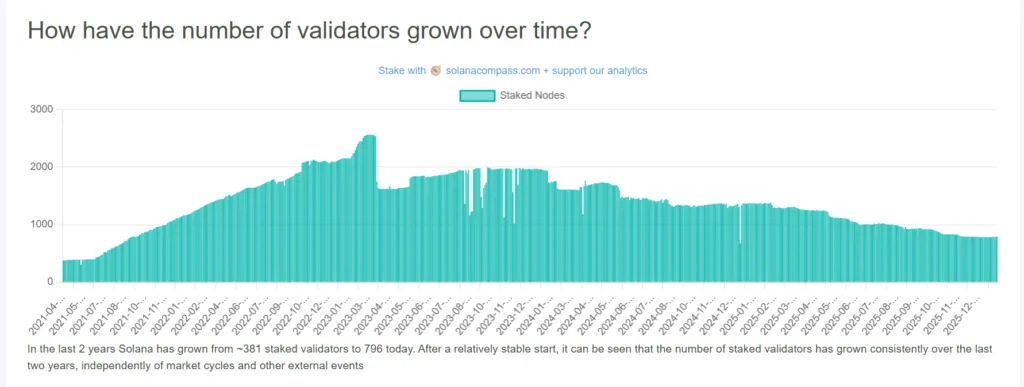
The flush-out did have its good and bad sides. Considering the good part, this mass exodus saw the exit of some of the zombie nodes, or inactive operators that were lying there. However, along with these, the smaller validators also were forced out, and this created a centralization of the large validators.
Some of the drop in Solana’s validator count is just cleanup, and that’s healthy. But there’s also a real economic pressure at play; for many small validators, the numbers simply don’t work anymore. When large operators can run at scale and charge zero fees, stake naturally concentrates, even if no one intends it.
Analyst Lavneet Bansal
He further added that this isn’t unique to Solana, but it does highlight the ongoing trade-off between efficiency and maintaining a broad, economically viable validator set.
When the stake is entrusted to the hands of a few large validators, it gets centralized, and the theoretical risk of a 50% attack is possible. However, an attack of this kind still requires collusion or an extremely concentrated stake distribution, which is very difficult to attain.
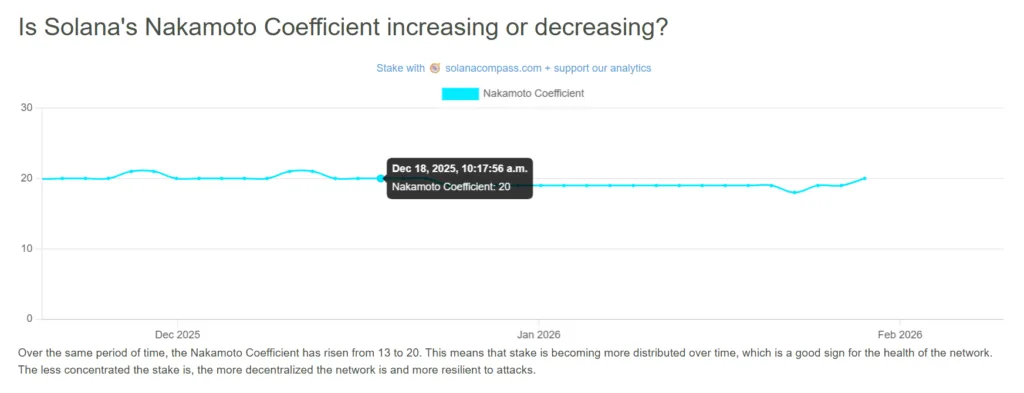
The Solana Nakamoto Coefficient from 18-20 shows that the stake is distributed better over time. The less concentrated the stake, the more decentralized the network is.
Despite the Solana prices moving sideways, the total value locked in the smart contract rose from $7.89 billion to $9.34 billion. The TVL shows how much capital is actively used on Solana, indicating network adoption, liquidity, and potential price support.