



The South Korea seized Bitcoin theft is a warning about what happens when old systems try to control new money. Here’s a story about a very modern safe and a very old mistake.
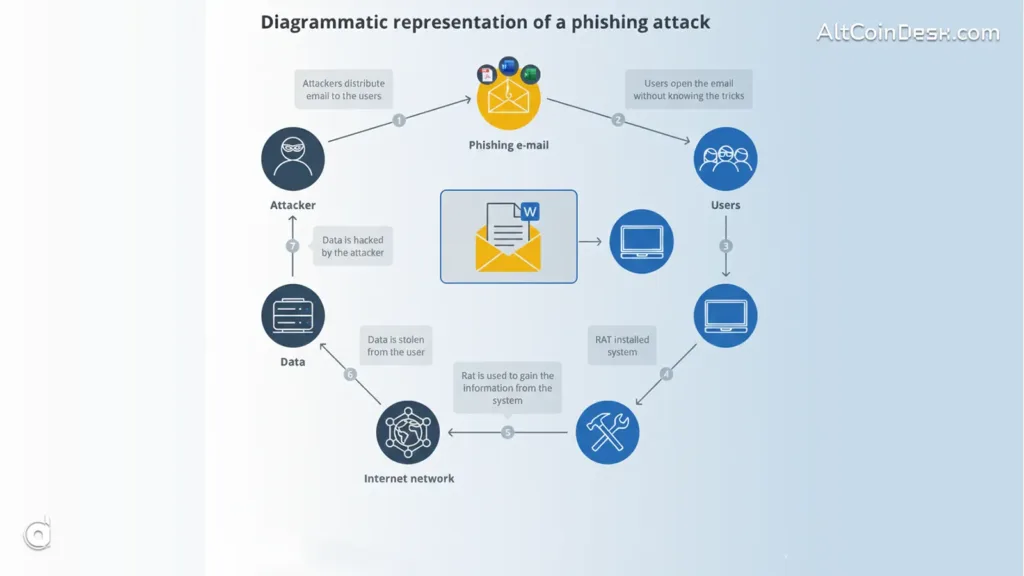
Prosecutors in South Korea seized Bitcoin as part of a criminal investigation, locked it away, and then discovered it was gone. Not misplaced. Not frozen. Gone. According to multiple reports, including from major outlets like Chosun Ilbo and The Dong-a Ilbo, a massive amount of seized Bitcoin vanished. The suspected cause? A phishing scam. Yes, the same simple trick that plagues email inboxes everywhere apparently caught a government agency off guard, potentially to the tune of $48 million.
This is not a tale of a shadowy hacker genius. Early reports point to a stunningly basic failure: credentials for a fortune in digital assets kept on a USB drive, and someone clicking where they shouldn’t. It’s the digital equivalent of storing the key to a gold vault on a hook by the door and then wondering how the gold went missing.
For years, the narrative has been that you are the weak link in crypto. “Not your keys, not your coins,” they say. Be careful of phishing! Secure your seed phrase! Yet here we are, with a state prosecutor’s office potentially falling for the very trap that everyday users are warned about. The irony is so thick you could cut it with a knife.
The custody conundrum
This story breaks my heart because it was predictable. Governments worldwide are aggressively expanding their power to seize cryptocurrency. Just this January, South Korea’s Supreme Court affirmed that Bitcoin on exchanges can be seized. This is a global trend. From the U.S. Secret Service to UK authorities, law enforcement is sitting on billions in seized digital assets.
But seizing a Bitcoin is not like impounding a car. A car sits in a physical lot. Bitcoin exists on a global ledger; it is secured by cryptographic keys. Whoever holds those keys holds the asset, absolutely and finally. There is no bank manager to call, no paperwork to reverse. It is a bearer asset, pure and simple.
And herein lies the fatal flaw this South Korea seized Bitcoin theft exposes: our legal systems evolved to seize and control physical property and traditional money in banks. Their custody protocols, forms in triplicate, locked cabinets, and two-person rules for physical access are ancient rituals next to the silent, swift logic of cryptocurrency.
Storing the key to millions on a USB stick? Using that stick on a computer that browses the web? For anyone in the crypto world, this is unfathomable. For high-value custody, you use hardware wallets, multi-signature schemes requiring several approvals, and air-gapped computers never connected to the internet. The state, it seems, is learning these rules the hardest way possible.

The $48 million question no one is asking
Everyone is asking how this happened. We should be asking who pays.
Think about it. This Bitcoin was seized, likely from someone accused of a crime. It was evidence, an asset for forfeiture, or something destined to be returned to victims. Now it’s gone from state custody. So what happens?
Does the South Korean taxpayer cover the loss? Do the original victims of the crime, who might have been hoping for restitution, simply lose out because the state failed to protect their property? Or does the loss just vanish into a bureaucratic black hole, with no one held financially accountable?
This question lands in a profound legal gray zone. If the police garage burned down with a seized Lamborghini inside, there are insurance and procedures. For seized Bitcoin, the rulebook is still being written. This incident sets a dangerous, messy precedent.
When the state becomes the weak link
The narrative flips today. The biggest Bitcoin phishing victim this year might be a government. This should send a chill down the spine of every policymaker.
It proves that technical competence, not just legal authority, is now a required function of the state. You cannot aggressively seize what you are structurally incapable of securing. This South Korea seized Bitcoin theft is not an argument against Bitcoin. It is a devastating argument against the current model of state crypto custody.
It reveals a deep hypocrisy: regulators and officials often dismiss crypto as the wild west, pointing to exchange collapses and retail scams as proof of its inherent danger. Yet when entrusted with the same technology, their own institutions fail at Security 101. They are learning, in public and at great cost, that this digital gold requires a digital Fort Knox, not a USB stick and a prayer.
A preview of collisions to come
So, where does this leave us? As a crypto community, we should not gloat. This is a serious failure that damages public trust and hurts real people, whether they are taxpayers or potential victims.
But we must use this moment to demand clarity and competence. If governments are to hold Bitcoin, they must be held to the highest, most transparent custody standards in the world. They must hire experts, implement bulletproof protocols, and be audited. The “how” of custody can no longer be an afterthought.
The story of the South Korea seized Bitcoin theft is a preview. It’s the sound of two worlds, the legacy system of law and the new reality of digital bearer assets, colliding. One world wrote the seizure order. The other world, through sheer cryptographic truth, just asked a simple, expensive question:
“You took it. But can you keep it safe?” The answer, so far, is a resounding and costly no.