


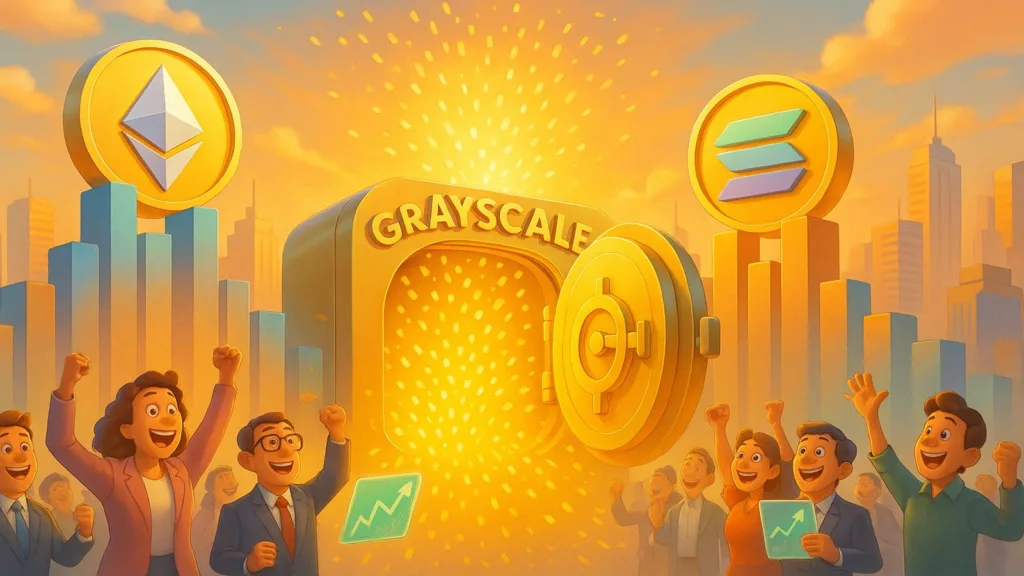
A simple truth with big consequences: when Grayscale adds staking to blue-chip products, the line between “crypto native” yield and Wall Street income quietly disappears.
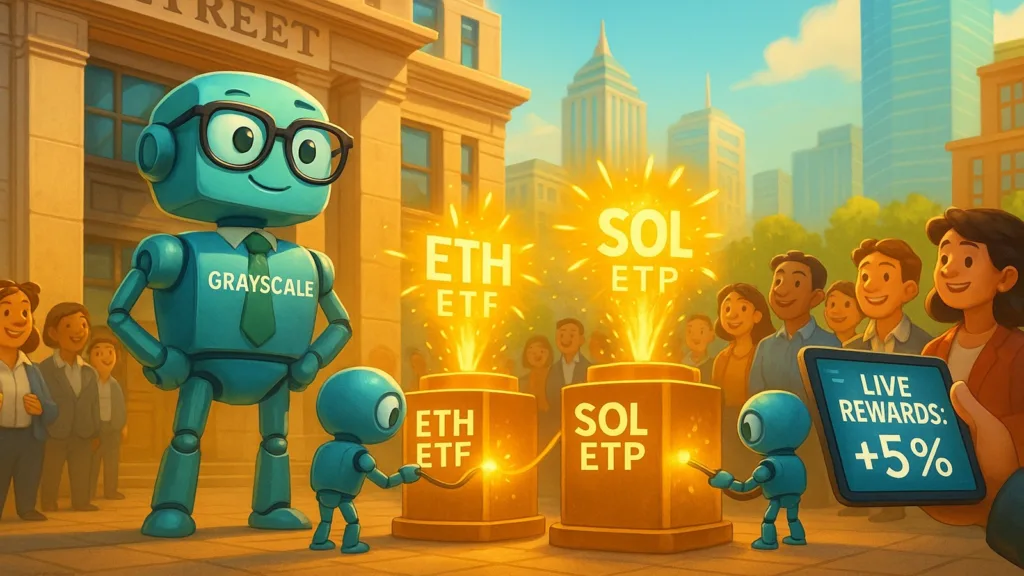
It’s been reported that U.S.-listed Ethereum funds managed by Grayscale are the first ETFs in the country to switch on staking, letting investors earn network rewards inside a familiar, regulated wrapper.
Meanwhile, SolanaFloor notes that Grayscale’s $GSOL product has activated staking, teeing up one of the first spot Solana ETPs with built-in rewards once uplisting finishes. These aren’t lab experiments; they’re live, regulated money pipes that pay yield from real blockchain work.
What almost everyone is missing
1) ETF investors just became a voting-sized validator bloc.
When billions funnel through a single sponsor’s staking program, validator choice stops being a technical detail and starts being market power.
Who gets delegated? What client software and MEV policies do those validators use? Those choices can tilt block production norms and fee markets, subtly shaping a chain’s culture and incentives. This is governance by routing table, and it scales with inflows.
2) “Passive” is no longer passive.
Traditional index ETFs track, skim a fee, and sleep. Staking ETFs track, produce blocks (through delegates), collect rewards, and shoulder slashing and downtime risk. That means new disclosures, new operational playbooks, and a new kind of tracking error: reward-rate variance. Your return now depends on how well the sponsor runs a validator program, not just on price.
3) Yield splits matter more than the headline.
Everyone quotes “staking APY,” but the net number is what counts after validator fees, custody, insurance, slashing buffers, and the sponsor’s take. If two funds hold the same asset but run different validator setups, their long-run performance can diverge quietly by hundreds of basis points. That’s a whole strategy edge hiding in the footnotes.
4) Tax and cash-flow timing will catch people off guard.
Rewards can be treated differently from capital gains, and some sponsors may periodically distribute, while others auto-compound. Two wrappers, same coin, very different investor outcomes at year-end. Expect accountants, not influencers, to decide which product gathers the most sticky AUM.
5) For Solana, the symbolism is larger than the yield.
By switching on staking for GSOL now, Grayscale is telling institutions, “You don’t need a dev team or a hot wallet to earn SOL rewards.” That lowers the barrier for conservative mandates and makes “staking as infrastructure” feel as normal as getting a dividend. If uplisting proceeds, this can standardize SOL yield for allocators who would never self-custody.
The upside and the trade-offs
Security & decentralization. A steady river of delegated stake from regulated vehicles can harden networks with more capital and more honest validators, but it can also concentrate power if that river is steered toward a narrow validator set. Sponsors must publish validator selection criteria, geographic dispersion, client diversity, and MEV policies. Shine light now, avoid drama later.
Product design. The best funds will show:
(a) clear reward-sharing math
(b) slashing insurance
(c) validator diversification
If you can’t explain the reward path and the worst-case loss path in one paragraph, the product is still too opaque.
Price discovery. As staking ETFs scale, reward flows become part of the NAV. In bull runs, that looks like “free carry.” In chop, it cushions drawdowns. Either way, the market will re-rate products that compound efficiently over those that leak yield to middlemen.
What to ask before you buy
- How are validators chosen and rotated? (Diversity beats convenience.)
- What’s the exact split of rewards net of all layers of fees?
- How are slashing risks mitigated and disclosed?
- Will rewards be distributed, reinvested, or both, and on what schedule?
These four questions separate a shiny brochure from a serious portfolio building block.
The bottom line
Staking inside regulated wrappers was inevitable; doing it at scale, with clear disclosures, is the real breakthrough. With Ethereum ETFs live on rewards and GSOL already switched on, Grayscale has moved staking from the command line to the client meeting.
The result is simple but profound: everyday investors can now earn blockchain yield without learning a single wallet command. If the industry handles validator diversity and fee transparency with care, Grayscale may have just created the blueprint others will follow, quietly turning block rewards into the next “dividend” class. And that’s the story everyone will remember when they ask where this new era began, with Grayscale making staking feel boring, safe, and suddenly normal.