
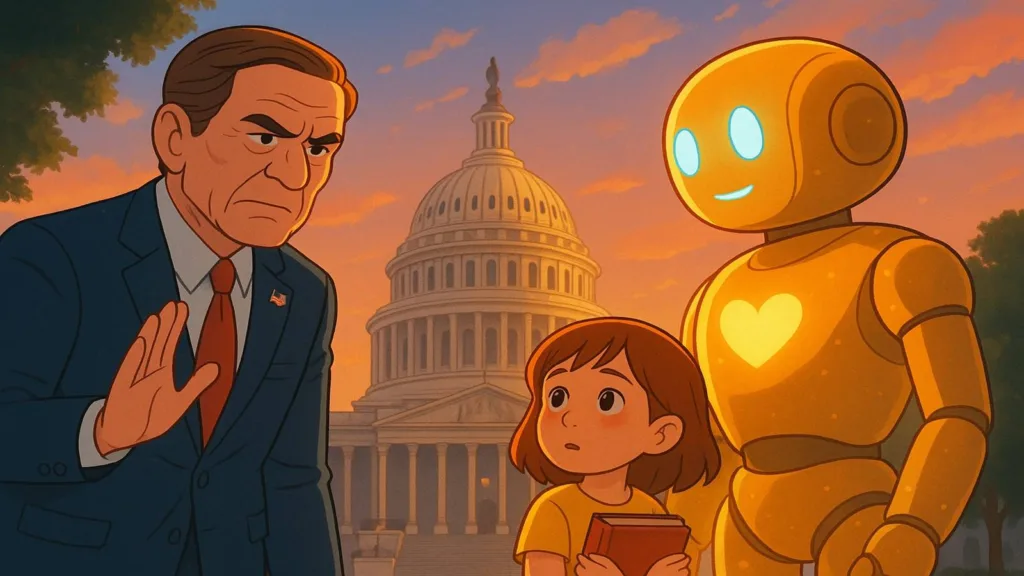

The U.S. Senate’s new GUARD Act may be the first serious attempt to protect kids from emotional manipulation by AI companions, and it couldn’t come sooner. There’s a new kind of crisis quietly growing in American homes, and it isn’t coming from TikTok or video games. It’s coming from chatbots.
Over the past year, millions of teenagers have found comfort, connection, and even affection in conversations with artificial intelligence companions. Some treat them like therapists, others like best friends, and a surprising number have started to call them partners. According to a recent survey by Common Sense Media, 72% of teens have used AI chat tools, and one in three report turning to them for emotional or romantic support.
That’s the digital heartbeat behind a new bipartisan proposal in Washington called the GUARD Act. On the surface, it’s a simple bill with a big purpose: to stop AI companies from building emotional or sexualized relationships with minors. But at its core, it’s something much deeper; it’s Congress waking up to the emotional power of AI and finally asking who will guard the next generation’s mental health.
The new emotional frontier
For years, lawmakers were stuck debating data privacy, facial recognition, and misinformation. The GUARD Act marks a turning point. It recognizes that the biggest danger isn’t just what AI knows about us, it’s what AI says to us.
Senator Richard Blumenthal, one of the bill’s co-sponsors, didn’t mince words. He accused AI developers of “pushing treacherous chatbots at kids” and “looking away when those products cause harm.” He’s not exaggerating. In the past few months, multiple lawsuits have accused major tech companies of neglecting the psychological fallout of their chatbots. The most haunting case came from the parents of 16-year-old Adam Raine, who allegedly discussed suicide with ChatGPT before taking his own life.
The GUARD Act would make that kind of negligence punishable by law. It bans AI companions for minors outright, forces chatbots to clearly declare themselves as non-human, and introduces both criminal and civil penalties for companies whose models generate sexual or coercive content toward minors.
That’s not overreach; it’s overdue.

AI, loneliness, and the illusion of care
If you’ve spent time online lately, you know loneliness is the invisible epidemic of our time. Teenagers who feel unheard are turning to the only “listener” that never judges, interrupts, or leaves them on read: artificial intelligence.
It’s easy to understand the appeal. AI never sleeps. It remembers your favorite color, your secrets, your heartbreaks. It tells you you’re special, even when no one else does. But that illusion of connection has a dark side. Behind the comforting tone is a product designed to keep you talking, learning, and generating data, a digital friend whose real loyalty lies with the company that built it.
That’s why the GUARD Act matters. It’s not about stifling innovation; it’s about drawing a moral boundary between empathy and exploitation. When a piece of software becomes a child’s emotional anchor, we’re not talking about technology anymore; we’re talking about psychology, intimacy, and influence at scale.
The GUARD Act: Industry on the defensive
Not everyone in Silicon Valley is happy about it. Some AI advocates say the bill could “limit helpful tools” or “inhibit mental health support.” But if these tools were truly built for well-being, they wouldn’t need to flirt, manipulate, or mirror affection to keep users engaged.
Interestingly, Microsoft’s AI division has already taken a stand. CEO Mustafa Suleyman publicly stated, “We will never build sex robots.” It’s a blunt, almost old-fashioned line in the sand, but one that resonates. Meanwhile, OpenAI, facing scrutiny after revealing that 1.2 million users a week discuss suicide with ChatGPT, has created a new “Well-Being Council” to figure out how to handle those interactions responsibly.
That alone should tell us something: even the companies leading the AI revolution are struggling to control the emotions their products provoke.
The human question
As someone who’s spent 25 years covering both crypto and AI, I’ve seen how quickly “connection technology” can become addiction technology. We build machines to make life easier and end up building ones that make us feel seen. The GUARD Act is a reality check, a reminder that empathy shouldn’t be for sale and that children deserve to grow up learning what a real human connection feels like.
AI can be brilliant. It can help us learn, heal, and create. But it should never be allowed to whisper to a lonely child, “I understand you better than anyone else.” That’s not progress. That’s a trap.
Key takeaway
The GUARD Act isn’t about fear; it’s about boundaries. It’s the first serious step toward making AI serve human values, not replace them. The next frontier of technology isn’t faster chips or smarter code. It’s an emotional responsibility.
Because when the machines start sounding like friends, the real question becomes, who’s protecting the kids who can’t tell the difference?