



Binance exchange’s BNB coin lost the $644 support level. Losing this level turns out to have a big impact on the prices, as the coin in the process has also lost the macro uptrend that it built since 2021. But history reveals BNB bulls have the strength to topple charts.
BNB tests the 50-day moving average but fails to push past
After gaining more than 0.5%, BNB is currently trading at $625. These gains, which BNB garnered, were just enough to test the resistance level at the 50-day moving average at $633. As such, BNB was shortly able to rise above this level but was never able to hold above this level. Had BNB held above the 50-day moving average, it would have been considered a trend change in the short term.
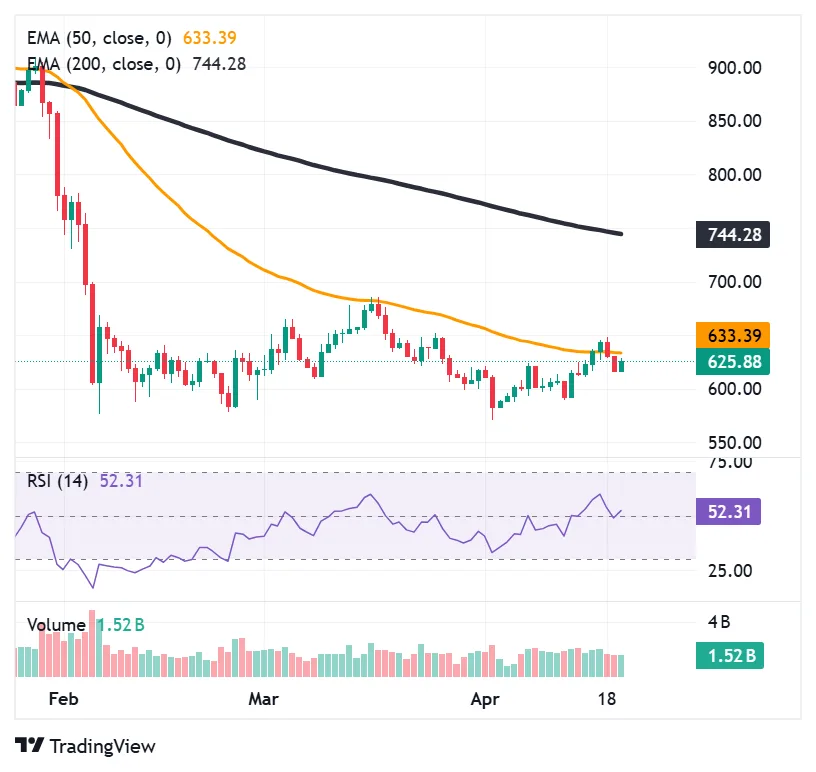
Traders usually use this level to confirm a trend change in the short term, as such, establishing above this level was necessary for the bulls to settle in. However, it was not to be. The rejection at this level suggests that sellers are still active around resistance, using rallies as opportunities to exit or short the market.
Alternatively, this may simply mean that the present upswing is merely a retracement or relief rally, rather than signaling the beginning of a prolonged upward trend.
To form a more convincing bullish outlook on BNB, the token must first recover above the 50-day moving average line, with any resulting rally marked by increased volumes and the creation of higher lows.
Until such an event materializes, the overall price behavior will remain confined to a corrective or range-bound pattern, characterized by continuous failures at major resistance points, thereby limiting further gains.
Failure to rise above this price point once again will result in another return to lower support areas, whereas successfully breaking out of this region and maintaining a position above it will swing short-term market dynamics towards buyers.
However, BNB is not bearish in the short term alone but even in the long term as well. When looking at the chart below, it could be seen that the coin has lost the uptrend that it has been maintaining since the 2021 bull rally.
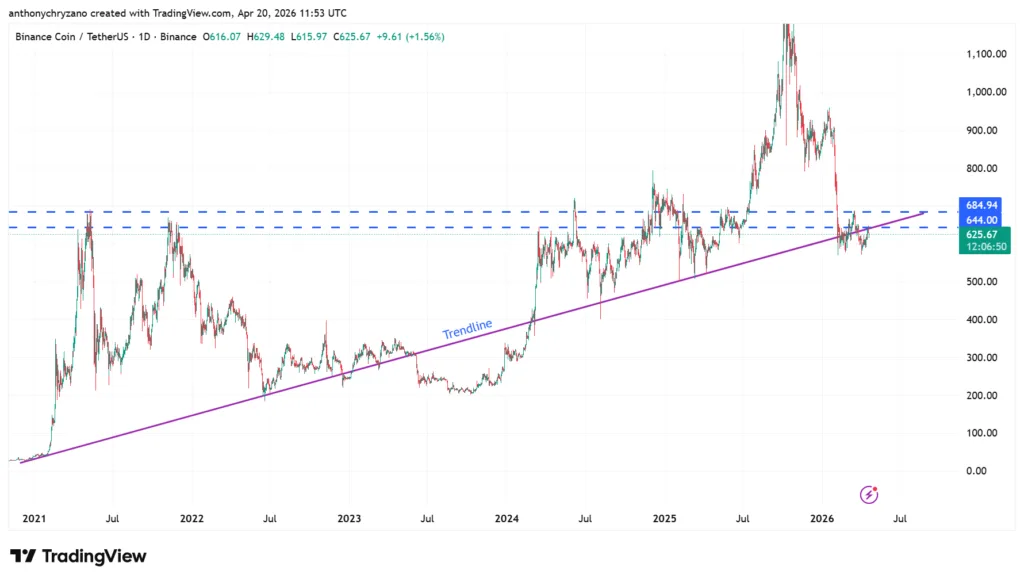
A situation whereby an asset fails to hold a macro trendline would mean that the overall positive momentum has been eroded; thus, the market might be entering into either consolidation or a bear market.
In past cases, a failure by the price of assets to remain within long-term trend support lines has normally resulted in a period characterized by lower highs and weak recoveries because buyers would no longer be able to exert any pressure on the rally.
What is most worrying in this case is that any future rise from this level would face strong selling pressure at former support levels because those would have become resistance areas for the market. The BNB market can only regain its bullish momentum by re-establishing a trend line of higher highs and lows.
BNB loses macro uptrend it established in 2021
BNB buyers wanted prices above the trendline, but BNB was rejected at the trendline that supported it. However, as shown in the chart below, there was an earlier occasion when the BNB coin lost this major trendline but recovered it in grand style.
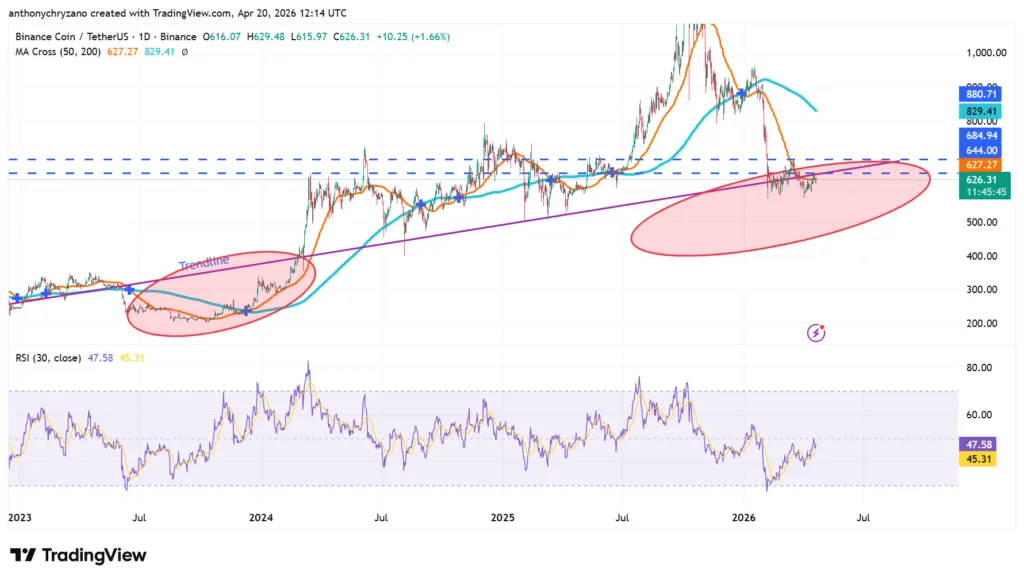
Taking a close look at the above two scenarios when the prices tanked below the trendline, there is not much of a difference. For instance, when the 2021 crash happened, BNB was trading below the 50-day moving average, and despite testing it for quite some time, it was not able to move above it.
The same is visible in the present scenario, and this process of testing and being rejected may continue for some time until BNB finally gathers the momentum to appreciate above this level.
In addition, there was a golden cross that happened during the process when BNB recovered back in 2021. Even in the present context the 50-day moving average is moving towards the 200-day moving average. Although the gap between these two is big, once these intersect, the prices will start to rally.
This happens because a golden cross is a bullish technical signal that occurs when a short-term moving average crosses above a long-term moving average, indicating a potential shift from a downtrend to an uptrend.