



Ethereum’s recent move doesn’t really feel like a typical crypto bounce. It feels more like something is quietly changing underneath the surface.
In mid-April 2026, ETH jumped around 8–9% in a single day, outperforming Bitcoin and catching a lot of traders that were leaning the other way. That said, this development wasn’t driven by a sudden wave of leverage. Instead, it looks like multiple slower-moving forces started to line up at once.
Regulation is finally becoming less of a headwind
One of the biggest shifts came from the SEC’s April 13 staff statement on DeFi. It didn’t “greenlight” the sector outright, but it did something arguably more important – it drew clearer lines.
The message was that certain DeFi interfaces – like front-end apps and wallet tools – may not need broker-dealer registration, as long as they aren’t custodying funds, giving advice, or directly executing trades.
In other words, if you’re just providing neutral software, you may not be treated like a financial intermediary.
That matters for Ethereum because so much of its ecosystem sits in exactly that grey zone. For years, developers and institutions have had to build with one eye on regulatory risk.
Even a partial clarification like this changes the tone. It makes DeFi feel less like a legal question mark and more like infrastructure that can actually scale.
The data is quietly improving too
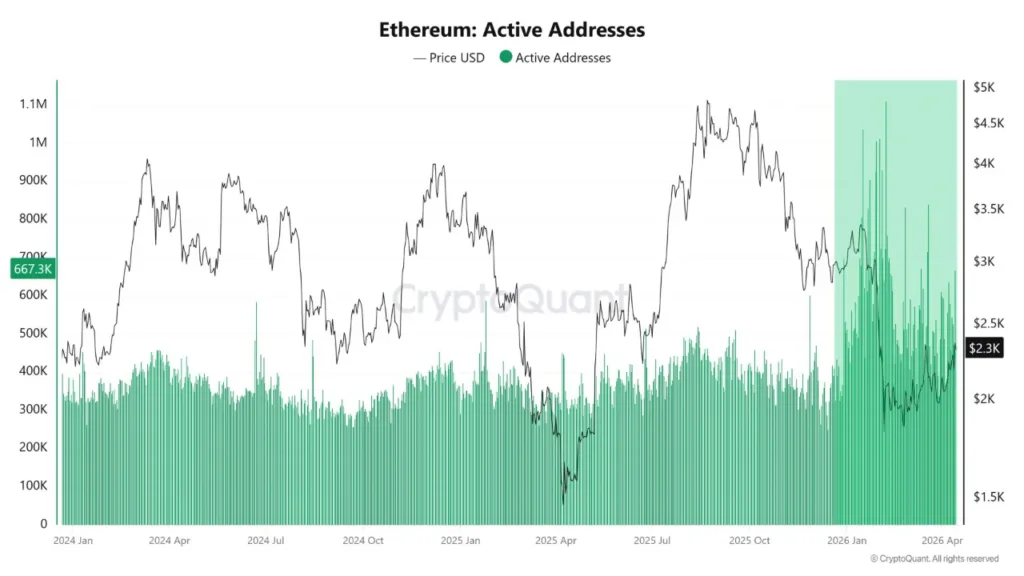
On-chain activity is starting to reflect that shift. Active addresses are ticking higher again, which usually points to real usage returning to the network – not just speculative trading cycles.
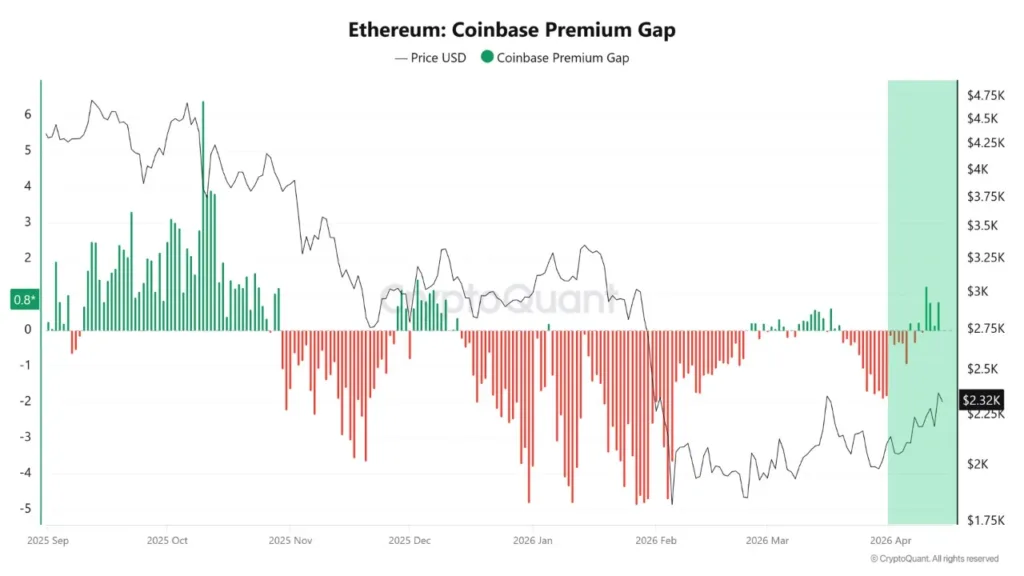
At the same time, the Coinbase Premium Gap is improving. That’s often read as a sign that US demand is picking up again, and more importantly, that larger players are stepping back in. It’s not the kind of flow you typically see from short-term momentum traders.
ETF inflows back that up. Ethereum funds have now posted three straight days of net inflows, with the strongest weekly totals so far this year.
That kind of behavior tends to come from portfolio allocation rather than fast in-and-out positioning. It’s slower, more deliberate money.
Bigger holders are starting to matter more
Then there’s the corporate side. Bitmine has reportedly built a position of around 4.8 million ETH – over 4% of total supply – and continues adding to it. That’s not a trading position anymore; it starts to look like strategic balance sheet allocation.
Moves like that matter because they quietly reduce available supply. Even if price isn’t reacting instantly, the structure underneath tightens over time.
This move feels different for a reason
Put all of this together – regulatory clarity, improving on-chain activity, steady ETF inflows, and large-scale accumulation – and Ethereum starts to look less like it’s reacting to hype and more like it’s being repriced around a new narrative.
It’s not just “ETH is going up.” It’s that the environment around ETH is changing in a way that supports higher long-term participation.
That’s what makes this move feel more structural than speculative. The price is moving, yes – but the bigger story is that the foundation underneath Ethereum is starting to look a lot more aligned than it has in previous cycles.