
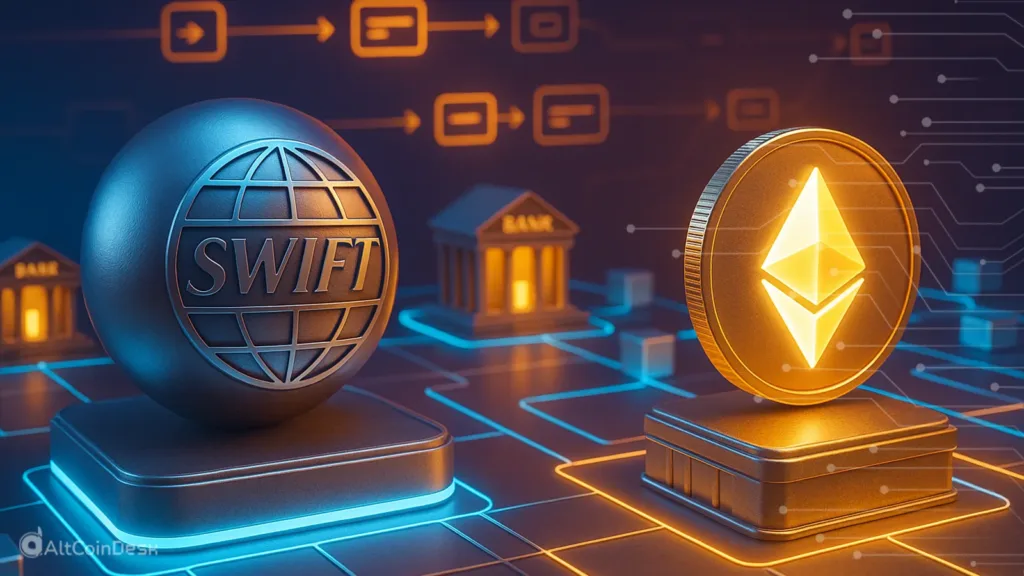

SWIFT is building its upcoming payments system on SWIFT Linea, ConsenSys’ Ethereum layer 2 network. That confirmation came directly from ConsenSys CEO Joe Lubin during TOKEN2049 in Singapore, ending weeks of speculation about which blockchain would anchor SWIFT’s blockchain payments initiative. By choosing Ethereum’s Linea, SWIFT is signaling confidence in a blockchain payment platform that promises both scalability and security, aligning with its push to modernize cross-border transactions.
Linea was reportedly selected for its mix of throughput, low gas costs, and cryptographic privacy features—ideal for a blockchain payment platform that must operate at the scale of SWIFT. Lubin said SWIFT wanted a base that could handle high-volume payments without compromising security.
Why this matters for finance and crypto
SWIFT has long been the backbone of global banking — handling messaging and instructions for trillions of dollars in transactions. Its move toward SWIFT blockchain infrastructure, anchored on Ethereum’s Linea, signals a shift from messaging-only rails to a blockchain-enabled settlement future.
According to the whitepaper, the pilot involves more than 30 major banks, including BNP Paribas, BNY Mellon, and Citi. As SWIFT tests its new blockchain platform, these institutions are helping evaluate how SWIFT’s blockchain payment rails might support tokenized deposits, stablecoins, and 24/7 settlement.
Linea uses zk-rollup and zero-knowledge proof techniques, enabling privacy while still leveraging Ethereum’s security. That combination helps the blockchain payment platform strike a balance—fast, scalable, yet compliant.
Interestingly, SWIFT opted for Linea over Ripple’s XRP Ledger, highlighting a preference for modular, neutral rails rather than building on a token-native ecosystem. Some analysts view this as proof that SWIFT wants flexibility, not dependence on any single crypto.
What SWIFT Linea means for blockchain payments
- Faster, cheaper cross-border payments: If the pilot succeeds, banks could settle international transfers in minutes—or even seconds—with much lower costs.
- Broad asset support: The system could support not just fiat messaging, but tokenized instruments, stablecoins, and CBDCs over time.
- Interoperability matters: Because it sits atop Ethereum’s ecosystem, SWIFT Linea may be able to connect to decentralized finance (DeFi) platforms and bridge traditional and blockchain rails.
- Regulatory complexity looms: Getting global compliance right (AML, KYC, cross-border laws) will be one of the biggest challenges in turning a pilot into production.
Just months ago, SWIFT was a messaging utility. Built on SWIFT blockchain platform rails, it may become a backbone for real-time settlement in the blockchain era.