
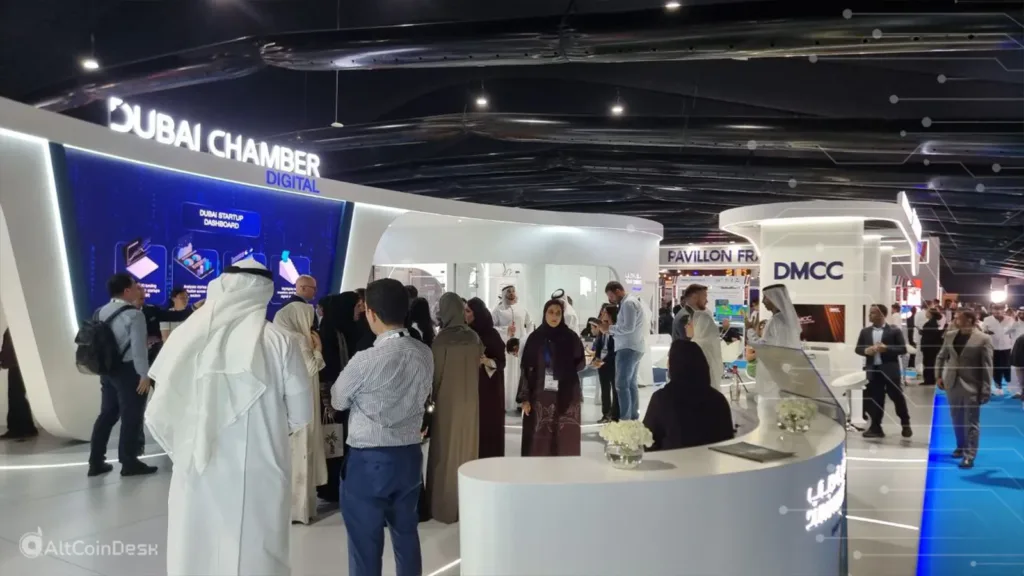

At Expand North Star’s Blockchain Stage, two panels framed a striking contrast: one opened with memes, the other with compliance. Together, they painted a picture of an industry growing up — from the chaotic energy of viral tokens to the sober architecture of trust, regulation, and institutional capital.
From culture coins to capital markets
Kevin Lee, Chief Business Officer at Gate, took the audience on a reflective ride from memecoins to real-world assets (RWAs).
“Memecoins reflect culture — they’re not propagated by genes, but by people,” he said. “They’re proof of community.”
The keynote “From Memecoins to RWAs – Is There Anything We Can’t Tokenize in 2026?” explored what happens when value moves beyond money — when attention, time, and cultural expression become tradable assets.
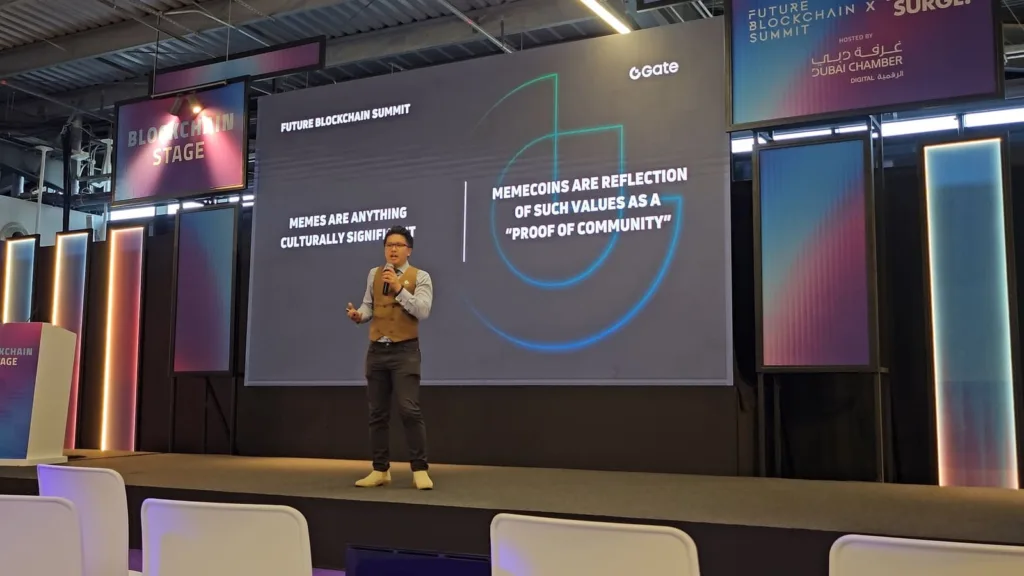
Lee argued that RWAs are not new products but old ones with new vehicles. Tokenization, he said, is about access and liquidity — not demand. Blockchain’s true value lies in its duality: an asset can be both unique and divisible, both scarce and accessible.
“An NFT is art — it’s proof of ownership, proof of authenticity,” he added. “You don’t need to go to an auction anymore. It’s just on-chain.”
But Lee also pushed back on the industry’s language. “I hate the term real-world asset,” he said. “It makes me feel like what we do here is less than. Crypto is the real world. Stablecoins are the real world.”
The message was clear: blockchain’s next frontier isn’t just tokenizing things — it’s tokenizing meaning.
Building trust, one token at a time
Later in the day, the tone shifted from idealism to infrastructure during the panel “Digital Identity & Compliance: Making RWA Tokens Work in a Regulated World.”
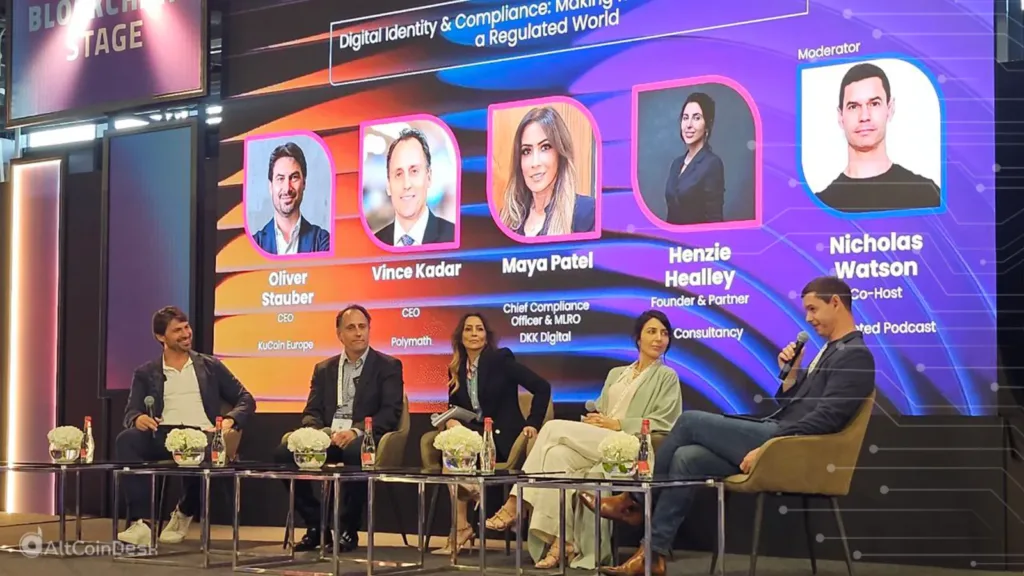
The group wrestled with a central question: can everything be put on-chain — and should it be?
Maya Patel was quick to draw the line. “No,” she said, arguing that full tokenization requires “the right technology tools, APIs, and frameworks.”
Stauber disagreed. “Yes,” he countered. “Everything that has value will eventually live on-chain — even personality.”
Kadar’s take was philosophical: “You’ve got to trust the chain.” Healley, meanwhile, kept the conversation grounded, noting that “securities follow classifications — it depends on what is being tokenized. You can have an RWA that still falls under digital asset laws.”
When asked whether regulators would ever reach a shared framework, Healley said alignment is happening but not uniformity. “They’re moving closer,” she said, “but full agreement? I don’t see it yet.” Stauber added that Europe’s patchwork of licenses makes that balance hard to strike.
The cost — and calculus — of compliance
In the panel’s closing moments, moderator Nicholas Watson posed a question that drew laughs and long pauses:
“How much compliance could you remove without breaking anything?”
Stauber estimated 20%. Kadar went for 30%. Patel matched 20%. Healley, after a beat, quipped: “A random variable.”
But beneath the humor lay a deeper truth — that compliance, identity, and education are what will turn blockchain’s speculative phase into its credible one. As Stauber put it: “Educating society is key.”
From chaos to credibility
Across both sessions, a single narrative emerged: tokenization is no longer about the asset — it’s about the assurance behind it.
Where once the industry measured success in memes and market caps, it’s now grappling with questions of authenticity, accountability, and alignment. The future of blockchain may not be about what we can tokenize, but who we trust to do it.