
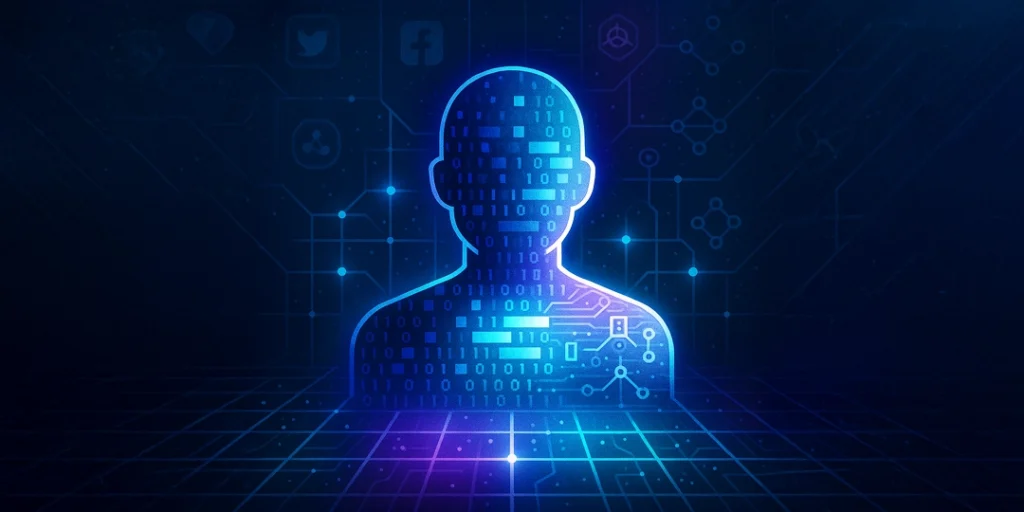

Social media platforms, the inevitable gift of the digital world, have made our communication much easier and smoother. You are at one end, and your friends and relatives are at the other end of the world; social media makes it possible to connect! What if social media runs on a different technology? A decentralized technology!
Decentralized Social Media Platforms
Like decentralized projects, decentralized social media platforms are online networks that lack a central unit of authority. These are social media platforms that operate on a decentralized network, eliminating the need for a single company, such as Facebook, Instagram, or Twitter, to have the authority to censor content.
Key features of decentralized social media platforms
No central authority
Not a single authority can touch the decentralized social media platforms, meaning, it is operated or controlled by users or nodes that validate the blockchain network.
You are the owner of your data
Typically, social media platform founders have access to your data. However, if you are a decentralized social media platform user, you can have access to and own your data.
Say bye to censorship
Yes, social media platforms are censored, monitored, and controlled, unlike the decentralized ones that do not have to face any resistance at all.
Privacy and security
As decentralized social media deploy a distributed network (blockchain), where data and operations are spread across several nodes, chances are less that hackers can damage the system. Even if hackers exploit one node, other nodes protect copies of the data hacked.
Moreover, once users enter data into these social media platforms, it is harder to alter the data without approval from the majority of the network.
Earn money
Just like how the typical social media platforms give rewards for content creation, decentralized social media platforms reward you for your content in cryptocurrency. The maximum user engagement your content receives, the more is your rewards.
Wait, is this reward only for content creators? Users who participate in voting, governance, and providing value can also earn rewards from particular decentralized social media platforms.
Earn rewards without advertising
You don’t have to run ads to make a profit. As mentioned above, you can monetize your content through user engagement and votes.
Communicate beyond boundaries
Besides communicating on a single platform, some decentralized social media platforms allow for communication between different platforms.
Examples of decentralized and blockchain-based social media platforms
Mastodon
Mastodon is much like X, but the difference is its decentralized nature. This platform is a microblogging platform that is said to be an alternative to X and has independent servers managed by the platform users. The platform is built on Fediverse, a network of platforms that communicate with each other using a common protocol.
Diaspora
Another platform that has an independently-owned server is known as Pods. Diaspora is a non-profit and decentralized social media platform that allows free use and control over choosing your way of interacting with others. You can select a pod to register and then communicate with the global Diaspora community. The platform first came to life in 2010.
Steemit
If you want to get crypto for creating and curating content, Steemit would be one of the best blockchain-based social media platforms. It deploys the Steem blockchain and provides STEEM tokens to the users. Launched in 2016, the platform allows users to earn tokens for posting and voting on content. Moreover, users can also earn rewards if they promote or like content soon after it is posted; even users who upvote valuable content can earn rewards.
DTube
DTube, launched in 2016, is a decentralized blockchain-based platform — a YouTube on blockchain. This platform was originally built on the Steem blockchain, but transitioned to its own blockchain called Avalon in 2020. Creators on this ad-free, censorship-resistant platform can earn crypto rewards for their content creation and engagement.
Besides, there are several other prominent decentralized social media platforms such as Bluesky, Minds, and Odysee.
Disadvantages of decentralized social media platforms
Although decentralized social media platforms are built to supersede the privacy and security issues dominant in social media networks, there are a few disadvantages that users need to keep in mind.
Less number of users
As decentralized social media platforms have less marketing budget and limited visibility, there are less number of user base when compared to social media platforms.
Growth is less
The absence of a central system means each user runs and maintains the platforms. When many users join a network, it is difficult for each user or node to process the platform, resulting in a lack of scalability and growth. Plus, the decentralized nature of blockchain enhances decision making, which is time-consuming and addicts growth.
User experience can be fragmented
Their own rules, their features, and their interfaces! Each platforms have its features. These unfamiliar interfaces make the user experience inconsistent by overwhelming them with many advanced customization options.
Limited knowledge limits users
Social media platforms have become more convenient for almost all age groups. However, this is not the case with decentralized social media platforms. There are even people who do not know about the existence of blockchain-based social media networks. Lack of knowledge can also decrease the number of users relying on the platforms.
Are decentralized social media platforms different from blockchain-based social media platforms?
Yes, both decentralized and blockchain-based social media platforms are different, albeit they have some correlation. Decentralized social media platforms do not always work on blockchain technology. Instead, they rely on traditional databases and peer-to-peer networks, such as the federated server, as in Mastodon and Diaspora. Worth noting, content on decentralized social media platforms is usually mutable or changeable.
So, what’s up with blockchain-based social media platforms? These platforms typically deploy blockchain technology to make the content immutable and create a built-in crypto/token system.
How to sign up?
Signing up on decentralized social media platforms takes a different form when compared to traditional social media platforms. Even decentralized social media platforms and blockchain-based social media platforms have different signup methods.
Decentralized social media platforms
- Choose a server
- Visit the URL of the server
- Click Sign Up/Create Account
- Add your username, email, and password
- Confirm your email address
Blockchain-based social media platforms
- Install a crypto wallet — MetaMask
- Choose a social media platform
- Click Connect Wallet or Sign In
- Approve the connection from your wallet
- Sign a transaction to confirm identity (not always required)
Final thoughts
Decentralized social media platforms have emerged as an ecosystem to secure and protect your data, ensuring no central authority or middleman is playing in between. As the data on these networks is distributed on several nodes and servers, users can take part in the decision-making and voting process to help govern the platform democratically. Despite the technology used behind these platforms possessing cons, their Web3 elements shine brighter and speak louder.
Disclaimer: Readers must conduct proper research before participating in any of the projects mentioned in this article. AltcoinDesk is not responsible for any financial losses, damages, or consequences resulting from the use of information provided in this article.