

Owning a piece of a government bond or a rental building once required serious capital and the right connections. That’s shifted. In 2026, blockchain technology lets investors hold fractional ownership of physical and financial assets through digital tokens, and the platforms making that possible have grown from niche experiments into regulated financial infrastructure.
The total value of tokenized real-world assets on public blockchains approached almost $30 billion by mid-April 2026, a figure that stood well below $5 billion just two years earlier. That pace of growth attracts scrutiny, and the platforms that have held up under it are the ones worth knowing about.
What to look for in RWA tokenization platforms
Every RWA platform takes a different approach. A basic one issues tokens. A serious one handles the full lifecycle: legal structuring, asset onboarding, investor management, secondary trading, and the institutional infrastructure needed for custody and reporting.
The best RWA tokenization platforms in 2026 treat compliance as something engineered into the code from the start, not patched on later. Every transfer checks whether both parties are eligible before it settles. That’s what institutional investors require, and it’s the baseline any credible platform needs to meet.
Best platforms for compliant issuance, asset onboarding, and investor management
Compliant issuance means creating and releasing tokens the legally correct way. In most jurisdictions, tokenized assets qualify as securities, so they fall under existing financial regulations.
Asset onboarding is what happens first: legal review, independent valuation, and structuring the token to correctly reflect ownership rights before anything goes live.
Investor management covers everything that follows: tracking who holds what, handling distributions, and managing eligibility across different jurisdictions.
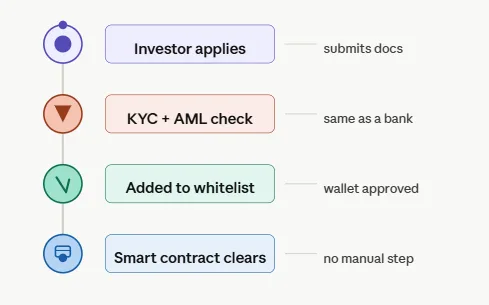
Before anyone holds a tokenized asset on a regulated platform, they go through KYC and AML checks, the same process a bank runs when opening an account. Once cleared, they get added to a whitelist that the smart contract recognizes automatically. Any transfer not involving two whitelisted wallets doesn’t go through.
Securitize
Securitize has been in this space longer than most. As an SEC-registered transfer agent, it operates under the kind of formal oversight that institutional investors actually require before committing capital. Its DS Protocol handles token issuance, transfer agent work, and settlement without manual back-and-forth.
BlackRock picked Securitize for its BUIDL fund, which cleared $2 billion in AUM by late 2025, putting it among the largest tokenized funds on the market. Securitize’s own total hit $4 billion around the same time. Apollo, Hamilton Lane, and KKR are on the client roster alongside BlackRock.
The investor portal pulls onboarding, cap table management, distributions, and redemptions into a single interface. That alone cuts the back-and-forth that traditional fund administration usually drags along with it.
Tokeny
Tokeny builds infrastructure for enterprises that want to launch their own compliant token offerings. It uses the ERC-3643 token standard, which embeds compliance rules directly into the token itself. A transfer simply won’t settle if either party fails the eligibility check. That makes it popular with banks and asset managers building out their own tokenization programs, particularly across Europe.
It also handles investor eligibility across multiple jurisdictions at the same time, letting issuers set different rules for different countries and enforcing them automatically without any manual intervention needed.
Polymath
Polymath went further and built its own blockchain, Polymesh, specifically for regulated financial assets. Identity verification, governance, and settlement rules are baked into the network layer rather than added on top. Investor identity is tied directly to the chain itself, so compliance checks don’t rely on a third-party service staying operational.
For institutional issuers who need the compliance architecture to be foundational rather than optional, that kind of built-in reliability matters considerably.
Best tokenized real estate platforms in 2026
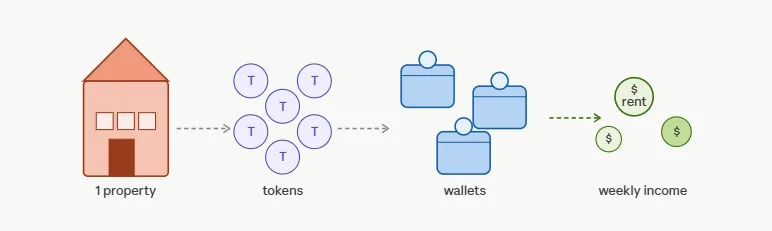
Real estate is one of the most accessible entry points into RWA tokenization. Tokenized real estate platforms let investors hold fractional ownership of properties and receive proportional income through smart contracts, without the legal complexity of direct property ownership.
RealT
RealT is the most retail-accessible of the tokenized real estate platforms currently operating. It lets investors own fractional shares of rental properties with a low minimum entry point and receive weekly rent distributions paid in stablecoins directly to their wallets.
By the end of 2025, it had tokenized nearly $130 to $150 million in residential real estate. The model is straightforward: hold tokens, receive rent, sell tokens when ready.
Lofty
Lofty takes a different approach to tokenized real estate than RealT. Built on the Algorand blockchain, it focuses heavily on speed. Transactions settle in seconds rather than the near-instant but slightly slower Ethereum-based alternatives.
Investors can buy fractional ownership in rental properties starting at $50, receive daily rental income distributed in stablecoins, and trade their tokens on Lofty’s own secondary marketplace without any lockup period.
What makes it distinct is the governance layer: token holders vote on actual property decisions, from approving repairs to deciding when to sell. It’s fractional ownership with a direct say in how the asset is managed, which goes further than most comparable platforms offer.
Best platforms for secondary trading and institutional infrastructure
Secondary trading is where a tokenized asset becomes genuinely useful. Without it, investors are locked in until the issuer redeems. With it, tokens can move between eligible holders on regulated venues, creating real liquidity where none existed before.
Ondo Finance
Ondo Finance went after a specific gap: institutional Treasury yield, made accessible inside DeFi. Its OUSG product was an early mover in bringing that kind of fixed income exposure onto public blockchains. The category has since taken off.
Tokenized Treasuries are now the single largest RWA segment on-chain, a market that pushed past $11 billion by Q1 2026 as more institutional names moved in.
Centrifuge
Centrifuge approaches secondary trading and institutional infrastructure from the private credit side. It lets businesses tokenize invoices and receivables, use them as collateral, and access DeFi lending pools.
A freight company with outstanding invoices can tap working capital without going through a traditional bank. Investors on the other side earn yield from financing those real-world obligations.
WisdomTree
WisdomTree became the first registered tokenized mutual fund to receive SEC approval for 24-hour trading and instant stablecoin settlement. That approval shifted the conversation around secondary trading from theoretical to fully operational, and it set a real benchmark for what institutional infrastructure looks like at the highest level.
How to choose between these platforms
The right choice comes down to three things: what’s being tokenized, where it’s regulated, and who the investors are. Institutional issuers tend to land on Securitize or Tokeny. Ondo and Centrifuge make more sense for teams building within DeFi. On the property side, RealT and Lofty both keep the entry point low, though they take different approaches to the underlying blockchain and how rental income actually reaches investors.
RWA tokenization platforms in 2026 are operating with real capital, real regulatory oversight, and infrastructure that would have looked ambitious just a few years ago. The platforms worth watching didn’t stumble into that position. They built compliance and liquidity into the foundation early, and it shows.