



The Lido DAO network is showing signs of increasing adoption, as the wallet it created has hit a 2-month high. The excitement surrounding the adoption has lifted prices by more than 20% within the past two days. With this boost in prices, Lido DAO has once again started to recover and rise from the support level at $0.28.
Lido DAO (LDO) prices are starting to recover after 141 new wallets bought LDO tokens in a single day. This is the highest number of new wallets acquiring LDO tokens. The token gain more than 20% during this event and now is priced at $0.40, after gaining nearly another 10% during the past 24 hours. 
The gains are not that impressive, but the chart above shows that LDO crossed a major level with the hype. As shown in the chart above, the token has crossed above the 50-day moving average, which is a short-term indicator the market uses and the traders rely on.
When the Lido DAO token crosses above the 50-day moving average, it’s generally considered a shift in short- to mid-term momentum in favor of buyers.
The 50-day MA acts here as a key trend indicator. When the price is below it, the market is usually considered weak or in a downtrend. But once it breaks above, it suggests that buyers are starting to regain control, and sentiment is turning more bullish.
This is generally indicative of:
Early recovery from a bearish downtrend or possible reversal of the trend
Bullish power within the market, as well as high buying demand
Greater trader confidence, which in turn may attract buyers
In addition, it usually serves as a strong support level once the breakout takes place. This means that should LDO remain above the 50-day moving average while setting new higher lows, there is a greater likelihood of future gains. Inversely, should it retrace back below this level, it is most likely an invalid breakout pattern.
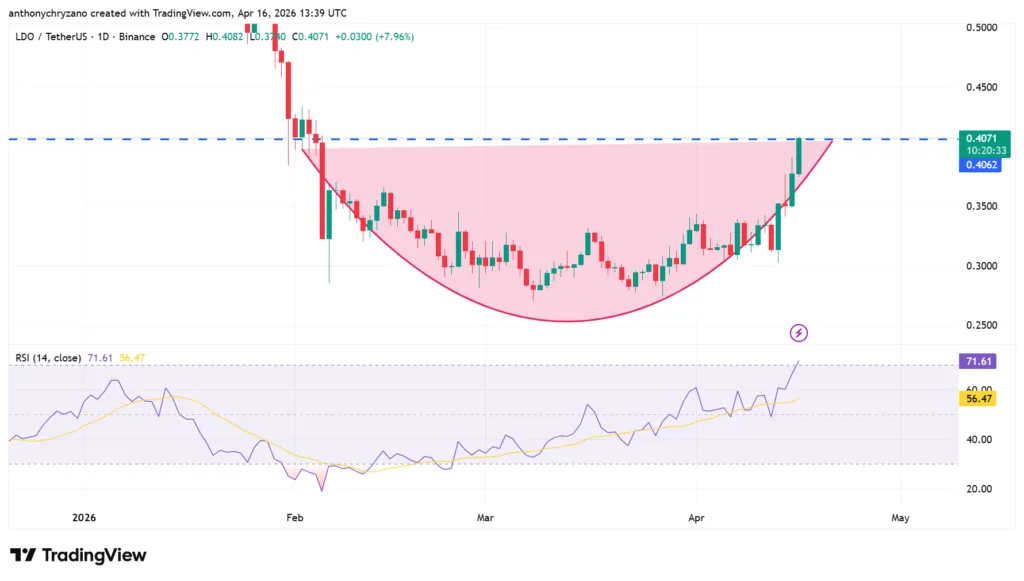
As shown in the chart above, the Lido DAO price is currently forming a rounded bottom structure, which typically signals a gradual shift from selling pressure to accumulation. Occasionally, the shift is drastic and takes a sharp V-shaped reversal. However, in this case price action is slowly curving upward, and the transition is gradual. This shows that sellers are losing their grip on the market while buyers are steadily stepping in at lower levels over time.
Such structures usually appear after an extended period of decline when the market moves into a period of silent accumulation. Initially, during the formation of this pattern, there is a dominance of bearish forces; however, over time, every downward leg loses its strength, and bottoms become more attractive to buyers.
If there is aggressive buying, it takes a V shape, but here the buying is moderate. As such, it has created the characteristic “rounding” effect, where momentum slowly transitions from bearish to neutral and eventually bullish.
From a trader’s point of view, the key features of this phase are uncertainty. The volume stays low, and price trades within a tight range, building a solid base. Some traders might be leaving positions due to disappointment, but other more patient traders will be buying, preparing for a possible reversal.
In case this rounding bottom forms further and manages to break its resistance level, which is called the neckline, in high volume, then it would signal a trend reversal to the expansion phase. Momentum would then accelerate sharply as buyers come back into play.